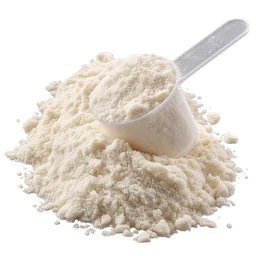
Collagen
Best for
Move more comfortably
Large effect, needs confirmation 40 mg/day 12 weeks 1 study, n=60 #1 of 4 studied
- 68 papers
- 11 of 105 outcomes
- 8 positive
- 3 major interactions
Collagen provides a proven benefit for joint discomfort and skin moisture, with the strongest evidence showing modest improvements rather than dramatic changes across these outcomes.
Median effective dose, most-studied outcomes
- Help skin spring back 1,000 mg 4–26 wk
- Move with less joint pain 5 g 8–26 wk
- Support your skin barrier 1,000 mg 4–13 wk
Risk, worst reported severity
- constipation moderate
- diarrhea moderate
- cyclosporine major
- cucurbitacin B major
What collagen actually does
Hydrated skin holds water and can feel less dry, tight, or rough. 20625414 · 29949889 · 32195722 +12
Comfort and mobility shape how easily a person can manage daily tasks. 36562843
Skin texture and visible pores shape whether the surface looks even and refined. 26561784 · 29949889 · 33521019 +3
| Outcome | Effect | Evidence | Dose | Time | Rank |
|---|---|---|---|---|---|
| Clear benefits 3 | |||||
| More hydrated skin Proven benefit Hydrated skin holds water and can feel less dry, tight, or rough. | | 3 meta-analyses 15 papers · n=5.7k | — | 4–13 wk | #1 /15 |
| Ease joint pain Proven benefit Comfortable joints can make walking, stairs, and everyday movement easier. | | 4 meta-analyses 19 papers · n=5.3k | — | 8–26 wk | #5 /23 |
| Firmer-looking skin Likely benefit Skin firmness shapes how taut and resilient the skin looks and feels. | | 3 meta-analyses 18 papers · n=2.7k | — | 4–26 wk | #1 /7 |
| Modest benefits 1 | |||||
| Feel less pain Proven but unnoticeable Pain relief can make it easier to move, rest, focus, and get through the day. | | 2 meta-analyses 6 papers · n=3.4k | — | 8–26 wk | — |
| Worth watching 3 | |||||
| Move more comfortably Large effect, needs confirmation Comfort and mobility shape how easily a person can manage daily tasks. | | 1 RCT 1 papers · n=60 | 40 mg | 12 wk | #1 /4 |
| Reduce visible sun damage Promising early signal Sun damage can leave skin with uneven tone, roughness, and other signs of photoaging. | | 2 RCTs 2 papers · n=152 | 1000 mg | 12 wk | #1 /3 |
| Support tendon strength during training Promising early signal Tendons connect muscle to bone and adapt to the repeated forces of exercise. | | 1 meta-analysis 2 papers · n=143 | 3–30 g | — | #1 /2 |
| Early research 3 | |||||
| Smoother-looking skin Faint early signal Skin texture and visible pores shape whether the surface looks even and refined. | | 6 RCTs 6 papers · n=282 | 1–10 g | 8–26 wk | #1 /3 |
| Less noticeable facial wrinkles Faint early signal Facial wrinkles are lines and creases that become more visible as skin changes over time. | | 4 RCTs 5 papers · n=76 | 0.3–10 g | 8–13 wk | #2 /4 |
| More radiant-looking skin Not enough research Skin radiance is the healthy-looking brightness that gives the complexion a natural glow. | | 3 RCTs 3 papers · n=80 | 10–1000 mL | 8–12 wk | — |
| Doesn't appear to help 1 | |||||
| Move with less stiffness Doesn't appear to help Stiff joints can make everyday movements feel restricted or uncomfortable. | | 2 meta-analyses 10 papers · n=1.0k | — | 5–26 wk | #8 /10 |
Effect tiers come from native-unit MCID where available, Cohen's d otherwise.
Dose, timing & forms
How much
For joint pain, the most useful starting point from the stronger trials is 5 g daily of collagen peptides, although studies span roughly 2 to 10 g and often run for about 12 weeks.1 For skin moisture and elasticity, 1 g daily sits near the middle of successful protocols, with studies using a broader range of peptide doses over 8 to 12 weeks.25 Do not chase very high doses expecting faster results. The evidence supports steady use more than a bigger scoop.12
When and how long
Take collagen every day. Trials build it into a regular routine for weeks, not as an occasional rescue dose when your knees hurt or before a single workout.12 Research has not established a best morning, evening, or pre-exercise window, so choose the time you will actually remember. You can take collagen with food or without it, based on what feels best for your stomach.12
Forms & standardisation
Hydrolyzed collagen peptides have the strongest coverage for skin moisture, elasticity, and general joint-pain outcomes. Look for a label that clearly says "hydrolyzed collagen peptides" and lists the amount per serving, rather than relying on vague beauty blend language.25 Undenatured type II collagen is a separate form studied at much lower doses for joint support, so grams of collagen peptides and milligrams of type II collagen are not interchangeable.4
Studied range, by outcome
| Outcome | Studied range | Median effective | Duration | Evidence |
|---|---|---|---|---|
| Help skin spring back | 246–12,000 mg | 1,000 mg | 4–26 wk | 18 papers 24 sig. endpoints |
| Move with less joint pain | 2–10.728 g | 5 g | 8–26 wk | 16 papers 14 sig. endpoints |
| Support your skin barrier | 246–12,000 mg | 1,000 mg | 4–13 wk | 15 papers 8 sig. endpoints |
| Move more easily with joint problems | — | 270 mg | 8–26 wk | 11 papers 10 sig. endpoints |
| Move more freely after rest | — | 40 mg | 5–26 wk | 10 papers 9 sig. endpoints |
| Ease the daily burden of arthritis | 2–10 g | 5 g | 8–26 wk | 10 papers 9 sig. endpoints |
| Soften facial wrinkles | 300–1,650 mg | 1,000 mg | 8–13 wk | 5 papers 6 sig. endpoints |
| Smooth rough, bumpy skin | 1,000 mg | 1,000 mg | 8–26 wk | 5 papers 3 sig. endpoints |
| Feel less intense pain | 2.5 g | — | 8–13 wk | 4 papers |
| Brighten your skin's appearance | 50 mL | 50 mL | 8–12 wk | 3 papers 8 sig. endpoints |
| Reduce photoaging severity | 1,000 mg | 1,000 mg | 12 wk | 2 papers 6 sig. endpoints |
| Build load-tolerant tendons | 3–30 g | 16.5 g | — | 2 papers 1 sig. endpoint |
| Bend and straighten your knee more easily | 40 mg | 40 mg | 12–17 wk | 2 papers 2 sig. endpoints |
| Ease joint symptoms | 5–10 g | 10 g | 13 wk | 1 paper 3 sig. endpoints |
| Keep pain from limiting daily life | 40 mg | 40 mg | 12 wk | 1 paper 1 sig. endpoint |
Adverse events and drug interactions
Safety events
Drug interactions
Recommended Collagen products
Real products that dose Collagen where the research does, in a clean formulation, from brands we've audited. We only list ones we'd stand behind.
-

Pure Encapsulations
Collagen JS
Well dosed 2,000 mg/day A formulaBrand audit 78/100
-

The Vitamin Shoppe
Shark Cartilage 750 mg
Well dosed 2,250 mg/day A formulaBrand audit 69/100
-

Puritan's Pride
BioCell Collagen II 500 mg
Well dosed 1,000 mg/day A formulaBrand audit 68/100
-

Allergy Research Group
Salmon Collagen Complex
Well dosed 50.01 mg/day B formulaBrand audit 83/100
-

Doctor's Best
Hyaluronic Acid + Chondroitin Sufate
Well dosed 1,000 mg/day B formulaBrand audit 82/100
-

Doctor's Best
Hyaluronic Acid + Chondroitin Sulfate
Well dosed 1,000 mg/day B formulaBrand audit 82/100
Chosen for adequate Collagen dosing vs. the studied range, a clean formulation (grade A–C), and independent brand-quality audits. Not sponsored.
What this is and how it works
- Across 19 reviewed studies (n=5,337), collagen improved joint discomfort; 15 studies (n=5,691) assessed skin moisture.1
- The evidence base spans 68 reviewed papers and 105 outcomes, including skin, joint, and connective-tissue measures.
- Benefits generally involve daily collagen peptides or hydrolysates used consistently for roughly two to three months.2
Collagen is the tough structural protein that gives skin its spring and helps build the framework of tendons, cartilage, and other connective tissues. Supplements usually come from animal connective tissue that manufacturers break into smaller, digestible peptides, often sold as hydrolyzed collagen.3
After you swallow hydrolyzed collagen, digestion releases small collagen peptides that reach the bloodstream, rather than sending an intact sheet of collagen straight into your skin or joints.3 Think of those peptides as delivery slips at a construction site: they provide building blocks and signal skin cells to step up work on the supportive mesh around them.25
Bottom line
Collagen makes the most sense if you want a modest, evidence-backed boost for joint pain or skin moisture and elasticity, and you are willing to use it daily for roughly two to three months.12 Skip the dramatic promises: stiffness does not seem to improve meaningfully, and wrinkle or glow claims still rest on weaker evidence.15 If collagen upsets your stomach or you use medicines with known interaction concerns, check with a clinician before starting.
Co-studied with
 Vitaminc38 shared
· d=1.04
Vitaminc38 shared
· d=1.04 Vitamine16 shared
· d=0.80
Vitamine16 shared
· d=0.80 Acerola7 shared
· d=0.76
Acerola7 shared
· d=0.76 Zinc7 shared
· d=0.76
Zinc7 shared
· d=0.76 Vitaminb77 shared
· d=0.76
Vitaminb77 shared
· d=0.76 Calcium2 shared
· d=0.70
Calcium2 shared
· d=0.70 Vitamind2 shared
· d=0.70
Vitamind2 shared
· d=0.70
Common questions
Does collagen actually help joint pain?
How long does collagen take to work for skin?
What type of collagen should I choose?
Does collagen help joint stiffness?
Sources
Sources
- 1. Use of collagen hydrolysate as a dietary supplement to improve athletes' knee joint discomfort: a randomized, double-blind, placebo-controlled study (2008) ↑
- 2. The effect of oral collagen peptide supplementation on skin moisture and the dermal collagen network: evidence from an ex vivo model and randomized, placebo-controlled clinical trials (2015) ↑
- 3. Identification of food-derived collagen peptides in human blood after oral ingestion of gelatin hydrolysates (2005) ↑
- 4. Undenatured type II collagen (UC-II) for joint support: a randomized, double-blind, placebo-controlled study in healthy volunteers (2016) ↑
- 5. Oral intake of specific bioactive collagen peptides reduces skin wrinkles and increases dermal matrix synthesis (2014) ↑
Generated August 27, 2026
Related
More evidence for Collagen
Evidence guide
Collagen
NewThreads, Signals, and Skepticism: The Real Story of Collagen from Lab Bench to Breakfast Mug
Evidence guide
Apr 9, 2026
Ranking
Skin Hydration
NewBest Supplements for Skin Hydration, Ranked by Clinical Evidence
Evidence ranking
Apr 4, 2026
Ranking
Arthritis and joint pain
NewBest Supplements for Arthritis and Joint Pain, Ranked by Clinical Evidence
Evidence ranking
Apr 4, 2026
Ranking
Body Fat Reduction
NewBest Supplements for Fat Loss, Ranked by Clinical Evidence
Evidence ranking
Apr 4, 2026
Evidence brief
Collagen · Lose body weight
NewCollagen for Weight Loss: What 18 Studies Really Show
Focused evidence brief
May 11, 2026
Ingredient evidence
Ingredient evidence
NewAstaxanthin
All scored outcomes
Aug 27, 2026