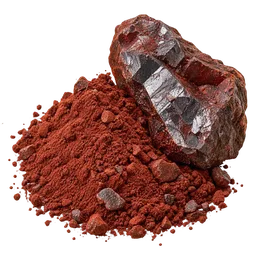
Iron
Best for
Build healthy red blood cells
Likely strong benefit 2–52 weeks 18 meta-analyses, n=87.7k #1 of 12 studied
- 47 papers
- 4 of 75 outcomes
- 4 positive
- 3 severe, 2 major interactions
Iron provides a proven strong benefit for stamina and red-blood-cell formation in people with low iron, supporting daily energy and physical functioning when deficiency limits oxygen delivery.
Median effective dose, most-studied outcomes
- Support oxygen delivery to your tissues 60 mg 4–52 wk
- Restore iron stores 80 mg 4–52 wk
- Have less fatigue 508 mg 4–12 wk
Risk, worst reported severity
- Serious adverse events (any) severe
- Altered neurodevelopment / long-term neurodevelopmental impairment severe
- antineoplastic agents major
- metformin major
What iron actually does
| Outcome | Effect | Evidence | Dose | Time | Rank |
|---|---|---|---|---|---|
| Strong benefits 2 | |||||
| Build healthy red blood cells Likely strong benefit Red blood cells carry oxygen, supporting the energy your body needs each day. | | 18 meta-analyses 28 papers · n=88k | — | 2–52 wk | #1 /12 |
| Feel less tired every day Proven strong benefit Everyday energy helps you get through daily tasks without feeling worn down. | | 2 meta-analyses 8 papers · n=876 | 14–1000 mg | 4–12 wk | #1 /31 |
| Modest benefits 2 | |||||
| Improve iron status in iron deficiency Proven modest benefit Iron status shows whether the body has enough iron to make oxygen-carrying hemoglobin. | | 15 meta-analyses 26 papers · n=51k | — | 4–52 wk | #1 /6 |
| Maintain iron status during pregnancy Likely real but unnoticeable Iron supports healthy red blood cells, which carry oxygen for the pregnant person and developing baby. | | 2 meta-analyses 3 papers · n=5.5k | 30–200 mg | 21–24 wk | — |
Effect tiers come from native-unit MCID where available, Cohen's d otherwise.
Dose, timing & forms
How much
For low iron stores and oxygen-delivery measures, oral protocols commonly center around 60 to 80 mg of elemental iron per day, then continue long enough to rebuild reserves rather than stopping when you first feel better.12 A 12-week trial that improved fatigue used 80 mg of elemental iron daily in menstruating women with low ferritin.1 Pregnancy protocols have used daily supplemental iron, but your clinician should set the amount because needs and test results vary during pregnancy.3
When and how long
Consistency matters more than chasing an instant energy lift. The fatigue trial used iron daily for 12 weeks, and the broader research follows participants for weeks to months because red-cell production and iron-store rebuilding take time.12 If iron upsets your stomach, discuss a schedule or formulation change with a clinician instead of simply quitting. Gastrointestinal side effects are common with ferrous sulfate.4
Forms & standardisation
Look for the amount of elemental iron on the Supplement Facts panel. That number lets you compare ferrous sulfate, ferrous fumarate, and ferrous gluconate products fairly, since the salt name and total tablet weight can mislead.2 Ferrous sulfate has extensive trial coverage, but it also has a well-documented tradeoff: constipation, abdominal discomfort, and other digestive side effects can limit adherence.4
Studied range, by outcome
| Outcome | Studied range | Median effective | Duration | Evidence |
|---|---|---|---|---|
| Support oxygen delivery to your tissues | — | 60 mg | 4–52 wk | 28 papers 17 sig. endpoints |
| Restore iron stores | — | 80 mg | 4–52 wk | 26 papers 15 sig. endpoints |
| Have less fatigue | 14–1,000 mg | 508 mg | 4–12 wk | 8 papers 13 sig. endpoints |
| Prevent iron-deficiency anemia | 1 mg/kg | — | 8–22 wk | 6 papers |
| Maintain iron stores during pregnancy | 30–200 mg | 60 mg | 21 wk | 3 papers 4 sig. endpoints |
| Maintain a healthy red-cell proportion | 18–80 mg | 50 mg | 9–16 wk | 3 papers 4 sig. endpoints |
Adverse events and drug interactions
Safety events
Drug interactions
Recommended Iron products
Real products that dose Iron where the research does, in a clean formulation, from brands we've audited. We only list ones we'd stand behind.
-

Bluebonnet
Extra-Strength Chelated Iron 27 mg
Well dosed 27 mg/day B formulaBrand audit 82/100
-

Thorne
Iron Bisglycinate
Well dosed 25 mg/day B formulaBrand audit 79/100
-

Solaray
Iron 50 mg
Well dosed 50 mg/day B formulaBrand audit 76/100
-

Kirkman
Iron Ferrochel 25 mg
Well dosed 25 mg/day A formulaBrand audit 57/100
-

Country Life
Easy Iron 25 mg
Well dosed 25 mg/day B formulaBrand audit 74/100
-

NOW
Double Strength Iron 36 mg
Well dosed 36 mg/day C formulaBrand audit 87/100
Chosen for adequate Iron dosing vs. the studied range, a clean formulation (grade A–C), and independent brand-quality audits. Not sponsored.
What this is and how it works
- Across 8 studies (n=876), iron improved stamina for daily tasks in people with low iron or depleted stores.1
- Forty-seven reviewed papers span 75 outcomes, including pregnancy, anemia, low ferritin, and broader iron-deficiency populations.
- Gastrointestinal side effects are common with ferrous sulfate, and high-dose iron requires individualized medical guidance.4
Iron is a dietary mineral your body uses to build hemoglobin, the protein inside red blood cells. Hemoglobin moves oxygen from your lungs to working tissues, which is why an iron shortfall often shows up as low stamina rather than an obvious warning sign.
Iron supplies the raw material for hemoglobin, so red blood cells can load up with oxygen in the lungs and deliver it to muscles and organs.2 Think of hemoglobin as a fleet of delivery vans: without enough iron, there are fewer seats for oxygen on every trip. Oral iron raises hemoglobin and iron measures across trials, although the response depends on whether low iron was present at the start.2
Bottom line
Iron makes sense when blood tests or a clinician point to low iron stores, iron-deficiency anemia, or a higher need such as pregnancy. It is not a casual supplement for tiredness alone, because fatigue has many causes and too much iron carries real risks. Get individualized advice before using high-dose iron, especially if you have ongoing symptoms, take medicines, or are pregnant.
Common questions
Does iron actually improve fatigue?
What type of iron supplement is best?
Should you take iron during pregnancy?
Sources
Sources
- 1. Effect of iron supplementation on fatigue in nonanemic menstruating women with low ferritin: a randomized controlled trial (2012) ↑
- 2. Oral iron supplementation: new formulations, old questions (2019) ↑
- 3. Daily oral iron supplementation during pregnancy (2015) ↑
- 4. Ferrous sulfate supplementation causes significant gastrointestinal side-effects in adults: a systematic review and meta-analysis (2015) ↑
Generated August 27, 2026
Related
More evidence for Iron
Evidence guide
Iron
NewThe Double-Edged Spark: How Iron Went From "Green Sickness" to Hepcidin-Guided Wisdom
Evidence guide
Apr 28, 2026
Ranking
Brain fog and mental clarity
NewBest Supplements for Brain Fog and Mental Clarity, Ranked by Evidence
Evidence ranking
Apr 4, 2026
Ranking
Memory and recall
NewThe 10 Best Supplements for Memory, Ranked by Evidence
Evidence ranking
May 9, 2026
Systematic review
Systematic review
NewIron for Cognitive Function: A Systematic Evidence Review
GRADE evidence review
Apr 8, 2026
Evidence map
Sleep
NewSleep: evidence map across 37 supplements
Evidence coverage map
Jul 30, 2026
Ingredient evidence
Ingredient evidence
NewVitamin B12
All scored outcomes
Aug 27, 2026