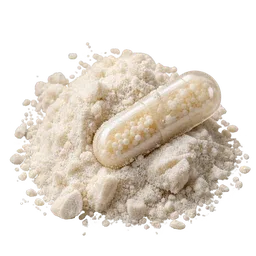
Probiotics
Best for
Ease irritable bowel syndrome symptoms
Likely strong benefit 8–16 weeks 1 meta-analysis, n=9k #3 of 7 studied
- 65 papers
- 8 of 123 outcomes
- 7 positive
- 7 severe, 2 major interactions
Probiotics likely provide strong benefit for easing IBS pain and urgency, while effects across other digestive outcomes depend heavily on the specific strain and goal.
Median effective dose, most-studied outcomes
- Ease abdominal bloating and gas 525 mg 8–9 wk
- Gut microbial community makeup 3 g 4 wk
Risk, worst reported severity
- bacteremia severe
- death (single mouse) severe
- lovastatin moderate
- valproic acid moderate
What probiotics actually does
Constipation can mean infrequent, hard, or difficult bowel movements. 29118557 · 31271261 · 38794741 +2
| Outcome | Effect | Evidence | Dose | Time | Rank |
|---|---|---|---|---|---|
| Strong benefits 1 | |||||
| Ease irritable bowel syndrome symptoms Likely strong benefit Irritable bowel syndrome can cause recurring belly pain and changes in bowel habits. | | 1 meta-analysis 4 papers · n=9.0k | 4500000000–10000000000 other | 8–16 wk | #3 /7 |
| Clear benefits 3 | |||||
| Relieve constipation Proven benefit Constipation can mean infrequent, hard, or difficult bowel movements. | | 2 meta-analyses 5 papers · n=4.6k | 0.1–10000000000 other | 4–12 wk | #2 /12 |
| Prevent diarrhea from antibiotics Likely benefit People taking antibiotics can develop diarrhea that interrupts treatment and daily life. | | 1 meta-analysis 3 papers · n=3.2k | 10000000000–100000000000 other | 3 wk | #1 /4 |
| Reduce diarrhea Proven benefit Diarrhea brings loose, watery stools that can disrupt daily life and cause dehydration. | | 1 meta-analysis 6 papers · n=1.1k | 4500000000–120000000000 other | 4–16 wk | #1 /16 |
| Modest benefits 1 | |||||
| Feel more comfortable after eating Proven modest benefit Digestive comfort means fewer gut symptoms getting in the way of everyday life. | | 1 meta-analysis 4 papers · n=2.4k | 3–100000000000 other | 4 wk | #1 /5 |
| Worth watching 2 | |||||
| Build a more diverse gut microbiome Promising early signal A diverse gut microbiome contains many types of bacteria that help process food. | | 8 RCTs 8 papers · n=461 | 1–50000000000 other | 4–26 wk | #4 /19 |
| Better vaginal health Promising early signal Vaginal health includes comfort, moisture, and a microbiome that helps protect against infection. | | 2 RCTs 2 papers · n=176 | 5–12000000000 other | 12–16 wk | — |
| Doesn't appear to help 1 | |||||
| Reduce bloating and gas Doesn't appear to help Bloating is a feeling of fullness or swelling in the belly, often with intestinal gas. | | 1 meta-analysis 4 papers · n=2.4k | — | 8–9 wk | — |
Effect tiers come from native-unit MCID where available, Cohen's d otherwise.
Dose, timing & forms
How much
For IBS, trials commonly use products providing about 4.5 to 10 billion CFU daily for 8 weeks or longer.1 Diarrhea and antibiotic-associated diarrhea studies span a much wider range, roughly 4.5 billion to 120 billion CFU daily, while constipation trials include doses from 100 million to 10 billion CFU daily.234 CFU means colony-forming units, a count of live organisms, but a bigger number does not automatically mean a better product because the strain drives the effect.5
When and how long
Use probiotics daily and judge them over the time frame studied, rather than taking them only when your stomach feels off. Diarrhea research often follows people for days to several weeks, while IBS trials commonly run 8 to 16 weeks.13 If you use one alongside an antibiotic, separate the doses by a few hours to reduce direct exposure of the live organisms to the drug.2
Forms & standardisation
Choose a label that lists the full strain name and the CFU amount through the expiration date, not only the amount at manufacture.5 The best-supported products are strain-specific preparations tested for a particular goal, rather than generic multi-strain blends with no matching human trial.124 Refrigeration is not a universal quality signal. Follow the storage instructions for that exact product.5
Studied range, by outcome
| Outcome | Studied range | Median effective | Duration | Evidence |
|---|---|---|---|---|
| Broaden your gut microbe mix | 1–3 g | — | 4–26 wk | 7 papers |
| Ease abdominal bloating and gas | 525 mg | 525 mg | 8–9 wk | 4 papers 1 sig. endpoint |
| Ease stomach and bowel discomfort | 3 g | — | 4 wk | 3 papers |
| Gut microbial community makeup | 3 g | 3 g | 4 wk | 3 papers 1 sig. endpoint |
Adverse events and drug interactions
Safety events
Drug interactions
What this is and how it works
- Across 4 studies (n=8,970), probiotics improved IBS pain and urgency; a precise effect size was not reported here. 1
- The evidence reviewed here spans 65 papers and 123 outcomes across digestive conditions and populations.
- Benefits are strain-specific, so results for one probiotic product do not establish benefits for the entire category. 5
Probiotics are live microorganisms, usually bacteria or yeasts, that you take in foods or supplements. Think of them as temporary guests in your gut, not permanent new tenants. A useful product names its genus, species, and strain, such as Lactobacillus rhamnosus GG, because that full name tells you what researchers actually tested.5
Probiotics work like a neighborhood watch at the gut lining: selected strains compete with unwanted microbes for space and food, produce compounds that change the local environment, and communicate with the gut's immune cells.5 Those actions can influence stool consistency, the gut barrier, and signals that shape pain and urgency, which fits the stronger results in diarrhea, constipation, and IBS.134
Bottom line
Probiotics are worth considering if you want targeted support for IBS symptoms, constipation, an acute diarrhea episode, or diarrhea during antibiotics.1234 Pick a product tied to your goal and reassess after a fair trial, since broad claims about "gut health" hide major strain-to-strain differences.5 Skip self-treatment and speak with a clinician first if you are severely ill, significantly immunocompromised, or have a central line because rare serious infections have occurred in high-risk people.6
Common questions
Do probiotics actually help IBS?
Should you take probiotics with antibiotics?
How long do probiotics take to work?
Do probiotics help bloating and gas?
Can everyone take probiotics safely?
Sources
Sources
- 1. Efficacy of probiotics in irritable bowel syndrome: a systematic review and meta-analysis (2014) ↑
- 2. Probiotics for the prevention of pediatric antibiotic-associated diarrhea (2017) ↑
- 3. Probiotics for treating acute infectious diarrhoea (2010) ↑
- 4. The effect of probiotics on functional constipation in adults: a systematic review and meta-analysis of randomized controlled trials (2014) ↑
- 5. The International Scientific Association for Probiotics and Prebiotics consensus statement on the scope and appropriate use of the term probiotic (2014) ↑
- 6. Harms reporting in randomized controlled trials of interventions aimed at modifying microbiota: a systematic review (2018) ↑
Generated August 27, 2026
Related
More evidence for Probiotics
Evidence guide
Probiotics
NewFrom Sour Milk to Precision Microbes: What Probiotics Can—and Can't—Do
Evidence guide
Apr 22, 2026
Ranking
Colds and Upper Respiratory Infections
NewThe 7 Supplements That Actually Help You Catch Fewer Colds
Evidence ranking
Apr 4, 2026
Ranking
Day-to-day anxiety
NewBest Supplements for Anxiety, Ranked by Clinical Evidence
Evidence ranking
Apr 4, 2026
Ingredient evidence
Ingredient evidence
NewBacillus Coagulans
All scored outcomes
Aug 27, 2026
Ingredient evidence
Ingredient evidence
NewBile Acid
All scored outcomes
Aug 27, 2026
Ingredient evidence
Ingredient evidence
NewChicory
All scored outcomes
Aug 27, 2026