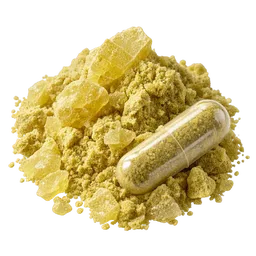
Quercetin
Best for
Lower systemic inflammation
Large effect, needs confirmation 1–12 weeks 2 meta-analyses, n=618 #3 of 83 studied
- 40 papers
- 2 of 91 outcomes
- 2 positive
- 5 severe, 9 major interactions
Quercetin shows a large effect on inflammation markers across the reviewed evidence, but the finding needs confirmation before it supports treatment decisions.
Median effective dose, most-studied outcomes
- Support overall antioxidant capacity 521 mg 1–17 wk
- Calm allergy signaling 50.555 mg/kg 5 wk
Risk, worst reported severity
- treatment-related carcinogenic lesions (kidney, urinary bladder, intestine) in male rats severe
- anaphylaxis severe
- tacrolimus major
- carbamazepine major
What quercetin actually does
| Outcome | Effect | Evidence | Dose | Time | Rank |
|---|---|---|---|---|---|
| Worth watching 1 | |||||
| Lower systemic inflammation Large effect, needs confirmation The immune system can drive body-wide inflammation that affects long-term health and how people feel day to day. | | 2 meta-analyses 9 papers · n=618 | — | 1–12 wk | #3 /83 |
| Early research 1 | |||||
| Lower allergy reactivity Faint early signal Allergy reactivity is the body's response to allergens that can drive allergy symptoms. | | 1 meta-analysis 2 papers · n=37 | 1.11–100 mg | 5–12 wk | #5 /9 |
Effect tiers come from native-unit MCID where available, Cohen's d otherwise.
Dose, timing & forms
How much
The most useful human trial context sits around 150 to 1,000 mg daily for inflammation-related and antioxidant outcomes, usually taken consistently for days to weeks rather than as a one-off dose.1 Antioxidant-capacity studies span a wide 42 to 1,000 mg daily, with many protocols lasting roughly six weeks, but positive results do not appear in every study.1 Because the inflammation finding remains worth watching rather than established, resist the urge to treat a higher dose as a better dose.1
When and how long
Consistency matters more than a special clock time in the available protocols. Take it at the same time each day and follow the product instructions, since trials generally test daily use over about one to eight weeks, not occasional capsules.1 Taking a new supplement with food is often easier on the stomach, but the research does not establish one universal meal-timing rule for quercetin.1
Forms & standardisation
The label should name the exact quercetin form, not just say "plant flavonoids." Quercetin glycosides attach a sugar-like unit to the molecule, which changes absorption compared with plain quercetin, so do not assume equal milligram doses deliver the same amount into circulation.3 Choose a single-ingredient product with transparent dosing if you want to judge your own response clearly.
Studied range, by outcome
| Outcome | Studied range | Median effective | Duration | Evidence |
|---|---|---|---|---|
| Support overall antioxidant capacity | 42–1,000 mg | 521 mg | 1–17 wk | 7 papers 2 sig. endpoints |
| Support lower whole-body inflammation | 150–1,000 mg | — | 1–8 wk | 5 papers |
| Calm allergy signaling | 1.11–100 mg/kg | 50.555 mg/kg | 5 wk | 1 paper 3 sig. endpoints |
Adverse events and drug interactions
Safety events
Drug interactions
Recommended Quercetin products
Real products that dose Quercetin where the research does, in a clean formulation, from brands we've audited. We only list ones we'd stand behind.
-

Carlson
Quercetin 500 mg
Well dosed 500 mg/day A formulaBrand audit 83/100
-

Pure Encapsulations
Quercetin
Well dosed 1,000 mg/day A formulaBrand audit 78/100
-

Pure Encapsulations
Quercetin UltraSorb
Well dosed 600 mg/day A formulaBrand audit 78/100
-

Source Naturals
NutraDrops Quercetin
Well dosed 134 mg/day A formulaBrand audit 73/100
-

Swanson
Quercetin 475 mg High Potency
Well dosed 950 mg/day A formulaBrand audit 69/100
-

Nature's Truth
Ultra Quercetin 585 mg
Well dosed 585 mg/day A formulaBrand audit 66/100
Chosen for adequate Quercetin dosing vs. the studied range, a clean formulation (grade A–C), and independent brand-quality audits. Not sponsored.
What this is and how it works
- Across 9 studies (n=618), quercetin lowered inflammation markers across 21 endpoints, indicating a large early effect needing confirmation.1
- The review covered 40 papers and 91 outcomes, spanning multiple quercetin supplementation questions.
- Inflammation findings remain early and require stronger, better-controlled studies before clinical conclusions.
Quercetin is a flavonoid, a natural plant compound found in foods such as onions, apples, berries, capers, and tea. Food amounts and supplement amounts are very different, so a capsule is not the same thing as simply eating more produce.3
Quercetin interacts with signaling switches that tell immune cells when to release inflammatory messengers, including pathways linked with IL-6 and TNF-alpha. Think of it like turning down a building's oversensitive smoke alarm, rather than removing the source of every fire.1 It also affects the body's antioxidant defense network, though human studies show uneven changes in oxidative-stress markers.1
Bottom line
Quercetin is most interesting for people who want to experiment cautiously with a plant compound that shows an early signal for lower inflammation markers, not for people seeking a proven fix for allergies or chronic symptoms.1 Skip self-experimentation if you use medicines with major interaction risk, especially tacrolimus, carbamazepine, antidepressants, antipsychotics, or selexipag. Severe reactions have appeared in safety reports, so stop and get urgent care for signs of an allergic reaction.
Common questions
What does quercetin do in the body?
Is quercetin good for allergies?
What is the best form of quercetin?
Who should avoid quercetin supplements?
Sources
Sources
- 1. The effect of quercetin supplementation on markers of inflammation and oxidative stress: A systematic review and meta-analysis of randomized controlled trials (2021) ↑
- 2. Quercetin and upper respiratory tract infection: A randomized controlled trial (2012) ↑
- 3. Bioavailability of quercetin in man from orally ingested quercetin glycosides (1999) ↑
Generated August 27, 2026
Related
More evidence for Quercetin
Evidence guide
Quercetin
NewThe Onion's Secret: From "Vitamin P" to Senolytics—What Quercetin Really Does
Evidence guide
Apr 13, 2026
Ranking
High Blood Pressure
NewBest Supplements for Blood Pressure, Ranked by Clinical Evidence
Evidence ranking
Apr 4, 2026
Evidence map
Metabolic health
NewMetabolic health: evidence map across 82 supplements
Evidence coverage map
Jul 30, 2026
Ingredient evidence
Ingredient evidence
NewAnthocyanidins
All scored outcomes
Aug 27, 2026
Ingredient evidence
Ingredient evidence
NewAstaxanthin
All scored outcomes
Aug 27, 2026
Ingredient evidence
Ingredient evidence
NewBilberry
All scored outcomes
Aug 27, 2026