Best Supplements for Depression, Ranked by Clinical Evidence
77 supplements · 3 outcomes · 130 trials
Our #1 pick
The deepest evidence base of any depression supplement
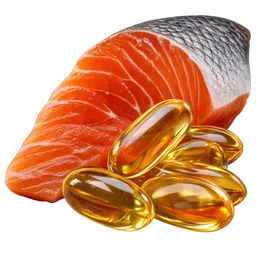
A 2019 meta-analysis of 26 randomized controlled trials found omega-3 supplementation produced a clear improvement in depression scores, with the benefit concentrated in EPA-rich formulations.6 A 2024 dose-response meta-analysis of 67 trials confirmed the finding and showed higher EPA doses produced larger effects.8 A 2025 network meta-analysis comparing multiple nutraceuticals head-to-head ranked omega-3 among the most effective, particularly when added to antidepressant therapy.10 One important nuance: DHA-dominant formulas showed essentially no benefit for depression, while EPA-pure or EPA-majority formulas consistently did.6 This distinction matters when you're shopping.
Depression is one of the most common reasons people turn to supplements, and one of the hardest conditions to study well. Depression scales are subjective, placebo response rates are notoriously high (sometimes 30 to 40 percent of people improve on sugar pills), and the line between "subclinical low mood" and "major depressive disorder" matters enormously for how you interpret any trial.
That said, a few supplements have genuine evidence behind them. Not wellness-influencer evidence. Not "a rat study showed promise" evidence. Real, replicated, placebo-controlled trial evidence in people with actual depressive symptoms, often pooled across multiple studies in systematic reviews.
The supplements that work best for depression tend to work through one of three pathways: reducing neuroinflammation (omega-3s, curcumin), supporting neurotransmitter production (SAM-e, St. John's Wort), or correcting nutritional gaps that worsen mood (magnesium, selenium). The best choice depends on your situation.
One thing this list will not do: pretend supplements replace therapy or medication for moderate-to-severe depression. If you're struggling to function, please talk to a clinician. These options work best for mild-to-moderate symptoms, as an add-on to existing treatment, or for people who want to try something before starting medication.
#1 deep dive
Why Omega-3 (EPA) takes the top spot
How it works
EPA reduces neuroinflammation by competing with arachidonic acid in brain cell membranes, shifting the balance away from pro-inflammatory signaling molecules and toward anti-inflammatory ones called resolvins.46 This matters because depression is increasingly understood as partly an inflammatory condition, with elevated inflammatory markers predicting both onset and treatment resistance.
Best for
People with mild-to-moderate depression, especially those with signs of inflammation (joint pain, metabolic issues, elevated inflammatory markers). Also well-suited as an add-on for people already taking an antidepressant who haven't fully responded.
Watch out
At doses above 2 g daily, omega-3 can increase bleeding risk in people on blood thinners (warfarin, aspirin, clopidogrel). Discuss with your doctor if you take anticoagulants.
Pro tip
Check the EPA-to-DHA ratio on the label. For depression specifically, you want a formula where EPA makes up at least 60% of the total omega-3 content. Many standard fish oil capsules are split roughly 50/50, which is not optimal for mood.
Evidence by outcome
Helps reduce symptom scores and sometimes raises the chance of major improvement.
Expected: ↓3.5 on PHQ-9 (meaningful at 5) · 12 weeks
Helps reduce the chance of developing meaningful depressive symptoms over time.
Curcumin (Turmeric Extract)
Likely helps
Works best when depression comes with inflammation
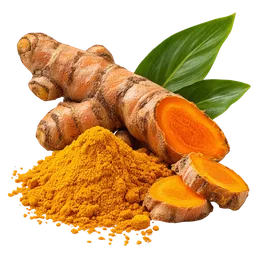
A 2025 network meta-analysis found curcumin shows a moderate improvement in depression scores, particularly strong when added to antidepressant therapy.1016 The best individual trial was a 12-month RCT in 227 people with type 2 diabetes and depression, where 1,500 mg daily of curcumin significantly lowered depression scores while also improving blood sugar, inflammation markers, and body weight.15 A 2025 meta-analysis specifically examining curcumin in chronic-disease-related depression confirmed benefits across multiple populations.16 The caveat: curcumin as monotherapy for depression (without an antidepressant) showed a trend toward benefit but didn't reach statistical significance in the network analysis.10
Full breakdown
St. John's Wort
Likely helps
Performs like an SSRI, with SSRI-level drug interactions
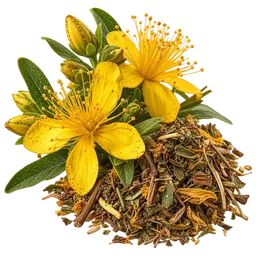
A 2016 systematic review of 35 trials involving nearly 7,000 patients found St. John's Wort significantly outperformed placebo for major depression, with response rates and symptom improvements comparable to SSRIs.3 A 2023 meta-analysis confirmed it performed similarly to SSRIs with fewer side effects.9 A 2025 meta-analysis specifically examining mild depression found response rates comparable to fluoxetine.10 The evidence is strong for mild-to-moderate depression. For severe depression, the data is limited and inconclusive.3 The big advantage over SSRIs is the side effect profile: significantly fewer reports of GI symptoms, sexual dysfunction, and neurological complaints.3
Full breakdown
Magnesium
Likely helps
The most accessible option, especially if you're running low
A 2023 meta-analysis of randomized trials in adults with depressive disorder found magnesium supplementation significantly reduced depression scores versus placebo, with a large pooled effect size.12 A 2025 meta-analysis of pharmacological interventions for milder depression included one magnesium trial showing significant improvement.10 The evidence is promising but thinner than omega-3 or curcumin. What makes magnesium compelling is that roughly half the population doesn't meet the recommended daily intake, and deficiency itself worsens mood.
Full breakdown

Lavender Oil (Silexan)
Likely helps
Primarily an anxiety treatment, with secondary mood benefits
Lavender's strongest evidence is for anxiety, where it has proven effects across multiple meta-analyses. For depression specifically, a 2021 meta-analysis found it reduced depression scores alongside anxiety in pooled trials.24 However, most of the depression data comes from trials where depression was a secondary outcome in anxiety studies.2526 A 2024 RCT in women on oral contraceptives found lavender improved mood disturbance, but this was a small trial in a specific population.26 The depression effect is real but smaller and less consistent than lavender's anxiety effect.
Full breakdown
Selenium
Likely helps
Most useful if you're deficient, which is more common than you think
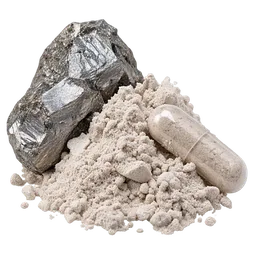
A 2022 meta-analysis found selenium supplementation significantly reduced depression scores versus placebo in interventional trials.30 Observational data also showed an association between higher dietary selenium intake and lower depression risk, with particularly strong findings for postpartum depression.30 The catch: most of the supplementation evidence comes from populations that may have had suboptimal selenium status to begin with. If your selenium intake is already adequate (common in people who eat Brazil nuts, seafood, or organ meats regularly), supplementation may offer diminishing returns.
Full breakdown
SAM-e
Likely helps
A methyl donor that works like an antidepressant, at a cost
The 2025 network meta-analysis ranked SAM-e among the effective nutraceuticals for depression, particularly as an add-on to antidepressant therapy.10 However, the largest head-to-head trial comparing SAM-e to escitalopram and placebo in 189 people with major depression found that neither SAM-e nor the antidepressant clearly separated from placebo at 12 weeks, though SAM-e showed transient superiority around weeks 8 to 10.27 The evidence is mixed as monotherapy but more promising as an augmentation strategy.
Full breakdown

Ginkgo Biloba
Proven benefit
Strong data in older adults with cognitive decline, less clear otherwise
A 2024 meta-analysis of RCTs found ginkgo significantly improved depression scores across multiple time points.2 A 2018 meta-analysis of four large trials in people with dementia showed clear improvements in depression, apathy, and sleep, alongside reductions in caregiver distress.3 A 2023 pilot trial in stroke patients found ginkgo improved depression scores alongside cognitive recovery.1 The evidence is strongest in older adults with cognitive impairment or cerebrovascular disease. For general adult depression without these conditions, the evidence is thinner and less direct.
Full breakdown
What doesn't work
Save your money on these
Despite widespread belief that vitamin D helps depression, the largest trial to date (a 5-year RCT with over 18,000 participants) found no reduction in depression risk or symptoms versus placebo. Smaller trials are mixed, and a meta-analysis specific to older adults found no benefit. If you're genuinely deficient, correcting that may help general well-being, but taking extra vitamin D specifically for depression is not supported by the weight of evidence.
5-HTP is a serotonin precursor, so the logic sounds straightforward: more building blocks should mean more serotonin. But the clinical evidence is razor-thin. The few existing trials are small, old, and poorly designed, with uncertain results. The theoretical mechanism is sound, but 'should work in theory' is not the same as 'works in practice.'
Rhodiola is heavily marketed as a mood-booster and adaptogen, but the depression-specific evidence is early-stage. A single trial found it helped when combined with sertraline, but that tells you the antidepressant worked, not necessarily that rhodiola did the heavy lifting. Independent evidence for rhodiola as a standalone depression treatment barely exists.
Ashwagandha has solid evidence for stress and anxiety, but depression is a different condition. The depression-specific data is early-stage with very few endpoints. If your low mood is really burnout-level stress and anxiety, ashwagandha might help with that. But for clinical depression with persistent sadness, anhedonia, and energy loss, the evidence isn't there.
Synergistic stacks
Combinations that work better together
The Inflammation-Depression Bridge
Omega-3 (EPA) + Curcumin
The Nutrient Foundation
Magnesium + Omega-3 (EPA)
Shortlist
A specific product for each pick
One well-dosed, cleanly-formulated option per ranked ingredient, from brands we've audited. Not sponsored.

For Omega-3 (EPA)
Nootropics Depot 70% DHA Fish Oil Softgels 1,000 mgWell dosed audit 87
For Curcumin (Turmeric Extract)
NOW Turmeric Curcumin GelsWell dosed audit 87
For Magnesium
Life Extension Magnesium (Citrate) 100 mgWell dosed audit 90
For Selenium
NutraBio Selenium 200 mcgWell dosed audit 90
For Ginkgo Biloba
Nootropics Depot Ginkgo Biloba PowderWell dosed audit 87
Buying guide
What to look for on the label
Form matters
- •For omega-3, check EPA content specifically. You want at least 60% EPA in the total omega-3 content. Many standard fish oil capsules are split roughly 50/50 EPA/DHA, which is not optimal for mood.
- •For curcumin, standard turmeric powder has almost zero bioavailability. Buy a formulation specifically designed for absorption, either a phospholipid complex, nanoparticle form, or one that includes piperine.
- •For St. John's Wort, look for extracts standardized to 0.3% hypericin. If drug interactions concern you, low-hyperforin preparations reduce the interaction risk while maintaining efficacy.
- •For magnesium, the form matters for tolerability. Glycinate is the gentlest on the stomach. Oxide is cheap but poorly absorbed and more likely to cause diarrhea.
Red flags
- •Any product claiming to 'cure' or 'treat' depression. Supplements cannot legally make disease claims, and companies that do are either ignorant of regulations or deliberately misleading you.
- •Proprietary blends that don't disclose individual ingredient amounts. You can't verify whether you're getting a clinically meaningful dose if the label says 'mood blend 500 mg' with six ingredients.
- •Products combining multiple depression supplements in one capsule at sub-clinical doses. A multi-ingredient formula with 200 mg of fish oil, 50 mg of curcumin, and 10 mg of saffron gives you inadequate doses of everything.
Quality markers
- •Third-party testing (USP, NSF, ConsumerLab). This verifies what's on the label is actually in the bottle, which matters particularly for fish oil (oxidation is common) and St. John's Wort (potency varies).
- •Published clinical trials using the specific branded ingredient. Silexan (lavender), EGb 761 (ginkgo), and specific curcumin formulations all have their own trial data.
- •Enteric coating for SAM-e (prevents degradation in the stomach) and blister-pack packaging (prevents moisture exposure).
The bottom line
The honest picture from the depression supplement data is that nothing here rivals a well-chosen antidepressant for moderate-to-severe depression. But for mild symptoms, for people who want to try something before medication, or as an add-on for people already on treatment, there are real options.
Omega-3s have the deepest evidence base and the clearest dose-response relationship, with EPA being the active component for mood. Curcumin and magnesium show promising effects, especially in people who also have inflammation or metabolic issues. St. John's Wort works but comes with serious drug interaction risks that limit who can safely take it.
Match your pick to your situation. Already on an antidepressant and want to augment? Omega-3 (EPA-dominant) has the best adjunctive data. Not on medication and dealing with mild symptoms? St. John's Wort is a reasonable first try if you're not on other medications. Dealing with depression alongside inflammation or metabolic problems? Curcumin addresses multiple pathways at once.
Give any of these at least 6 to 8 weeks before deciding whether they're working. Depression supplements have slower onset than most people expect, and early dropout is the most common reason people miss real benefits.
Frequently asked
Common questions
Can supplements replace antidepressants?
How long should I try a supplement before deciding it's not working?
Is it safe to combine depression supplements?
Does the form of omega-3 matter for depression?
Can I just eat more fish instead of taking omega-3 supplements?
Why isn't vitamin D on the ranked list?
Related
Go deeper on the top picks
Standalone evidence guides for the supplements at the top of this ranking, plus systematic reviews and combination breakdowns.
Ingredient evidence
Ingredient evidence
NewOmega-3
All scored outcomes
Aug 27, 2026
Ranking
Attention-Deficit/Hyperactivity Disorder
NewBest Supplements to Ease ADHD Symptoms in Children (2026)
Evidence ranking
May 17, 2026
Ranking
Arthritis and joint pain
NewBest Supplements for Arthritis and Joint Pain, Ranked by Clinical Evidence
Evidence ranking
Apr 4, 2026
Ranking
Migraines and Headaches
NewBest Supplements for Migraines and Headaches, Ranked by Clinical Evidence
Evidence ranking
Apr 4, 2026
Ranking
Brain fog and mental clarity
NewBest Supplements for Brain Fog and Mental Clarity, Ranked by Evidence
Evidence ranking
Apr 4, 2026
Ranking
Staying asleep through the night
NewBest Supplements to Stay Asleep Through the Night
Evidence ranking
Apr 4, 2026
Sources
- 1. Ginkgo biloba extract EGb 761 improves cognition and overall condition after ischemic stroke ↑
- 2. Effects and safety of Ginkgo biloba on depression: a systematic review and meta-analysis ↑
- 3. Treatment effects of Ginkgo biloba extract EGb 761 on behavioral and psychological symptoms of dementia ↑
- 4. A double-blind, randomized controlled trial of ethyl-eicosapentaenoate for major depressive disorder ↑
- 5. Omega-3 supplementation lowers inflammation and anxiety in medical students ↑
- 6. Meta-analysis of the effects of eicosapentaenoic acid (EPA) in clinical trials in depression ↑
- 7. Role of omega-3 fatty acids in the treatment of depressive disorders: a comprehensive meta-analysis ↑
- 8. A double-blind, randomized controlled clinical trial comparing EPA and DHA in depression ↑
- 9. Inflammation as a predictive biomarker for response to omega-3 fatty acids in major depression ↑
- 10. No Effect of Omega-3 Fatty Acid Supplementation on Cognition and Mood in Individuals over 70 ↑
- 11. Meta-analysis and meta-regression of omega-3 supplementation for depression ↑
- 12. Efficacy of omega-3 PUFAs in depression: A meta-analysis ↑
- 13. Omega-3 Fatty Acid Supplementation for Perinatal Depression: A Meta-Analysis ↑
- 14. Effects of n-3 PUFA Supplementation in the Prevention and Treatment of Depressive Disorders ↑
- 15. Effect of Long-term Supplementation With Marine Omega-3 Fatty Acids vs Placebo on Depression ↑
- 16. The effects of docosahexaenoic acid supplementation on cognition and well-being ↑
- 17. N-3 Polyunsaturated Fatty Acids in Elderly with Mild Cognitive Impairment ↑
- 18. Effects of long-chain omega-3 polyunsaturated fatty acids on reducing anxiety and depression ↑
- 19. Efficacy and safety of n-3 fatty acids supplementation on depression: a dose-response meta-analysis ↑
- 20. No Effects of Omega-3 Supplementation on Kynurenine Pathway, Inflammation, Depression ↑
- 21. Omega-3 fatty acid supplementation for depression in children and adolescents ↑
- 22. Efficacy of Pharmacological Interventions in Milder Depression: A Systematic Review and Meta-Analysis ↑
- 23. Comparative efficacy and tolerability of nutraceuticals for depressive disorder: A network meta-analysis ↑
- 24. Effects of Lavender on Anxiety, Depression, and Physiological Parameters ↑
- 25. The efficacy and safety of St. John's wort extract in depression therapy compared to SSRIs ↑
- 26. The effect of lavender on mood disorders associated with oral contraceptive use ↑
- 27. Lavender for anxiety and depression: systematic review ↑
- 28. Lavender aromatherapy effects on stress and mood ↑
- 29. Associations of Dietary Copper, Selenium, and Manganese Intake With Depression ↑
- 30. The role of selenium in depression: a systematic review and meta-analysis ↑
Generated April 4, 2026