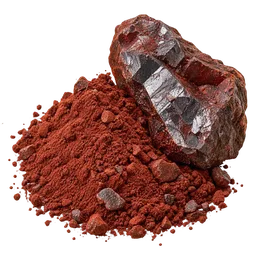
Iron for Cognitive Function: A Systematic Evidence Review
Does iron supplementation improve cognitive function and mental performance?
Evidence summary
Iron delivers a strong benefit for memory, learning, and fatigue in people with low iron or iron deficiency, but the gains are concentrated in deficiency-related symptoms rather than general cognitive boosting.
- Across 3 studies (n=589), iron reduced general fatigue in iron-deficient women and blood donors 2.
- Memory and learning improved mainly in participants with low iron, including delayed recall and immediate learning.
- Benefits were restricted to low-iron or iron-deficient groups; healthy infants and iron-replete adults lacked clear gains.
What we found
Iron can help thinking, but only in a fairly specific way. The best evidence says it may improve memory, learning, attention, and energy when low iron is already part of the problem. It does not look like a general brain booster, and it does not reliably make people think faster or improve child development in otherwise healthy infants.
The most sensible takeaway is this: consider iron for cognition only if iron deficiency is plausible or confirmed. If your iron levels are already fine, the evidence here gives little reason to expect a meaningful mental benefit.
Introduction
Iron matters for oxygen delivery, energy production, and brain function, so it is reasonable to ask whether supplementing it improves memory, focus, and mental performance.1245 The answer from the current analysis is not a simple yes or no. Iron helps cognition selectively, not universally.2456
The main pattern is that benefits cluster where iron status is plausibly limiting performance already.245 In adults, especially women with low ferritin or fatigue, iron supplementation is linked to modest gains in memory, learning, attention, and overall cognitive performance.245 In contrast, when iron status is not clearly a problem, or when supplementation is given during infancy in relatively low-risk populations, cognitive development does not seem to move much at all.6
That split between adult benefit and child nulls is the most useful way to read the evidence.156 It suggests baseline iron status, developmental timing, and the specific mental domain being measured matter more than the simple fact of taking iron. Memory and sustained attention look more responsive than processing speed, abstract reasoning, or school performance.56
Evidence 1 of 4
Deficiency-linked gains cluster in memory and global cognition
Iron demonstrates its most credible cognitive benefits in memory-related outcomes, and those gains look most relevant when deficiency is part of the story.245 Across the current analysis, general memory performance improved by a small but likely noticeable amount (d 0.45), and overall cognitive performance showed a similar gain (d 0.47). More specific memory tasks looked stronger: immediate memory and learning reached a moderate effect (d 0.74), and delayed recall was stronger still (d 0.94). Those larger recall effects suggest iron may matter more for storing and retrieving information than for making the whole brain uniformly faster.5
The adult trial-level evidence fits that interpretation, but it is narrower than a blanket cognition claim.5 In the small 16-week pilot trial in young women, the direct treatment comparison for memory improved numerically but did not reach conventional statistical significance, with memory Sten scores rising 0.67 in the iron groups versus 0.08 in controls.5 More importantly, participants whose ferritin actually rose showed better attention and a trend toward better memory than non-improvers, which points toward restored iron status, not simple pill-taking, as the active ingredient.5
These findings are encouraging rather than universal because some of the strongest memory estimates come from sparse evidence, even when the average effect looks substantial.5 General memory has high-certainty support overall, with no observed heterogeneity in the pooled estimate (I² 0%), meaning the included results line up well on average, although the prediction interval still crosses no effect, so future studies may not always show the same size benefit.5 Immediate and delayed recall look stronger in magnitude, but each currently rests on a single study summary, so replication would matter more here than for the broader memory signal.5
What this means
If iron is going to help cognition, memory is where the best case currently sits. The likely experience is not a dramatic mental transformation, but somewhat better learning and recall, especially in people whose low iron stores were dragging performance down.
General Memory Performance
Proven benefit Strong · 92Proven modest benefit
Single study: A 2014, d=0.22 (n=17+8)
▸ GRADE Assessment
| Domain | Rating | Reason |
|---|---|---|
| Risk of bias | No concern | 4 papers, majority low risk |
| Inconsistency | No concern | no concerns (I²=0%, consistency=100%, PI crosses null) |
| Imprecision | No concern | N=1473 meets OIS=400 |
| Publication bias | No concern | k=3 usable (< 10), cannot assess per Cochrane 10.4 |
| Indirectness | No concern | deferred to Phase 2 (#1546) |
| Overall certainty | High | |
Certainty is graded across the five GRADE domains, each able to downgrade the rating. How we grade evidence →
Overall Cognitive Performance
Proven benefit Strong · 75Proven modest benefit
▸ GRADE Assessment
| Domain | Rating | Reason |
|---|---|---|
| Risk of bias | No concern | 2 papers, majority low risk |
| Inconsistency | Serious | I²=94% (> 75%) |
| Imprecision | No concern | N=3551 meets OIS=400 |
| Publication bias | No concern | k=2 usable (< 10), cannot assess per Cochrane 10.4 |
| Indirectness | No concern | deferred to Phase 2 (#1546) |
| Overall certainty | Moderate | |
Certainty is graded across the five GRADE domains, each able to downgrade the rating. How we grade evidence →
Delayed Recall Memory
Likely helps Strong · 66Likely strong benefit
▸ GRADE Assessment
| Domain | Rating | Reason |
|---|---|---|
| Risk of bias | No concern | 1 papers, majority low risk |
| Inconsistency | No concern | single study, inconsistency N/A |
| Imprecision | Serious | single study (N=221), unreplicated |
| Publication bias | No concern | k=1 usable (< 10), cannot assess per Cochrane 10.4 |
| Indirectness | No concern | deferred to Phase 2 (#1546) |
| Overall certainty | Moderate | |
Certainty is graded across the five GRADE domains, each able to downgrade the rating. How we grade evidence →
Immediate Memory and Learning
Likely helps Strong · 67Likely benefit
▸ GRADE Assessment
| Domain | Rating | Reason |
|---|---|---|
| Risk of bias | No concern | 1 papers, majority low risk |
| Inconsistency | No concern | single study, inconsistency N/A |
| Imprecision | Serious | single study (N=399), unreplicated |
| Publication bias | No concern | k=1 usable (< 10), cannot assess per Cochrane 10.4 |
| Indirectness | No concern | deferred to Phase 2 (#1546) |
| Overall certainty | Moderate | |
Certainty is graded across the five GRADE domains, each able to downgrade the rating. How we grade evidence →
Evidence 2 of 4
Attention may improve, but speed and complex thinking are not reliably upgraded
Iron likely helps attention a little, but it does not look like a general executive-function upgrade.5 Attention and concentration improved by a small amount overall (d 0.45), which is in the same range as the memory effect.5 In the 16-week pilot RCT, attention Sten scores rose by 1.31 points with iron while controls declined by 0.54, a borderline result in the treatment comparison, and the improvement was clearer among ferritin improvers than non-improvers (1.24 vs -1.31, p=0.026). That pattern again suggests the benefit tracks correction of low iron status more than supplementation alone.5
Iron does not appear to make people broadly quicker thinkers.5 Processing speed was essentially unchanged across the available evidence (d 0.02), which is the kind of effect that is statistically and practically close to zero.5 The same caution applies to reasoning and problem solving: the pooled estimate is technically positive, but it is tiny (d 0.10), small enough that most people would be unlikely to notice any real-world difference.5
The inconsistency across these higher-order outcomes is too large to ignore.5 Heterogeneity, often summarized as I-squared, describes how much studies disagree beyond what chance would explain. Attention (I² 99.4%) and reasoning (I² 96.0%) show extreme between-study spread, which means the average result is not equally likely in every setting.5 The prediction intervals also cross no effect, so some future studies in similar populations could plausibly find little or no benefit even if the average pooled estimate stays positive.5
The weak negative signals for cognitive flexibility and visuospatial ability should not drive decisions.5 Those estimates sit around d -0.20, but they come from very low-certainty evidence and unreplicated data, so they are better read as unresolved noise than as proof of harm.5
What this means
Iron may sharpen sustained attention somewhat, especially when low ferritin improves. It is not a reliable way to think faster, solve harder problems, or boost every executive skill at once.
Attention and Concentration
Likely helps Strong · 73Likely modest benefit
Single study: A 2014, d=0.31 (n=17+8)
▸ GRADE Assessment
| Domain | Rating | Reason |
|---|---|---|
| Risk of bias | No concern | 6 papers, majority low risk |
| Inconsistency | Serious | I²=99% (> 75%) |
| Imprecision | No concern | N=4132 meets OIS=400 |
| Publication bias | No concern | k=5 usable (< 10), cannot assess per Cochrane 10.4 |
| Indirectness | No concern | deferred to Phase 2 (#1546) |
| Overall certainty | Moderate | |
Certainty is graded across the five GRADE domains, each able to downgrade the rating. How we grade evidence →
Reasoning and Problem Solving
Likely helps Strong · 72Likely real but unnoticeable
▸ GRADE Assessment
| Domain | Rating | Reason |
|---|---|---|
| Risk of bias | No concern | 4 papers, majority low risk |
| Inconsistency | Serious | I²=96% (> 75%) |
| Imprecision | No concern | N=7906 meets OIS=400 |
| Publication bias | No concern | k=4 usable (< 10), cannot assess per Cochrane 10.4 |
| Indirectness | No concern | deferred to Phase 2 (#1546) |
| Overall certainty | Moderate | |
Certainty is graded across the five GRADE domains, each able to downgrade the rating. How we grade evidence →
Processing Speed
Likely no effect Strong · 73Probably doesn't help
Single study: A 2014, d=0.16 (n=10+15)
▸ GRADE Assessment
| Domain | Rating | Reason |
|---|---|---|
| Risk of bias | Serious | 2/2 papers with RoB concerns |
| Inconsistency | No concern | no concerns (no data) |
| Imprecision | No concern | N=1121 meets OIS=400 |
| Publication bias | No concern | k=2 usable (< 10), cannot assess per Cochrane 10.4 |
| Indirectness | No concern | deferred to Phase 2 (#1546) |
| Overall certainty | Moderate | |
Certainty is graded across the five GRADE domains, each able to downgrade the rating. How we grade evidence →
Cognitive Flexibility / Set Shifting
Early data Very early · 20Faint negative signal
▸ GRADE Assessment
| Domain | Rating | Reason |
|---|---|---|
| Risk of bias | Very serious | 1/1 papers high risk of bias |
| Inconsistency | No concern | single study, inconsistency N/A |
| Imprecision | Serious | single study (N=1096), unreplicated |
| Publication bias | No concern | k=1 usable (< 10), cannot assess per Cochrane 10.4 |
| Indirectness | No concern | deferred to Phase 2 (#1546) |
| Overall certainty | Very low | |
Certainty is graded across the five GRADE domains, each able to downgrade the rating. How we grade evidence →
Visuospatial Ability
Early data Very early · 18Barely detectable negative
▸ GRADE Assessment
| Domain | Rating | Reason |
|---|---|---|
| Risk of bias | Very serious | 1/1 papers high risk of bias |
| Inconsistency | No concern | single study, inconsistency N/A |
| Imprecision | Serious | single study (N=562), unreplicated |
| Publication bias | No concern | k=1 usable (< 10), cannot assess per Cochrane 10.4 |
| Indirectness | No concern | deferred to Phase 2 (#1546) |
| Overall certainty | Very low | |
Certainty is graded across the five GRADE domains, each able to downgrade the rating. How we grade evidence →
Evidence 3 of 4
Child development and school-related outcomes are the clearest non-response
Iron does not appear to help child language or cognitive development in the populations captured here, and these null findings are among the most convincing results in the review.16 Language development was essentially unchanged overall (d 0.03), and cognitive development was the same story (d 0.05), both with high-certainty evidence.16 That is not a case of “maybe but underpowered.” The sample sizes were substantial, and the observed effects were so small they look like background noise rather than missed meaningful benefit.6
The strongest modern child trial was notably clean and notably negative.6 In healthy breastfed infants given low-dose iron from 4 to 9 months, Bayley-III cognitive scores at 12 months were 1.14 points lower with iron than placebo, and language scores were 0.75 points higher, but both confidence intervals comfortably included no real effect.6 On the Bayley-III, where standard scores are centered at 100 with a 15-point standard deviation, shifts of roughly 1 point are trivial and unlikely to reflect any noticeable developmental change.6
Older child data do not overturn that conclusion.1 In preschool children in Zanzibar, iron improved language development by 0.8 points on a 20-point scale, which is a modest shift in raw score terms, but the broader synthesized developmental picture remains null once the newer and larger child evidence is considered.16 That mismatch likely reflects context: the Zanzibar cohort had heavy infectious and nutritional burdens, whereas the infant trial studied a lower-risk population.16
School-related outcomes also showed no meaningful improvement overall.16 Academic achievement stayed effectively unchanged despite large combined samples and moderate-certainty evidence, reinforcing the idea that even when iron helps some underlying cognitive domains, that does not automatically translate into better grades or broad developmental acceleration.16
What this means
For routine developmental enhancement in otherwise healthy infants and children, iron is not supported here as a meaningful cognitive booster. Any benefit in childhood appears to depend heavily on context, especially whether iron deficiency is severe enough to be limiting development in the first place.
Language Development
No clear effect Strong · 94Doesn't appear to help
Single study: L 2024, d=0.03 (n=104+96)
▸ GRADE Assessment
| Domain | Rating | Reason |
|---|---|---|
| Risk of bias | No concern | 3 papers, majority low risk |
| Inconsistency | No concern | no concerns (no data) |
| Imprecision | No concern | N=762 meets OIS=400 |
| Publication bias | No concern | k=2 usable (< 10), cannot assess per Cochrane 10.4 |
| Indirectness | No concern | deferred to Phase 2 (#1546) |
| Overall certainty | High | |
Certainty is graded across the five GRADE domains, each able to downgrade the rating. How we grade evidence →
Cognitive Development
No clear effect Strong · 93Doesn't appear to help
Single study: L 2024, d=0.05 (n=104+96)
▸ GRADE Assessment
| Domain | Rating | Reason |
|---|---|---|
| Risk of bias | No concern | 2 papers, majority low risk |
| Inconsistency | No concern | no concerns (no data) |
| Imprecision | No concern | N=975 meets OIS=400 |
| Publication bias | No concern | k=2 usable (< 10), cannot assess per Cochrane 10.4 |
| Indirectness | No concern | deferred to Phase 2 (#1546) |
| Overall certainty | High | |
Certainty is graded across the five GRADE domains, each able to downgrade the rating. How we grade evidence →
Academic Achievement
No clear effect Strong · 76Doesn't appear to help
▸ GRADE Assessment
| Domain | Rating | Reason |
|---|---|---|
| Risk of bias | No concern | 3 papers, majority low risk |
| Inconsistency | Serious | I²=97% (> 75%) |
| Imprecision | No concern | N=2810 meets OIS=400 |
| Publication bias | No concern | k=2 usable (< 10), cannot assess per Cochrane 10.4 |
| Indirectness | No concern | deferred to Phase 2 (#1546) |
| Overall certainty | Moderate | |
Certainty is graded across the five GRADE domains, each able to downgrade the rating. How we grade evidence →
Evidence 4 of 4
Energy relief is real, and may explain part of the cognitive benefit
Iron likely reduces fatigue by a noticeable amount, and that probably explains some, but not all, of the cognitive benefit seen in adults.2347 Across pooled fatigue outcomes, the average effect was modest (pooled d 0.24), which translates to about a 3.8-point reduction on the PROMIS Fatigue T-score equivalent, a change large enough to be felt by many people rather than just detected statistically.234
The best individual trials show that this benefit is real but population-dependent.24 In non-anemic women with unexplained fatigue, 80 mg of elemental iron daily for 4 weeks reduced fatigue by about 0.95 points more than placebo on a 1-10 visual analogue scale, roughly a 10 percent shift across the full scale.2 In menstruating women with low ferritin and fatigue, 12 weeks of the same dose reduced CAPPS fatigue scores by 3.46 points on a 0-40 scale and the Multidimensional Assessment of Fatigue global index by 4.0 points on a 0-50 scale.4 Those are modest but believable improvements, consistent with the idea that iron can restore energy when low stores are contributing to tiredness.24
Fatigue relief is not guaranteed, even in iron-deficient states.3 In female blood donors with iron deficiency but no anemia after a single donation, 4 weeks of iron did not improve fatigue versus placebo on either a 0-10 VAS (-0.18 between-group difference) or the Fatigue Severity Scale (-0.06).3 That negative study matters because it shows low ferritin alone is not always enough to produce a quick symptomatic response.3
Fatigue probably acts as one pathway into better cognition, not the whole mechanism.2345 The heterogeneity here was very high (I² 90.3%), meaning some studies found clear symptom relief and others found little change, so the average hides both responders and non-responders.234 But the fact that memory effects can look stronger than fatigue effects, especially for recall tasks, suggests iron's cognitive role is not reducible to simply feeling more energetic.45
What this means
If low iron is making day-to-day fatigue worse, iron supplementation may help energy and concentration together. But better energy does not guarantee better cognition, and not every iron-deficient person will feel a clear change within a few weeks.
General Fatigue
Likely helps Strong · 70Likely benefit
- S 2012: Cohen's d 0.05 (95% CI -0.27 to 0.38) , VAS , n=145.
- F 2003: Cohen's d 0.27 (95% CI -0.07 to 0.60) , Visual analogue scale (10-point) , n=136.
- P 2012: Cohen's d 0.38 (95% CI 0.10 to 0.66) , Current and Past Psychological Scale (CAPPS) , n=198.
- Pooled random-effects Cohen's d 0.24 (95% CI 0.05 to 0.43).
▸ GRADE Assessment
| Domain | Rating | Reason |
|---|---|---|
| Risk of bias | No concern | 6 papers, majority low risk |
| Inconsistency | Serious | I²=90% (> 75%) |
| Imprecision | No concern | N=589 meets OIS=400 |
| Publication bias | No concern | k=4 usable (< 10), cannot assess per Cochrane 10.4 |
| Indirectness | No concern | deferred to Phase 2 (#1546) |
| Overall certainty | Moderate | |
Certainty is graded across the five GRADE domains, each able to downgrade the rating. How we grade evidence →
Across the Evidence
The central pattern is selectivity.2456 Iron helps where biology gives it a reason to help. When iron stores are low enough to plausibly limit oxygen delivery, mitochondrial energy production, or neurotransmitter function, memory and attention improve modestly.245 When those constraints are absent, or when development is being shaped by many stronger forces than iron alone, the effect largely disappears.6
Baseline iron status looks like the main effect modifier across the review.23456 The positive adult trials enrolled people with fatigue, low ferritin, or iron deficiency, and the cognitive pilot hinted that ferritin improvement tracked mental improvement better than hemoglobin change alone.5 By contrast, the infant trial was conducted in a relatively low-risk, largely non-anemic population and found no developmental gain despite months of supplementation.6 That contrast supports a threshold model: iron seems to restore function more reliably than it enhances already-adequate function.
The domain pattern also makes biological sense.5 Memory consolidation, learning, and sustained attention depend heavily on stable energy availability and neurotransmitter systems that are sensitive to iron status. Processing speed and abstract reasoning are broader constructs, shaped by many influences and often less responsive to short-term nutritional correction.5 That may explain why recall tasks show the strongest effects, attention shows smaller gains, and speed or complex executive functions remain flat.
High heterogeneity is the main reason not to oversimplify the adult results.2345 Heterogeneity means different trials are not estimating the same practical effect in the same kind of person. The very high I-squared values for attention, reasoning, and fatigue suggest that dose, duration, baseline ferritin, symptom burden, and population context all change the outcome materially.2345 When prediction intervals cross no effect, the right interpretation is not that the average result is false. It is that benefit is probably real on average, but not equally large, or even present, in every context.5
The child nulls sharpen the argument rather than weaken it.16 If iron were a broadly stimulating cognitive supplement, it should have moved language or cognitive development in these adequately powered child studies. It did not.6 That makes the adult deficiency-linked signal more credible, not less, because it shows the review is distinguishing responsive and non-responsive settings instead of labeling everything positive.1246
Discussion
The overall conclusion is moderately confident and fairly practical: iron demonstrates modest cognitive benefit, but mainly for people whose iron status is already impairing function.245 The best-supported targets are memory, learning, and attention, with little reason to expect faster processing speed, better school performance, or broad executive enhancement.56
What is supported is narrower than common marketing language.245 The current analysis supports iron as a corrective intervention in deficiency-linked states, not as a universal nootropic. In adults with low ferritin, fatigue, or related symptoms, the expected gain is modest but real.24 In healthy infants and children without clear deficiency burden, routine supplementation did not improve developmental cognition or language in this dataset.6
What would change confidence most is better replication in well-characterized deficient populations.5 Trials that stratify by ferritin, transferrin saturation, hemoglobin, baseline fatigue, and symptom burden would clarify who benefits most. Larger cognition-focused RCTs using the same memory and attention batteries would also help determine whether the stronger recall effects hold up or are inflated by sparse evidence.5
The main reasons for caution are not hidden flaws so much as real limits of generalization.2345 Several pooled adult outcomes show extreme inconsistency, some domains rely on sparse or inherited synthesis data, and some positive effects come from populations that were selected precisely because iron deficiency was plausible.245 That means the benefits should not be casually extended to people who are already iron replete.
Taken together, the evidence reviewed here supports a simple position: iron is worth considering when low iron is a believable contributor to fatigue or mental underperformance, and not worth expecting much from when iron status is already adequate.2456
Methodology
We searched PubMed for studies on iron and cognitive or mental performance, then screened the results to include controlled human studies that matched the review question. Seven randomized trials were included from a larger corpus of 139 records. We read each study, recorded who was studied, what form and dose of iron was used, how long treatment lasted, what outcomes were measured, and how large the effects were.1234567
We assessed evidence quality with GRADE and judged clinical importance against published meaningful-change thresholds. One important caveat is that GRADE was built for pharmaceutical interventions and tends to rate nutrition evidence conservatively. It automatically downgrades observational evidence and only rarely upgrades for large effects, usually above risk ratios of 2.0. Because of that, supplement evidence can read as “low certainty” in GRADE even when the practical signal is fairly consistent. Our confidence judgments therefore also weigh effect size, sample size, consistency, and whether the change is large enough to matter in real life.
Every cited study is publicly indexed on PubMed, so each claim can be checked directly. The main limitations are population dependence, sparse data for some cognitive domains, high between-study inconsistency in several pooled adult outcomes, and incomplete trial-level detail for some inherited synthesis estimates.
Study Selection
Characteristics of Included Studies
| Study | Design | N | Population | Dose | Duration | RoB |
|---|---|---|---|---|---|---|
| R 2001 FT | rct | 614 | clinical | low-dose daily | NR | Some |
| F 2003 FT | rct | 144 | clinical | 80 mg elemental iron daily for 4 weeks | four weeks | Low |
| Conflicts of interest: Study sponsored by Robapharm. FV and BF received financial support from Robapharm for a preliminary report. | ||||||
| S 2012 FT | rct | 154 | subclinical | 80 mg elemental iron daily for 4 weeks | 4 weeks | Low |
| Conflicts of interest: BF gave lectures to Pierre Fabre Médicament and Vifor Pharma; other authors declared no competing interests. | ||||||
| P 2012 FT | rct | 198 | clinical | 80 mg elemental iron daily for 12 weeks | 12 weeks | Low |
| Conflicts of interest: Study sponsored and funded by Pierre Fabre Médicament; authors report various consultancies, lecture fees and grants from Pierre Fabre and Vifor Pharma as described in manuscript. | ||||||
| A 2014 FT | rct | 32 | healthy | 60–80 mg elemental iron daily for 16 weeks | 16 weeks | Some |
| L 2024 FT | rct | 221 | healthy | 1 mg/kg daily from 4–9 months | Intervention from 4 to 9 months (5 months); follow-up assessments to 36 months | Some |
| M 2025 FT | rct | 96 | clinical | 18 mg iron + 90 mg vitamin C daily for 60 days | 60 days | Low |
| Conflicts of interest: All investigational products were provided by Orgenetics, Inc.; no other conflicts explicitly reported. | ||||||
Sources
- 1. R 2001. Effects of iron supplementation and anthelmintic treatment on motor and language development of preschool children in Zanzibar: double blind, placebo controlled study. (2001) ↑
- 2. F 2003. Iron supplementation for unexplained fatigue in non-anaemic women: double blind randomised placebo controlled trial. (2003) ↑
- 3. S 2012. Clinical evaluation of iron treatment efficiency among non-anemic but iron-deficient female blood donors: a randomized controlled trial. (2012) ↑
- 4. P 2012. Effect of iron supplementation on fatigue in nonanemic menstruating women with low ferritin: a randomized controlled trial. (2012) ↑
- 5. A 2014. A study of the effects of latent iron deficiency on measures of cognition: a pilot randomised controlled trial of iron supplementation in young women. (2014) ↑
- 6. L 2024. Effect of Low-Dose Iron Supplementation on Early Development in Breastfed Infants: A Randomized Clinical Trial. (2024) ↑
- 7. M 2025. Efficacy of Plant-Based Iron and Vitamin C in Adults With Iron Deficiency Anemia: A Randomized, Double-Blind Clinical Study. (2025) ↑
Related
Continue through the evidence
Ingredient evidence
Ingredient evidence
NewIron
All scored outcomes
Aug 27, 2026
Evidence guide
Iron
NewThe Double-Edged Spark: How Iron Went From "Green Sickness" to Hepcidin-Guided Wisdom
Evidence guide
Apr 28, 2026
Ranking
Brain fog and mental clarity
NewBest Supplements for Brain Fog and Mental Clarity, Ranked by Evidence
Evidence ranking
Apr 4, 2026
Ranking
Memory and recall
NewThe 10 Best Supplements for Memory, Ranked by Evidence
Evidence ranking
May 9, 2026
Evidence map
Sleep
NewSleep: evidence map across 37 supplements
Evidence coverage map
Jul 30, 2026
Ingredient evidence
Ingredient evidence
NewBacopa
All scored outcomes
Aug 27, 2026