Best Supplements for Deep, Restful Sleep (2026)
546 supplements · 17 outcomes · 5887 trials
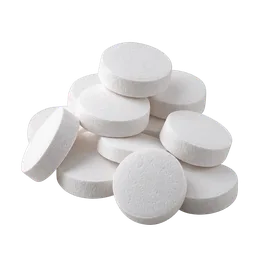
Our #1 pick
The strongest, most-studied nudge into sleep — 28 trials on quality alone.
Melatonin is the most evidence-dense sleep supplement in our dataset. It hits trust 100 across sleep onset latency (22 trials, n=4,280), sleep quality (28 trials, n=6,097), sleep efficiency (16 trials), and total sleep time (23 trials).1439 Effects are consistently real but modest — you'll fall asleep roughly 10–20 minutes faster with a small-to-moderate improvement in how solid your sleep feels. It also has strong evidence for reducing jet lag (trust 81, moderate effect) and daytime sleepiness (trust 99).16 One important caveat: melatonin may cause earlier waking — the data on "delay early waking" actually shows a likely-harmful signal (trust 68), meaning it shifts your whole sleep window earlier rather than just extending it.
If your nights look like this — tired but wired at 11:30, finally dozing off at 1, then bolt-awake at 3:47 for no reason — you're in good company.
The supplement industry loves selling you "sleep stacks" with 12 ingredients, each at a fraction of a useful dose, wrapped in a proprietary blend that makes it impossible to know what you're actually taking. Most of it is noise.
When you strip away the marketing and look at what clinical trials actually measured — sleep onset latency, total sleep time, PSQI scores, actigraphy data — a short list of supplements consistently moves the needle.1412 Below, we rank them by the strength and quality of the evidence, flag what genuinely doesn't work, and tell you where the data gets shaky so you can make your own call.
#1 deep dive
Why Melatonin takes the top spot
How it works
Melatonin is the hormone your brain releases when it gets dark, signaling that it's time to wind down. Taking it orally amplifies that signal — like dimming the lights in your brain's control room so the whole building starts shutting down for the night.14 It mainly shifts and reinforces your circadian clock, which is why it's especially effective for people whose body clock is out of sync with their schedule.
Best for
People whose main problem is falling asleep — especially night owls, shift workers, jet lag, or anyone whose body clock has drifted from their schedule. Also strong for people with sleep apnea on CPAP who still can't fall asleep.3
Watch out
Can cause next-day grogginess, vivid dreams, and interact with blood thinners, sedatives, and blood pressure medications. Avoid in pregnancy/lactation (insufficient data). Use caution with diabetes meds — melatonin can affect glucose tolerance.9
Pro tip
If you fall asleep fine but wake at 3–4 a.m., try a low-dose extended-release formulation instead of immediate-release. And seriously: start at 0.5–1 mg. The 10 mg gummies at CVS are absurd overkill for most people.
Evidence by outcome
Shortens the time between lying down and drifting off.
Expected: ↓13.4 on PSQI/actigraphy composite · 4 weeks
Helps sleep feel deeper, calmer, and less disrupted overall.
Expected: ↓2.9 on PSQI · 4 weeks
Helps turn time in bed into real sleep instead of tossing and lying awake.
Increases the total time you spend asleep during the night.
Helps you feel less drowsy and more awake during the day.
Helps poor sleep interfere less with focus, energy, and daily tasks.
Helps sleep and daytime function adjust faster after crossing time zones.
Helps you stay asleep with fewer or shorter wake-ups during the night.
Helps with the overall burden of trouble falling asleep, staying asleep, and poor nights.
Helps you sleep later into the morning instead of waking too soon.
Boosts the slow, restorative sleep linked to physical recovery.
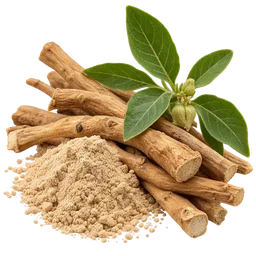
Ashwagandha
Proven benefit
The strongest sleep quality effect in our dataset — because it turns down stress first.
Ashwagandha's sleep quality score (d=1.16, trust 99) is the largest effect in our entire sleep dataset — substantially bigger than melatonin's.11213 A 2021 meta-analysis pooling 5 RCTs (n=400) confirmed significant improvements in overall sleep composites, though PSQI specifically didn't always reach significance.1 Beyond sleep, ashwagandha has proven strong benefits for reducing daily stress (trust 100) and anxiety (trust 98), which are likely the upstream drivers of its sleep effects.5 The trade-off: its sleep-specific outcomes beyond overall quality (sleep onset, total sleep time, efficiency) all sit at trust 38–45 with only 2 endpoints each — the sleep quality signal is deep but the mechanistic detail is still sparse.
Full breakdown

Saffron
Proven benefit
The mood-and-sleep herb that helps you sleep longer and wake less often.
Saffron has the broadest sleep evidence after melatonin, with positive signals across 7 sleep outcomes. It shows moderate effects for total sleep time (d=0.61, trust 56, 4 trials) and reducing night awakenings (d=0.57, trust 63).26 Sleep quality reaches trust 71 with a moderate effect, though the clinical importance is rated trivial by threshold analysis.2 A 2022 meta-analysis pooling insomnia RCTs confirmed improvements in PSQI scores and sleep onset but noted that overall insomnia severity was not statistically significant.2 One important finding: sleep efficiency shows no effect (trust 77, d=0.08), meaning saffron helps total sleep time without meaningfully changing the ratio of sleep-to-time-in-bed. Beyond sleep, saffron has proven benefits for depression (trust 99), blood sugar (trust 100), and lipid profiles.
Full breakdown
Magnesium
Proven benefit
The nervous-system calmer with solid sleep quality data and useful side benefits.
Magnesium shows proven modest benefit for sleep quality (d=0.29, trust 86, 6 trials including a 2025 meta-analysis).7 It also likely helps with insomnia severity (trust 71, 6 endpoints) with a trivial-to-small effect. The picture gets thin beyond those two outcomes — sleep onset latency, total sleep time, and sleep efficiency are all at trust 24 or below with only 2–3 endpoints each.15 Where magnesium really shines is the side-benefit profile: proven effects on blood pressure (trust 100), blood sugar (trust 98), depression (trust 81), and inflammation (trust 90). It also has evidence for reducing nighttime leg cramps (trust 80), which makes it particularly useful for people whose sleep is disrupted by restless legs or cramping.
Full breakdown

Valerian
Proven benefit
The classic herbal sleep aid — strong on quality, useless for onset.
Valerian's sleep quality evidence is surprisingly strong — trust 95 from 8 studies with a proven (though trivial-by-threshold) improvement on PSQI scores.811 One polysomnography study confirmed increased deep sleep and improved sleep architecture.11 Here's the interesting part: valerian shows likely no effect on sleep onset latency (trust 56, d=0.02), making it nearly the opposite of melatonin.8 Where melatonin helps you fall asleep, valerian seems to help the quality of sleep once you're there. Total sleep time data is early (trust 45) but suggests a moderate effect from 2 studies. The evidence is thinner than melatonin's — most outcomes rely on 1–4 endpoints.
Full breakdown
L-Theanine
Early data
Quiets a racing mind without sedation — promising but still early.
L-theanine's sleep evidence is promising but still entirely preliminary — no outcome reaches the "helps" verdict. Sleep quality has the best signal (d=0.53, trust 37, 4 endpoints), followed by sleep onset latency (d=0.50, trust 27, 2 endpoints).10 One interesting finding: a reduction in sleep medication use (d=0.45, trust 21) hints that theanine might help people rely less on sleep drugs, though this is from a single study. The evidence base is thin — mostly 1–4 endpoints per outcome. What theanine has going for it is a clean safety profile and a mechanism that's biologically plausible (alpha-wave promotion, GABA modulation). It's not a proven sleep aid yet, but it's a reasonable low-risk experiment.
Full breakdown
What doesn't work
Save your money on these
GABA is your brain's main calming neurotransmitter, which makes it sound perfect for sleep. The problem: we have only 1–2 tiny studies per sleep outcome, all with trust scores under 21. Scientists still debate how much oral GABA even crosses the blood-brain barrier. The marketing is way ahead of the evidence.
Glycine went viral in biohacker circles after a few small Japanese studies. Our data shows one study with a trust score of 21 and no clear effect on sleep quality. The internet enthusiasm is running on anecdotes and a couple of small trials.
Popularized by Andrew Huberman's podcast, apigenin has zero sleep-specific endpoints in our dataset. The studies we have are exclusively about skin health. Chamomile tea might help you relax, but isolated apigenin as a sleep supplement is based on mechanism speculation, not clinical evidence.
Synergistic stacks
Combinations that work better together
Clock & Calm Stack
Melatonin + Magnesium
Stress-to-Sleep Stack
Ashwagandha + Saffron
Shortlist
A specific product for each pick
One well-dosed, cleanly-formulated option per ranked ingredient, from brands we've audited. Not sponsored.

For Melatonin
Life Extension Melatonin 3 mgWell dosed audit 90
For Ashwagandha
Nootropics Depot Ashwagandha Extract 250 mgWell dosed audit 87
For Saffron
Swanson Saffron ExtractWell dosed audit 69
For Magnesium
Life Extension Magnesium (Citrate) 100 mgWell dosed audit 90
For Valerian
Solaray Valerian 470 mgWell dosed audit 76
For L-Theanine
NutraBio L-TheanineWell dosed audit 90
Buying guide
What to look for on the label
Form matters
- •Melatonin: Immediate-release for falling asleep; extended-release if you fall asleep fine but wake mid-night. 0.5–3 mg is plenty — the 10 mg gummies are marketing, not science.
- •Magnesium: Glycinate or citrate absorb well. Oxide is mostly a laxative. "Magnesium threonate" is marketed for brain penetration but sleep-specific evidence is thinner than generic forms.
- •Ashwagandha: Standardized root extracts (KSM-66, Sensoril) are what the trials used. Avoid vague "proprietary blends" that don't state withanolide content.
- •Saffron: Must be standardized *Crocus sativus* extract (affron is the most-studied brand). Cheap "saffron" colorants are not the same molecule.
- •Valerian: Standardized for valerenic acid. The smell is normal and actually correlates with potency.
Red flags
- •"Proprietary blend" sleep formulas where you can't tell if you're getting 0.5 mg or 50 mg of any ingredient.
- •Products combining stimulants (caffeine, synephrine) with sleep ingredients in the same capsule and promising 24-hour energy *and* perfect sleep.
- •Claims that any supplement will "cure insomnia" or replace your medications. The best evidence in our dataset shows modest improvements, not miracles.
- •Sleep gummies with 10+ mg melatonin. Studies show 0.5–3 mg is the effective range — more causes next-day grogginess without better sleep.
Quality markers
- •Third-party testing seals (NSF, USP, Informed Choice) or documented independent purity testing.
- •Clear labels stating exact doses, plant parts (root vs. leaf for ashwagandha), and standardization percentages.
- •Doses that match clinical trial ranges. If a product has 5x the studied dose, that's not "extra strength" — it's untested territory.
The bottom line
If you zoom out from the marketing and just look at the numbers, a clear pattern emerges.
Melatonin is the undisputed winner for falling asleep faster — nothing else comes close on evidence volume or consistency. Ashwagandha has the single largest effect on sleep quality in our entire dataset, but it works through stress reduction, not sedation, so it takes weeks and helps most when anxiety is the root cause. Saffron and magnesium offer solid, moderate-evidence support for different aspects of sleep — saffron for total sleep time and night awakenings, magnesium for overall quality and the bonus of leg cramp relief. Valerian is the dark horse: strong subjective quality data but zero help with onset. L-theanine is promising but still early.1278
None of these turn bad habits into great sleep. But if you've already tackled the basics — consistent bed/wake times, no screens in bed, caffeine curfew by early afternoon, dark cool room — then the right supplement can realistically deliver a 10–20% improvement that turns "tolerable" nights into genuinely restorative ones.
Start with one supplement. Give it 2–4 weeks at a clinical dose. Track your sleep (even a simple journal works). If it's not clearly helping, stop and try the next one on the list. Your biology will tell you what works — the data just narrows down where to start.
Frequently asked
Common questions
What is the single best supplement for falling asleep faster?
Which supplement helps you stay asleep through the night?
Is it safe to take melatonin every night long-term?
Can I combine magnesium and melatonin for sleep?
Does valerian root actually work for sleep?
Why isn't GABA on this list?
Related
Go deeper on the top picks
Standalone evidence guides for the supplements at the top of this ranking, plus systematic reviews and combination breakdowns.
Ingredient evidence
Ingredient evidence
NewMelatonin
All scored outcomes
Aug 27, 2026
Evidence guide
Melatonin
NewThe Signal of Darkness: How Melatonin Went From Frog Skin to Flight Plans—and What That Means for Your Nights
Evidence guide
May 5, 2026
Ranking
Migraines and Headaches
NewBest Supplements for Migraines and Headaches, Ranked by Clinical Evidence
Evidence ranking
Apr 4, 2026
Ranking
Trouble Falling Asleep
NewBest Supplements to Fall Asleep Faster, Ranked by Clinical Evidence
Evidence ranking
May 27, 2026
Ranking
Staying asleep through the night
NewBest Supplements to Stay Asleep Through the Night
Evidence ranking
Apr 4, 2026
Systematic review
Systematic review
NewMelatonin for Sleep: A Systematic Evidence Review
GRADE evidence review
Jul 2, 2026
Sources
- 1. Effect of Ashwagandha (Withania somnifera) extract on sleep: A systematic review and meta-analysis (2021) ↑
- 2. Crocus Sativus for Insomnia: A Systematic Review and Meta-Analysis (2022) ↑
- 3. Effect of melatonin on insomnia and daytime sleepiness in patients with obstructive sleep apnea and insomnia (COMISA) (2024) ↑
- 4. Melatonin for Treatment-Seeking Alcohol Use Disorder patients with sleeping problems: A randomized clinical pilot trial (2020) ↑
- 5. A New Ashwagandha Formulation (Zenroot) Alleviates Stress and Anxiety Symptoms While Improving Mood and Sleep Quality (2025) ↑
- 6. Effect of saffron supplementation on sleep quality: A systematic review and meta-analysis of randomized controlled trials (2025) ↑
- 7. The effect of magnesium supplementation on sleep quality: a systematic review and meta-analysis (2025) ↑
- 8. Valerian for Sleep Problems: A Systematic Review and Meta-Analysis (2024) ↑
- 9. Melatonin use in children and adolescents with chronic insomnia: a systematic review, meta-analysis and clinical recommendation (2023) ↑
- 10. L-Theanine as a Functional Food Additive: Its Role in Disease Prevention and Health Promotion (2019) ↑
- 11. Effects of valerian on polysomnographic sleep in poor sleepers: a randomized placebo-controlled crossover study (2023) ↑
- 12. The effect of ashwagandha root extract on insomnia and anxiety: A double-blind, randomized, placebo-controlled study (2019) ↑
- 13. Efficacy and Safety of Ashwagandha Root Extract for Insomnia and Anxiety: A Double-blind, Randomized, Placebo-controlled Study (2020) ↑
- 14. Meta-Analysis: Melatonin for the Treatment of Primary Sleep Disorders (2013) ↑
- 15. The Effect of Magnesium Supplementation on Primary Insomnia in Elderly (2012) ↑
- 16. Melatonin reduces night blood pressure in patients with nocturnal hypertension (2000) ↑
Generated March 29, 2026