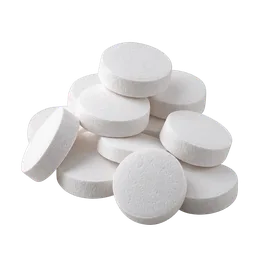
Melatonin
Best for
Fall asleep sooner
Proven benefit <1–52 weeks 8 meta-analyses, n=4k #1 of 20 studied
- 101 papers
- 9 of 168 outcomes
- 7 positive
- 8 severe
Melatonin provides a proven benefit for falling asleep faster, with the clearest evidence focused on sleep onset rather than staying asleep or waking refreshed.
Median effective dose, most-studied outcomes
- Sleep more soundly 5 mg 1–104 wk
- Spend more time asleep 5 mg <1–52 wk
- Fall asleep sooner 5.25 mg <1–52 wk
Risk, worst reported severity
- fatigue severe
- insomnia severe
- lipid modifying agents moderate
- metformin moderate
What melatonin actually does
Sleep quality reflects whether the night leaves you feeling well rested. 15914575 · 20712869 · 23129488 +26
Uninterrupted sleep helps the night feel more settled and restorative. 21120122 · 23129488 · 23432361 +15
| Outcome | Effect | Evidence | Dose | Time | Rank |
|---|---|---|---|---|---|
| Clear benefits 1 | |||||
| Fall asleep sooner Proven benefit A shorter wait for sleep can make bedtime feel less frustrating. | | 8 meta-analyses 28 papers · n=4.0k | — | 0–52 wk | #1 /20 |
| Modest benefits 3 | |||||
| Sleep that feels more restorative Proven modest benefit Sleep quality reflects whether the night leaves you feeling well rested. | | 10 meta-analyses 29 papers · n=6.1k | — | 1–104 wk | #2 /34 |
| Get more sleep each night Likely modest benefit More time asleep can help you meet the amount of sleep you need. | | 10 meta-analyses 25 papers · n=3.8k | 0.3–24 mg | 0–52 wk | #2 /9 |
| Wake up more refreshed Proven modest benefit Feeling alert in the morning can make the day easier to start. | | 3 meta-analyses 19 papers · n=1.4k | — | 0–17 wk | #1 /16 |
| Worth watching 2 | |||||
| Ease jet lag Promising early signal Jet lag can disrupt sleep and alertness after travel across time zones. | | 2 meta-analyses 9 papers · n=1.1k | 0.3–8 mg | 0–6 wk | #1 /3 |
| Reduce insomnia symptoms Promising early signal Less severe insomnia can mean fewer nights spent struggling with sleep. | | 6 RCTs 6 papers · n=364 | 0.5–20 mg | 2–17 wk | #1 /13 |
| Early research 3 | |||||
| Stay asleep through the night Studies contradict Uninterrupted sleep helps the night feel more settled and restorative. | | 7 meta-analyses 18 papers · n=816 | 0.3–24 mg | 4–52 wk | — |
| Spend more time in deep sleep Faint early signal Deep sleep is a stage of sleep linked with physical restoration. | | 2 RCTs 2 papers · n=24 | 0.3–9 mg | 4–12 wk | #4 /6 |
| Spend more time in REM sleep Not enough research REM sleep is the sleep stage most closely associated with vivid dreaming. | | 1 meta-analysis 2 papers · n=139 | 2–10 mg | 4–10 wk | — |
Effect tiers come from native-unit MCID where available, Cohen's d otherwise.
Dose, timing & forms
How much
For falling asleep faster, oral trials span a wide range, from 0.3 to 12 mg, with a median effective dose of 5.25 mg across the better-performing studies. 12 Sleep quality and total sleep time trials also commonly center around 5 mg, but their average improvements are smaller than the effect on sleep onset. 12 Study periods range from days to a year, although the middle of the evidence sits around four to eight weeks. 12
When and how long
Forms & standardisation
Most sleep research uses oral melatonin, but release speed matters. Immediate-release products fit the goal of falling asleep, while extended-release products aim to keep the signal going later into the night. 24 Check whether a label identifies the release type and the amount per serving, since a product marketed simply as melatonin does not tell you how quickly it releases its dose.
Studied range, by outcome
| Outcome | Studied range | Median effective | Duration | Evidence |
|---|---|---|---|---|
| Sleep more soundly | — | 5 mg | 1–104 wk | 28 papers 20 sig. endpoints |
| Spend more time asleep | 0.3–24 mg | 5 mg | <1–52 wk | 25 papers 17 sig. endpoints |
| Fall asleep sooner | 0.3–12 mg | 5.25 mg | <1–52 wk | 24 papers 20 sig. endpoints |
| Feel alert through the day | — | 5.25 mg | <1–17 wk | 19 papers 10 sig. endpoints |
| Stay asleep through the night | 0.3–24 mg | 5 mg | 4–52 wk | 18 papers 13 sig. endpoints |
| Shift sleep and wake times earlier | 0.3–6 mg | 3.15 mg | <1–6 wk | 6 papers 14 sig. endpoints |
| Sleep more easily through the night | 0.5–20 mg | 3 mg | 2–8 wk | 4 papers 4 sig. endpoints |
| Adjust to local time sooner | 0.5–8 mg | 5 mg | 1 wk | 3 papers 5 sig. endpoints |
| Support overnight physical recovery | 0.3–9 mg | 9 mg | 4–12 wk | 2 papers 1 sig. endpoint |
| Support healthy REM sleep | 2–10 mg | — | 4–10 wk | 2 papers |
| Support healthy stage N2 sleep | 0.3–5 mg | 2.65 mg | 12 wk | 1 paper 2 sig. endpoints |
Adverse events and drug interactions
Safety events
Drug interactions
Recommended Melatonin products
Real products that dose Melatonin where the research does, in a clean formulation, from brands we've audited. We only list ones we'd stand behind.
-

Life Extension
Melatonin 3 mg
Well dosed 3 mg/day A formulaBrand audit 90/100
-

Life Extension
Melatonin 10 mg
Well dosed 10 mg/day A formulaBrand audit 90/100
-

NutraBio
Melatonin
Well dosed 3 mg/day A formulaBrand audit 90/100
-

NOW
Melatonin 3 mg
Well dosed 3 mg/day A formulaBrand audit 87/100
-

Doctor's Best
Quick Melt Melatonin 2.5 mg
Well dosed 2.5 mg/day A formulaBrand audit 82/100
-

Pure Encapsulations
Melatonin 3 mg
Well dosed 3 mg/day A formulaBrand audit 78/100
Chosen for adequate Melatonin dosing vs. the studied range, a clean formulation (grade A–C), and independent brand-quality audits. Not sponsored.
What this is and how it works
- Across 28 studies (n=3,962), melatonin improved sleep-onset outcomes, with positive effects reported across 50 endpoints.1
- The evidence base reviewed here spans 101 papers and 168 outcomes, including sleep, circadian timing, and jet lag.2
- Benefits are strongest for delayed sleep timing and schedule disruption, while effects on sleep quality are smaller and less consistent.1
Melatonin is a hormone your brain releases as evening darkness arrives. Supplemental melatonin gives that nighttime signal a louder voice, which is why people use it when bedtime, travel, or shifting schedules throw their internal clock off course. 4
Melatonin attaches to MT1 and MT2 receptors that help set the timing of your sleep and wake rhythm. Think of it as changing the timestamp on your brain's daily calendar, telling it that night has arrived rather than sedating it like a switch. 4
Bottom line
Melatonin makes the most sense when your main problem is falling asleep later than you want, or when travel and schedule changes have scrambled bedtime. 13 Keep expectations realistic for staying asleep and waking refreshed, where benefits are smaller and studies disagree more. 12 Skip self-experimenting if it leaves you severely drowsy, dizzy, or troubled by vivid nightmares, and check with a clinician or pharmacist if you use regular medication.
Co-studied with


Common questions
How long does melatonin take to work?
Does melatonin help you stay asleep all night?
Is melatonin useful for jet lag?
Sources
Sources
- 1. Meta-Analysis: Melatonin for the Treatment of Primary Sleep Disorders (2013) ↑
- 2. Evidence for the Efficacy of Melatonin in the Treatment of Primary Adult Sleep Disorders (2017) ↑
- 3. The Prevention and Treatment of Jet Lag (2002) ↑
- 4. New Perspectives on the Role of Melatonin in Human Sleep, Circadian Rhythms and Their Regulation (2018) ↑
Generated August 27, 2026
Related
More evidence for Melatonin
Evidence guide
Melatonin
NewThe Signal of Darkness: How Melatonin Went From Frog Skin to Flight Plans—and What That Means for Your Nights
Evidence guide
May 5, 2026
Ranking
Deep, Restful Sleep
NewBest Supplements for Deep, Restful Sleep (2026)
Evidence ranking
Mar 29, 2026
Ranking
Migraines and Headaches
NewBest Supplements for Migraines and Headaches, Ranked by Clinical Evidence
Evidence ranking
Apr 4, 2026
Ranking
Trouble Falling Asleep
NewBest Supplements to Fall Asleep Faster, Ranked by Clinical Evidence
Evidence ranking
May 27, 2026
Ranking
Staying asleep through the night
NewBest Supplements to Stay Asleep Through the Night
Evidence ranking
Apr 4, 2026
Systematic review
Systematic review
NewMelatonin for Sleep: A Systematic Evidence Review
GRADE evidence review
Jul 2, 2026