Why does a 60-count bottle only last ten days?
Nov 15, 2026 · 2 min read · 4 sources
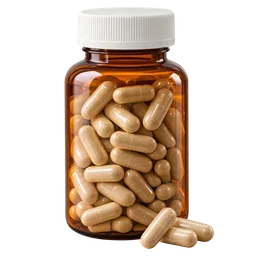
Divide the bottle count by capsules per serving, then by servings per day. That is how many days it lasts, and cost per day is the fair price to compare.
You bought what looked like a two-month bottle, then the directions told you to take a handful every day. Annoying, but usually not mysterious.
The big number on the front is how many capsules are inside, not how many days they last. Brands often need several capsules to fit the amount on the label, so a serving can be 3, 4 or 6 capsules. Before you buy, check three things on the back panel: Servings Per Container, how many servings the directions say to take each day, and the price per day.
The quick math is the real answer
Servings per day is the step people skip. One serving daily makes this bottle a 10-day supply. Two servings daily makes it 5 days.
This is not a special supplement rule. It is just label arithmetic. U.S. supplement labels use a Serving Size line and a Servings Per Container line on the Supplement Facts panel. FDA labeling rules say serving size for dietary supplements should be expressed in a form-appropriate term, such as tablets, capsules, packets or teaspoonfuls, and that Servings Per Container appears under Serving Size in the label format.1
So I would ignore the front-panel count until I have checked the serving size. A 60-count product can mean 60 days if the serving is 1 capsule. It can mean 30 days if the serving is 2 capsules. It can mean 10 days if the serving is 6 capsules. Same bottle count, totally different supply.
Why companies use big serving sizes
Sometimes the big serving is practical. You cannot fit a meaningful amount of bulky ingredients into one small capsule. Minerals, amino acids, fiber blends, creatine, collagen and multi-ingredient formulas often need multiple capsules to reach the amount printed in the Supplement Facts panel.
The key is that the amount listed is usually per serving, not per capsule. NIH’s consumer guidance says the Supplement Facts label lists active ingredients, the amount per serving, and other ingredients such as fillers, binders and flavorings. It also notes that the manufacturer suggests the serving size.2 That means a label showing 1,500 mg per serving with a serving size of 3 capsules is not giving you 1,500 mg in each capsule. It is giving you 1,500 mg across the full serving.
This is where people accidentally underdose. They take 1 capsule from a 6-capsule serving and assume they took the label dose. They did not. They took one sixth of it. That might be fine if you are testing tolerance or trying to stretch a bottle, but it is not the protocol the label describes.
What I would check before buying again
First, look for Servings Per Container. That is the fastest answer. NIH’s Dietary Supplement Label Database catalogs current and historical label information for products marketed in the United States, and its entries show the same basic fields consumers should look for: serving size and servings per container.3
Second, calculate cost per serving. A $30 bottle with 10 servings costs $3 per serving. A $45 bottle with 45 servings costs $1 per serving. The cheaper bottle on the shelf can be the expensive one in actual use.
Third, decide whether you truly need the full serving. For ordinary wellness products, following the labeled serving is usually the cleanest comparison. For products with a real safety ceiling, do not freeload extra capsules because the bottle looks small. FDA’s supplement manufacturing rules focus on quality control, packaging and labeling, but they do not mean every suggested serving is the right personal dose for every person.4
The red flags are specific: high-dose fat-soluble vitamins, iron, iodine, selenium, stimulant blends, and anything you are combining with prescription medication. In those cases, the mistake is not just buying a short bottle. It is treating a multi-capsule serving as harmless because each capsule looks small.
The better habit is boring and useful: read the back panel before the price tag. Count divided by serving size tells you how long the bottle lasts. Amount per serving tells you what dose you are actually buying.
Worth knowing
- The question is about label math, not ingredient efficacy.
- Manufacturers suggest serving size, and some ingredients have safety limits or medication interactions.
Common questions
Why did my 60-count bottle run out in ten days?
Is the dose listed per capsule or per serving?
What number should I use when comparing two supplements?
Sources
- 1. 21 CFR 101.36. Nutrition labeling of dietary supplements (2026) Primary label rule for serving size and servings per container.
- 2. Dietary Supplements: What You Need to Know (2026) Consumer explanation of amount per serving and manufacturer-suggested serving size.
- 3. Dietary Supplement Label Database (2026) Supports label-field examples and consumer lookup context.
- 4. 21 CFR Part 111. Current Good Manufacturing Practice in Manufacturing, Packaging, Labeling, or Holding Operations for Dietary Supplements (2026) Clarifies that labeling and manufacturing rules are not personal dosing proof.