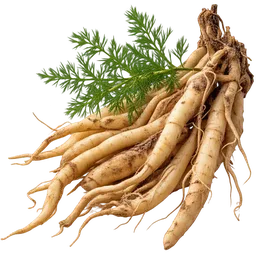
Asparagus racemosus
Best for
Less overall discomfort during menopause
Barely detectable 250 mg/day 24 weeks 1 study, n=40 #10 of 10 studied
- 1 papers
- 1 of 7 outcomes
- 1 positive
- 1 severe
Asparagus racemosus provides barely detectable relief for menopause symptoms, based on one small trial and insufficient evidence for reliable symptom improvement across outcomes.
Median effective dose, most-studied outcomes
- Make daily life easier in menopause 250 mg 24 wk
Risk, worst reported severity
- adrenal insufficiency / HPA axis suppression severe
- Cushingoid features (facial puffiness) moderate
What asparagus racemosus actually does
Menopause symptoms can affect comfort, sleep, mood, and daily life. 40347163
| Outcome | Effect | Evidence | Dose | Time | Rank |
|---|---|---|---|---|---|
| Early research 1 | |||||
| Less overall discomfort during menopause Barely detectable Menopause symptoms can affect comfort, sleep, mood, and daily life. | | 1 RCT 1 papers · n=40 | 250 mg | 24 wk | #10 /10 |
Effect tiers come from native-unit MCID where available, Cohen's d otherwise.
Dose, timing & forms
How much
For menopause-related daily-life symptoms, the single available 24-week protocol used 250 mg twice daily. The measured improvement was trivial, so this dose is a research reference point, not an established effective target.2
When and how long
The studied approach used a split daily schedule over 24 weeks, rather than occasional use when symptoms feel worse. The trial does not establish whether taking it with food, at a particular time of day, or in the evening changes results.2
Forms & standardisation
Look for a label that clearly identifies the product as Asparagus racemosus root, often sold as shatavari. The available trial base does not establish a best extract ratio, active-compound standard, or preparation method, so marketing claims about a uniquely superior form run ahead of the evidence.2
Studied range, by outcome
| Outcome | Studied range | Median effective | Duration | Evidence |
|---|---|---|---|---|
| Make daily life easier in menopause | 250 mg | 250 mg | 24 wk | 1 paper 1 sig. endpoint |
Adverse events and drug interactions
Safety events
What this is and how it works
- One trial (n=40) reported positive menopause-symptom results, but the effect size was not quantified. 2
- The reviewed evidence includes 1 paper spanning 7 outcomes, with early-tier evidence across menopause-related claims.
- Evidence applies only to the studied preparation, dose, and menopausal participants; broader effects remain unestablished.
Asparagus racemosus is a climbing plant commonly known as shatavari, with roots used in traditional preparations. It belongs to the Asparagus genus, but it is not the same thing as the green asparagus on your dinner plate.1
The available clinical research measured how menopause symptoms affected daily life, rather than identifying a confirmed biological pathway. Think of it like noticing a tiny change on a dashboard without yet knowing which wire in the engine caused it. That trial found only a trivial symptom effect, so no proven mechanism explains a meaningful benefit yet.2
Bottom line
Asparagus racemosus is reasonable only for someone who understands that the menopause evidence rests on one trial with a trivial effect. It is not a strong choice if you want a supplement with reliable symptom relief. People with medical conditions, hormone-related concerns, or regular medicines should speak with a qualified clinician before using it.
Common questions
Does Asparagus racemosus help with menopause symptoms?
How long does shatavari take to work?
What is Asparagus racemosus?
Sources
Sources
Generated August 27, 2026
Related