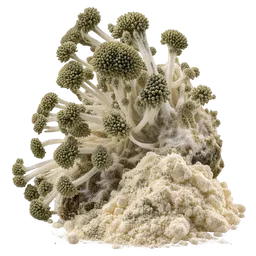
Aspergillus oryzae
What the trials found
Aspergillus oryzae does not have an established benefit for any specific health outcome in humans, because available evidence is insufficient for a reliable clinical conclusion.
- 1 papers
- 0 of 14 outcomes
Dose, timing & forms
How much
No evidence-based dose range stands out for Aspergillus oryzae because human outcome research is extremely limited. Do not treat doses used for fermentation-derived enzyme products as proven doses for gut health, metabolism, weight, or physical performance.
When and how long
No clinical protocol provides a reliable case for taking Aspergillus oryzae at a particular time of day, with meals, or on an empty stomach. If a product contains digestive enzymes alongside A. oryzae, its label instructions might focus on meals, but that is product-specific guidance rather than proof of a health benefit from A. oryzae itself.
Forms & standardisation
Check whether the label lists live or inactivated A. oryzae, a fermentation extract, or a named enzyme preparation. These forms serve different purposes, and evidence from food fermentation or enzyme manufacturing does not transfer automatically to a whole-organism supplement.1 A label should clearly state the form and amount rather than relying on vague claims about “koji” or “fermentation.”
What this is and how it works
- No clinical effect estimate or MCID comparison is available for Aspergillus oryzae supplementation 1.
- One paper reviewed here spans 14 outcomes, without establishing a consumer-relevant benefit.
- Evidence concerns enzyme preparations and does not define a validated supplement form, dose, or target population.
Aspergillus oryzae is a mold used to make koji, the starter behind foods such as miso, soy sauce, and sake. In fermentation, it produces enzymes that break complex food molecules into smaller building blocks.1 Supplement labels can refer either to the organism itself or to enzymes produced through fermentation, which are not interchangeable products.
In food fermentation, A. oryzae acts like a prep cook with molecular scissors, cutting starches and proteins into smaller pieces that other microbes and processes can use.1 Researchers have not established that swallowing an A. oryzae supplement produces a meaningful, repeatable effect in the human body. The available clinical evidence is too thin to connect this fermentation role to a specific health outcome.
Bottom line
Aspergillus oryzae has a legitimate history in food fermentation, but that history is not the same as clinical proof. Skip it if you want a supplement with a well-supported benefit or a clear dosing plan. It only makes sense to consider when you understand the exact product form and have a specific reason to use it.
Common questions
What is Aspergillus oryzae used for?
Is Aspergillus oryzae a probiotic?
How much Aspergillus oryzae should you take?
Sources
Sources
Generated August 27, 2026