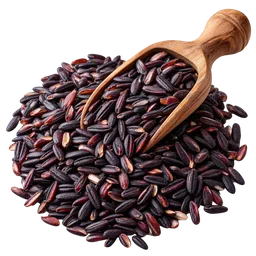
Black Rice
What the trials found
Black rice provides anthocyanin-rich whole-grain nutrition, but human evidence is insufficient to show noticeable improvements in memory, focus, or metabolic markers.
- 2 papers
- 0 of 18 outcomes
Dose, timing & forms
How much
There is no established supplemental dose for black rice. The limited clinical literature uses food-based preparations or varying black-rice-derived products, so it does not yet support a precise daily milligram target for attention, memory, metabolic health, or cardiovascular outcomes.12 If you want to include it, think of black rice as a whole-grain food rather than a measured treatment protocol.
When and how long
Research does not identify a best time of day to eat black rice or take a black rice extract. For a food-first approach, use it consistently in meals where you would otherwise choose another grain, rather than expecting an occasional serving to produce a noticeable short-term effect.1 The evidence also does not establish whether taking an extract with food changes outcomes.12
Forms & standardisation
The dark, intact grain is the most recognizable food form because the pigment-rich outer layer supplies its anthocyanins.1 Extract labels vary widely, and current human research does not establish a preferred extract, anthocyanin percentage, or pigment dose. Look for a product that clearly identifies black rice and its anthocyanin content, but do not mistake label precision for proven clinical benefit.12
What this is and how it works
- Across 2 reviewed papers, black rice lacked a quantified human effect size for memory, focus, or metabolic markers.1
- The reviewed evidence spans 18 outcomes, including cognition and metabolic health, but remains largely exploratory.12
- Human studies are too limited to establish reliable benefits across black-rice forms, doses, or populations.12
Black rice is a whole grain rice variety with a dark purple outer layer. That outer layer carries anthocyanins, natural pigments that largely disappear when grains are heavily refined.1 You eat it like brown rice, though it has a nuttier flavor and a firmer bite.
Its anthocyanins act less like a magic shield and more like extra hands on a busy cleanup crew, reacting with oxidizing molecules and influencing the cell signals that coordinate inflammation.12 Researchers are also exploring whether these compounds affect blood-vessel function and the way the body handles carbohydrate after a meal, but the clinical evidence is early.12
Bottom line
Black rice makes sense if you want a flavorful whole-grain swap with anthocyanin pigments that white rice does not provide.1 Skip the expectation that it will noticeably sharpen memory, improve focus, or transform metabolic markers: those outcomes need much larger and better controlled human trials before black rice earns that reputation.12
Common questions
Is black rice healthier than white rice?
Does black rice improve blood sugar?
What gives black rice its color?
Can you take black rice extract every day?
Sources
Sources
Generated August 27, 2026