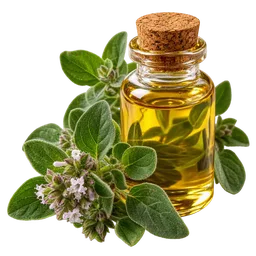
Carvacrol
What the trials found
Carvacrol has insufficient human evidence for a useful effect on immune, respiratory, or inflammation outcomes, despite laboratory anti-inflammatory signals in mouse cells.
- 2 papers
- 0 of 9 outcomes
- 1 severe, 2 major interactions
Risk, worst reported severity
- mortality/weakness in co-treatment group severe
- thalidomide major
- cyclophosphamide major
Dose, timing & forms
How much
A dependable consumer dose range has not been established. The reviewed evidence base is too small, and it does not provide enough human trial detail to connect a specific oral amount with a reliable immune, respiratory, or inflammation outcome.2 Avoid extrapolating doses from concentrated oregano products, lab experiments, or animal research.1
When and how long
There is no evidence-based time of day, meal timing, or schedule for carvacrol supplementation. Daily use, split doses, and taking it with food have not been validated for a specific consumer outcome in adequate human trials.2
Forms & standardisation
Carvacrol itself and oregano oil are not interchangeable products. If considering an oregano-derived product, a label should clearly state the amount of carvacrol rather than relying on a vague oregano-oil amount, but transparency does not prove effectiveness or safety.2 Concentrated products deserve extra caution because human dosing research is not established.
Adverse events and drug interactions
Safety events
Drug interactions
What this is and how it works
Carvacrol is an aromatic plant compound found most famously in oregano, and also in thyme and related herbs. It is often sold through oregano-oil products, but the amount of carvacrol can differ dramatically from one bottle to the next.2
In laboratory immune-cell research, carvacrol changes signals linked with cyclooxygenase-2 and PPAR-gamma, two molecular controls that influence inflammatory messaging.1 Think of those controls as knobs on a sound mixer: changing their settings can turn down some alarm signals in a cell, but that finding does not establish a meaningful effect in people.1
Bottom line
Carvacrol is interesting chemistry, not a well-proven supplement. Its lab-based anti-inflammatory signals are real, but human research is far too limited to promise a useful result for immune, respiratory, or inflammation goals.12 Skip self-directed use if you take prescription medicines, especially cancer therapies, until a clinician or pharmacist reviews the interaction risk.
Common questions
What is carvacrol used for?
Is carvacrol the same as oregano oil?
What is a typical carvacrol dose?
Can I take carvacrol with medications?
Sources
Sources
Generated August 27, 2026