Creatine
Best for
More muscle energy for training
Likely benefit 1–14 weeks 1 meta-analysis, n=477 #1 of 7 studied
- 101 papers
- 11 of 141 outcomes
- 8 positive
- 8 severe, 3 major interactions
Creatine likely benefits people performing repeated high-intensity exercise, with the strongest evidence for preserving power across repeated hard efforts rather than broad improvements across every outcome.
Median effective dose, most-studied outcomes
- Increase everyday strength 5.85 g 1–52 wk
- Generate more peak power 18 g <1–12 wk
- Build muscle size 12.5 g 1–52 wk
Risk, worst reported severity
- severe vertigo severe
- Serous (exudative) retinal detachment (bilateral) severe
- ketamine major
- immunosuppressants major
What creatine actually does
More muscle can support strength, movement, and the physical changes you train for. 19242554 · 24530883 · 25993883 +22
Speed and power drive explosive efforts when every second and pedal stroke count. 10362452 · 11842271 · 15994258 +25
Recovery helps your body feel ready for the next training session after hard exercise. 29722252 · 33631721 · 35218552 +4
Overall thinking brings together the mental abilities you use throughout the day. 25632150 · 28701493 · 36960692 +1
Focus helps you stay with a task instead of being pulled away by distractions. 21118604 · 25632150 · 38684388 +2
Overall sport performance reflects how well you perform across the demands of your sport. 30935142
| Outcome | Effect | Evidence | Dose | Time | Rank |
|---|---|---|---|---|---|
| Clear benefits 1 | |||||
| More muscle energy for training Likely benefit Muscle energy stores provide quick fuel for hard efforts during training. | | 1 meta-analysis 9 papers · n=477 | — | 1–14 wk | #1 /7 |
| Modest benefits 4 | |||||
| Build more muscle Proven modest benefit More muscle can support strength, movement, and the physical changes you train for. | | 5 meta-analyses 25 papers · n=6.7k | — | 1–52 wk | #1 /37 |
| Sprint faster with more power Likely modest benefit Speed and power drive explosive efforts when every second and pedal stroke count. | | 7 meta-analyses 28 papers · n=6.0k | 0.03–20000 mg/kg/day | 0–16 wk | #4 /29 |
| Get stronger Likely modest benefit Strength helps your muscles produce more force for lifting, carrying, and daily movement. | | 9 meta-analyses 40 papers · n=5.2k | — | 1–52 wk | #6 /41 |
| Remember more Proven modest benefit Memory helps you hold onto information and bring it back when you need it. | | 2 meta-analyses 5 papers · n=1.5k | 0.35–20 g | 1–6 wk | #2 /42 |
| Early research 5 | |||||
| Recover better after exercise Studies contradict Recovery helps your body feel ready for the next training session after hard exercise. | | 2 meta-analyses 7 papers · n=853 | — | 0–8 wk | #2 /37 |
| Improve overall thinking Faint early signal Overall thinking brings together the mental abilities you use throughout the day. | | 1 meta-analysis 4 papers · n=323 | 3–100 g | 1–208 wk | #5 /20 |
| Sharpen focus Faint early signal Focus helps you stay with a task instead of being pulled away by distractions. | | 1 meta-analysis 5 papers · n=307 | 3–20 g | 1–8 wk | #8 /31 |
| Maintain power across repeated sprints Not enough research Repeated-sprint power matters when short, hard efforts leave little time to recover. | | 1 meta-analysis 9 papers · n=280 | 3–26.2 g | 1–4 wk | — |
| Strengthen executive control Barely detectable Executive control helps you plan, shift gears, and manage impulses when tasks get demanding. | | 1 meta-analysis 2 papers · n=149 | 3–20 g | 6 wk | — |
| Doesn't appear to help 1 | |||||
| Perform better in sport Probably doesn't help Overall sport performance reflects how well you perform across the demands of your sport. | | 1 meta-analysis 1 papers · n=501 | — | — | — |
Effect tiers come from native-unit MCID where available, Cohen's d otherwise.
Dose, timing & forms
How much
For strength, lean mass, and repeated hard efforts, the practical maintenance dose is usually 3 to 5 g daily. Trials also commonly use a short loading phase of about 20 g/day, divided across the day for 5 to 7 days, then switch to maintenance. 1 Training studies often run for roughly 8 weeks or longer, so treat creatine as a daily habit alongside resistance training, not a one-workout booster. 1
When and how long
Consistency matters more than the clock. You can take creatine with a meal, after training, or whenever you are most likely to remember it, because benefits come from building and maintaining muscle stores over days and weeks. 1 If a loading dose upsets your stomach, split it into smaller servings through the day or skip loading and use a daily maintenance dose instead. 1
Forms & standardisation
Creatine monohydrate has by far the strongest human trial coverage for performance, strength, and lean mass. Look for a plain product labeled creatine monohydrate, ideally with third-party quality testing, rather than paying extra for alternative forms that lack the same depth of evidence. 1 Creatine dissolves better in warm liquid, but complete dissolution is not required for it to work. 1
Studied range, by outcome
| Outcome | Studied range | Median effective | Duration | Evidence |
|---|---|---|---|---|
| Increase everyday strength | — | 5.85 g | 1–52 wk | 40 papers 24 sig. endpoints |
| Generate more peak power | — | 18 g | <1–12 wk | 27 papers 6 sig. endpoints |
| Build muscle size | 3–20 g | 12.5 g | 1–52 wk | 17 papers 16 sig. endpoints |
| Preserve lean tissue | 5–20 g | 5 g | 1–52 wk | 9 papers 5 sig. endpoints |
| Maintain speed across sprints | 20–26.2 g | 20 g | 1–4 wk | 9 papers 4 sig. endpoints |
| Preserve fat-free mass | 2–20 g | 5 g | 1–14 wk | 7 papers 6 sig. endpoints |
| Restore strength after exercise | 2–20 g | 3 g | <1–5 wk | 6 papers 9 sig. endpoints |
| Recall information across tasks | 0.35–20 g | 11.1 g | 1–6 wk | 5 papers 8 sig. endpoints |
| Cover short distances faster | — | — | 4–16 wk | 5 papers |
| Hold focus through repetitive work | 3–20 g | 20 g | 1–8 wk | 5 papers 2 sig. endpoints |
| Handle daily tasks with steadier thinking | 3–40 g | — | 1–208 wk | 4 papers |
| Plan tasks and adapt to change | 3–20 g | 5 g | 6 wk | 2 papers 1 sig. endpoint |
| Power muscle effort and recovery | 4.8–20 g | — | 14 wk | 1 paper |
| Build all-around athletic ability | — | — | — | 1 paper |
Adverse events and drug interactions
Safety events
Drug interactions
Recommended Creatine products
Real products that dose Creatine where the research does, in a clean formulation, from brands we've audited. We only list ones we'd stand behind.
-

NutraBio
Creatine Monohydrate
Well dosed 5 Gram(s)/day A formulaBrand audit 90/100
-

NutraBio
100% Pure Creatine Monohydrate
Well dosed 5 Gram(s)/day A formulaBrand audit 90/100
-

Nootropics Depot
Creatine Monohydrate
Well dosed 5,000 mg/day A formulaBrand audit 87/100
-

NOW Sports
Micronized Creatine Monohydrate
Well dosed 4.2 Gram(s)/day A formulaBrand audit 87/100
-

NOW Sports
Creatine Monohydrate
Well dosed 20 Gram(s)/day A formulaBrand audit 87/100
-

Nootropics Depot
Creatine Monohydrate Instant
Well dosed 5,000 mg/day A formulaBrand audit 87/100
Chosen for adequate Creatine dosing vs. the studied range, a clean formulation (grade A–C), and independent brand-quality audits. Not sponsored.
What this is and how it works
- Across 9 studies (n=477), creatine improved power during repeated hard efforts; a numerical effect and MCID were not reported. 1
- The review covered 101 papers and 141 outcomes, with evidence strongest for exercise performance, strength, and lean mass.
- Creatine’s cognitive benefits remain modest, and overall athletic skill does not show a meaningful boost. 2
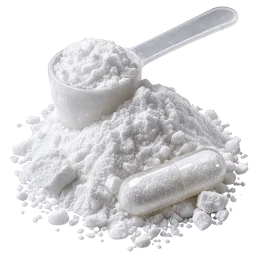
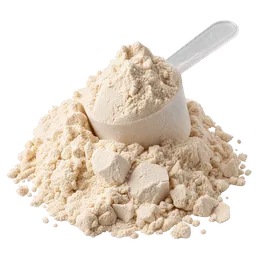
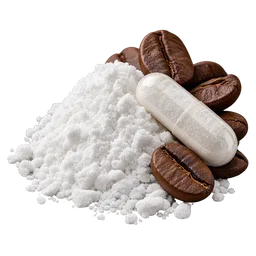
Creatine is a compound your body makes from amino acids, and you also get small amounts from foods such as meat and fish. Most supplemental creatine comes as a powder that raises the amount stored inside your muscles. 1
During a hard lift or sprint, muscle burns through its immediate fuel in seconds. Stored creatine acts like a spare battery pack, rapidly restoring that fuel so your next burst starts with more charge. 1 Brain cells use the same energy-buffer system, which gives researchers a plausible reason to study memory, though the human cognitive results remain smaller and less certain. 2
Bottom line
Creatine is a strong pick if you lift, sprint, or do repeated high-intensity work and want a small but real edge in strength, lean mass, and hard-effort output. 1 Memory results are interesting but modest, and evidence does not show a meaningful boost to overall athletic skill. 12 If you have kidney concerns, take medicines that affect kidney function, or have had a serious reaction to supplements, get individualized advice before using it. 1

Common questions
What does creatine actually do?
How long does creatine take to work?
Does creatine build muscle without training?
Does creatine improve memory?
Does creatine cause water-weight gain?
Sources
Sources
Generated August 27, 2026
Related
More evidence for Creatine
Evidence guide
Creatine
NewFrom Beef Tea to Brain Fuel: The Many Lives of Creatine
Evidence guide
Apr 16, 2026
Ranking
Body Fat Reduction
NewBest Supplements for Fat Loss, Ranked by Clinical Evidence
Evidence ranking
Apr 4, 2026
Ranking
Healthy Brain Aging
NewBest Supplements to Protect Brain Tissue as You Age (2026)
Evidence ranking
May 18, 2026
Ranking
Memory and recall
NewThe 10 Best Supplements for Memory, Ranked by Evidence
Evidence ranking
May 9, 2026
Systematic review
Systematic review
NewCreatine for Strength and Muscle Performance
GRADE evidence review
May 4, 2026
Evidence map
Focus & memory
NewFocus & memory: evidence map across 45 supplements
Evidence coverage map
Jul 30, 2026