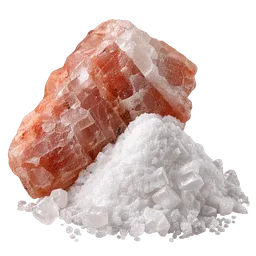
Potassium
Best for
Lower kidney stone risk
Large effect, needs confirmation 40–2800 mg/day 1–13 weeks 3 studies, n=98 #1 of 5 studied
- 15 papers
- 2 of 36 outcomes
- 2 positive
- 2 major interactions
Potassium provides a proven modest benefit for blood pressure, with additional promising evidence for potassium citrate in recurrent calcium kidney stones when urine citrate is low.
Risk, worst reported severity
- abdominal pain mild
- hyperkalaemia
- diuretics major
- ace inhibitors and arbs moderate
What potassium actually does
| Outcome | Effect | Evidence | Dose | Time | Rank |
|---|---|---|---|---|---|
| Modest benefits 1 | |||||
| Lower blood pressure Proven modest benefit Blood pressure is the force of blood against artery walls, and high levels strain the heart. | | 4 meta-analyses 9 papers · n=6.4k | 24–3900 other | 1–15 wk | #4 /82 |
| Worth watching 1 | |||||
| Lower kidney stone risk Large effect, needs confirmation Kidney stones form when minerals and other substances in urine collect into hard crystals. | | 4 RCTs 3 papers · n=98 | 40–2800 mg | 1–13 wk | #1 /5 |
Effect tiers come from native-unit MCID where available, Cohen's d otherwise.
Dose, timing & forms
How much
For stone-related urine chemistry, the reviewed trials studied 2,800 mg/day orally for up to 12 weeks.2 Blood pressure trials used widely different potassium amounts and commonly ran about four weeks, so there is no single self-directed dose that fits everyone.1 Because potassium can accumulate to dangerous levels, use a clinician's plan rather than chasing a high number on a supplement label.
When and how long
Consistency matters more than a special time of day. Stone studies assessed urine changes over weeks, not after an occasional dose, and blood pressure studies also used daily intake for several weeks.12 Take a potassium product exactly as directed, and do not double a missed dose. If a clinician prescribes potassium citrate, follow their instructions about meals, fluids, and repeat urine testing.
Forms & standardisation
Potassium citrate has the most direct relevance for calcium-stone prevention because citrate itself changes urine acidity and calcium handling.2 For blood pressure, the evidence evaluates higher potassium intake broadly, not one supplement brand or salt as a universal winner.1 Check whether a label lists elemental potassium and the salt form, and do not assume potassium chloride and potassium citrate serve the same purpose.
Studied range, by outcome
| Outcome | Studied range | Median effective | Duration | Evidence |
|---|---|---|---|---|
| Reduce calcium in urine to limit stones | 2,800 mg | — | 1–12 wk | 3 papers |
Adverse events and drug interactions
Safety events
Drug interactions
What this is and how it works
- Across 9 studies (n=6,361), potassium lowered both systolic and diastolic blood pressure numbers.1
- Fifteen papers reviewed here span 36 outcomes, with blood pressure evidence stronger than other reported benefits.
- Potassium citrate—not potassium generally—showed promise for recurrent calcium stones in people with low urinary citrate.2
Potassium is an electrolyte, a mineral that carries electrical signals your nerves, muscles, and heart use every minute. You get it from foods such as beans, potatoes, yogurt, fruit, and leafy greens, while supplements come in several salts with very different jobs.1
Think of potassium as a signal that tells the kidneys to release more sodium, like opening a pressure valve on a water system. That shift helps explain the small blood pressure reduction seen when potassium intake rises.1 Potassium citrate also makes urine less acidic and supplies citrate, which holds onto calcium before it can join crystal-building materials in the urinary tract.2
Bottom line
If your goal is a modest blood pressure improvement, prioritize potassium-rich foods and discuss supplements with a clinician if your intake is low.1 Potassium citrate is worth discussing for recurrent calcium stones when urine testing points to the right problem, but the promising stone evidence does not make it a DIY treatment.2 Skip self-prescribing if you have kidney problems or take medicines that can raise potassium.
Common questions
Does potassium lower blood pressure?
Can potassium citrate prevent kidney stones?
Is food potassium safer than a potassium supplement?
Sources
Sources
Generated August 27, 2026
Related
More evidence for Potassium
Ingredient evidence
Ingredient evidence
NewBeet nitrate
All scored outcomes
Aug 27, 2026
Ingredient evidence
Ingredient evidence
NewBlack Garlic
All scored outcomes
Aug 27, 2026
Ingredient evidence
Ingredient evidence
NewChokeberry
All scored outcomes
Aug 27, 2026
Ingredient evidence
Ingredient evidence
NewCocoa / Cacao
All scored outcomes
Aug 27, 2026
Ingredient evidence
Ingredient evidence
NewFlavan-3-ols
All scored outcomes
Aug 27, 2026
Ingredient evidence
Ingredient evidence
NewGarlic
All scored outcomes
Aug 27, 2026