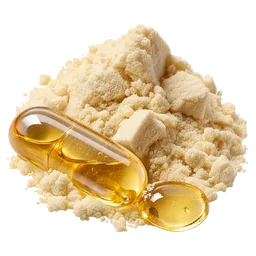
Lysophosphatidylcholine
What the trials found
Lysophosphatidylcholine does not appear to provide proven benefits for focus, memory, mood, sleep, inflammation, or hormonal support in consumers.
- 2 papers
- 0 of 6 outcomes
Dose, timing & forms
How much
No clinically established supplemental range exists for lysophosphatidylcholine. The limited evidence reviewed here does not provide a reproducible human protocol tied to a meaningful improvement in cognition, mood, sleep, hormones, or inflammation. That makes a label dose an experiment, not an evidence-based plan.
When and how long
No human trial pattern establishes a best time of day, meal pairing, or split-dose schedule for LPC. Taking it with food is a practical choice for a phospholipid-containing product, but that is not a demonstrated strategy for a specific outcome.1
Forms & standardisation
Do not assume that lecithin, phosphatidylcholine, alpha-GPC, citicoline, and LPC products work interchangeably. They differ in structure, digestion, and biological handling.1 If you encounter an LPC product, look for clear disclosure of the LPC species and concentration rather than a vague phospholipid blend.
What this is and how it works
- No quantitative effect estimate or noticeable-change comparison is established for the reviewed outcomes.1
- Two papers reviewed here span six outcomes, including cognition, mood, sleep, inflammation, and hormonal function.
- Biological functions of lysophosphatidylcholine do not establish effective supplement doses or consumer benefits.
Lysophosphatidylcholine, often shortened to LPC, is a phospholipid your body makes when it trims one fatty-acid tail from phosphatidylcholine. It circulates in blood attached to proteins and lipoproteins, and food or supplement products do not yet have the same human trial track record as more familiar choline ingredients.1
LPC helps shuttle fatty acids and choline-containing building blocks between cells, while also sending signals that influence immune and metabolic activity.1 Think of it as a delivery van whose cargo and destination change the message: the same molecule can participate in normal cell upkeep or inflammatory signaling depending on its chemical form and setting.1
Bottom line
LPC has interesting biology, but interesting biology is not the same as a useful supplement. Skip it if you want a proven option for focus, memory, mood, sleep, inflammation, or hormonal support. It currently fits best in clinician-guided or research-focused use, not a routine consumer stack.
Common questions
What is lysophosphatidylcholine used for?
Is lysophosphatidylcholine the same as phosphatidylcholine?
What dose of lysophosphatidylcholine should I take?
Does lysophosphatidylcholine improve memory or focus?
Sources
Sources
Generated August 27, 2026