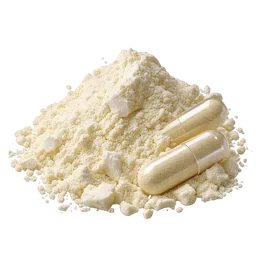
L-Methionine
What the trials found
L-Methionine offers limited evidence for broad mood, sleep, or weight benefits, while high intake raises more concrete homocysteine and liver-safety concerns.
- 5 papers
- 0 of 9 outcomes
- 1 severe, 1 major interaction
Risk, worst reported severity
- case report hepatotoxicity related to methionine load severe
- homocysteine increase
- acetaminophen major
Dose, timing & forms
How much
There is no well-established consumer dose range for L-methionine that reliably improves a specific health outcome in the reviewed evidence. The available research is too thin to turn isolated protocols into a practical recommendation, while higher methionine exposure has a clear biological tradeoff: it can raise homocysteine.2 Treat a high-dose product as something to discuss with a clinician, not a routine wellness add-on.
When and how long
Human evidence does not establish a best time of day, meal pairing, or split-dose schedule for L-methionine. Daily timing is less important than total exposure and your reason for using it, especially because large loads can raise homocysteine.2 Avoid treating it like an occasional energy or mood booster, since that use lacks a convincing trial-backed protocol.
Forms & standardisation
Look for products labeled specifically as L-methionine, the naturally occurring form used in human metabolism. A cleaner label does not solve the central evidence gap: standardization markers do not establish a proven benefit dose for this ingredient. Food sources deliver methionine alongside other amino acids and nutrients, rather than as a concentrated single-amino-acid load.1
Adverse events and drug interactions
Safety events
Drug interactions
What this is and how it works
- Methionine loading raises plasma homocysteine in healthy humans, but no quantitative effect estimate or noticeable-change threshold is provided.2
- Five papers reviewed here span nine outcomes, with human evidence concentrated on metabolic and safety questions.
- High-dose self-use deserves caution, especially alongside acetaminophen or existing liver and homocysteine concerns.
L-methionine is an essential amino acid, which means you need to get it from food or supplements because your body cannot make it from scratch. Protein-rich foods supply it naturally, while supplements deliver a concentrated dose that bypasses the usual food context.
Your body uses methionine to make S-adenosylmethionine, a molecule that works like a worker passing chemical instruction tags between cells. It also feeds the pathway that produces glutathione, an antioxidant that helps cells handle everyday chemical wear and tear.1 When intake overwhelms the pathways that recycle it, homocysteine can rise, like traffic backing up after a busy exit ramp.2
Bottom line
L-methionine makes the most sense when a clinician identifies a specific nutritional or metabolic reason to use it, not as a broad mood, sleep, or weight supplement. The human benefit evidence reviewed here is limited, while homocysteine and liver-related safety questions are more concrete.2 Skip self-directed high doses, particularly if you use acetaminophen or have concerns about liver health or homocysteine.
Common questions
What does L-methionine do in the body?
Does L-methionine raise homocysteine?
Is L-methionine a good supplement for mood?
Who should avoid L-methionine supplements?
Sources
Sources
Generated August 27, 2026
Related