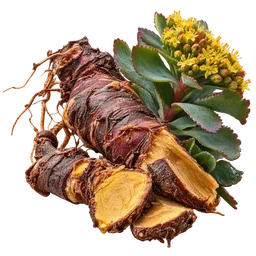
Rhodiola crenulata
What the trials found
Rhodiola crenulata has no established human benefit across energy, stress, or other outcomes because the available evidence is too limited and uncertain.
- 2 papers
- 0 of 8 outcomes
Dose, timing & forms
How much
There is no evidence-based general dose range for Rhodiola crenulata yet. The human evidence base is small, and it does not establish a repeatable protocol for exercise, altitude, respiratory, cardiovascular, or inflammation-related goals.1 Avoid treating dose advice for Rhodiola rosea as interchangeable with R. crenulata, since they are different species.1
When and how long
No well-supported timing routine exists for R. crenulata. Until larger trials test consistent schedules, do not assume that a morning, pre-workout, or daily routine produces a proven effect.1 If you try it, follow the product directions and pay attention to drowsiness, dizziness, headache, stomach symptoms, or dry mouth.
Forms & standardisation
Look for a label that clearly names Rhodiola crenulata, including the plant part and extract details. Salidroside is a commonly discussed constituent, but a salidroside percentage alone does not establish that a product matches a clinically effective preparation.1 A product labeled only “rhodiola” leaves too much room for species confusion.
Adverse events and drug interactions
Safety events
What this is and how it works
- No reliable pooled effect estimate, sample size, or noticeable-change comparison is available for Rhodiola crenulata outcomes.1
- Two papers reviewed here span eight outcomes, but do not establish a validated dose or consistent human benefit.
- Evidence remains preliminary, making Rhodiola crenulata a poor choice for dependable supplement effects.
Rhodiola crenulata is a flowering plant that grows in cold, high-altitude parts of Asia. Its roots contain salidroside and other plant chemicals that have made it a focus of research on physical stress and oxygen-demanding activity.1
Researchers are studying its compounds for their effects on the body's stress-response signaling and oxidative processes, the chemical wear that rises when cells work hard.1 Think of that oxidative process like sparks from a busy engine, and plant antioxidants as part of the cleanup crew. That biology is interesting, but it does not yet prove a meaningful outcome for people taking R. crenulata supplements.1
Bottom line
Rhodiola crenulata is most reasonable for someone curious about an under-researched alpine botanical and comfortable with uncertain results. It is not a strong choice if you want a supplement with established human benefits or a clearly validated dose. Consider skipping it if mild dizziness, drowsiness, headache, dry mouth, or stomach upset would be a problem.
Common questions
What is Rhodiola crenulata used for?
Is Rhodiola crenulata the same as Rhodiola rosea?
Does Rhodiola crenulata improve exercise performance?
When should you take Rhodiola crenulata?
Sources
Sources
Generated August 27, 2026