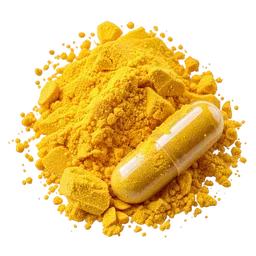
Riboflavin
Best for
Fewer migraine attacks
Promising early signal 100–200 mg/day 12 weeks 1 meta-analysis, n=114 #2 of 12 studied
- 8 papers
- 2 of 17 outcomes
- 1 positive
Riboflavin shows a promising early signal for fewer headache attacks in people with migraine, while evidence across other outcomes remains too limited for broader conclusions.
Median effective dose, most-studied outcomes
- Reduce headache days 200 mg 12 wk
Risk, worst reported severity
- vomiting/emesis
- urine discoloration (yellow urine)
- chlorpromazine moderate
- imipramine moderate
What riboflavin actually does
| Outcome | Effect | Evidence | Dose | Time | Rank |
|---|---|---|---|---|---|
| Worth watching 1 | |||||
| Fewer migraine attacks Promising early signal Migraine prevention can mean fewer days shaped by head pain and missed plans. | | 1 meta-analysis 2 papers · n=114 | 100–200 mg | 12 wk | #2 /12 |
| Early research 1 | |||||
| Less pain during migraine attacks Not enough research Pain relief can help a migraine feel less overwhelming while it lasts. | | 1 meta-analysis 2 papers · n=60 | 100–200 mg | 12 wk | — |
Effect tiers come from native-unit MCID where available, Cohen's d otherwise.
Dose, timing & forms
How much
For the most promising use, fewer headache days, trials examined 100 to 200 mg daily for 12 weeks. 12 That is far above the small amount needed to avoid dietary deficiency, so do not assume a standard multivitamin dose matches the studied approach. The same dose range did not show a meaningful improvement in headache pain intensity. 2
When and how long
Forms & standardisation
Studied range, by outcome
| Outcome | Studied range | Median effective | Duration | Evidence |
|---|---|---|---|---|
| Reduce headache days | 100–200 mg | 200 mg | 12 wk | 2 papers 2 sig. endpoints |
| Get through headaches more easily | 100–200 mg | — | 12 wk | 2 papers |
Adverse events and drug interactions
Safety events
Drug interactions
What this is and how it works
- Two studies (n=114) reported fewer headache attacks with riboflavin, but no standardized effect size or MCID comparison was provided 1.
- Eight papers reviewed here spanned 17 outcomes, with the strongest signal focused on migraine prevention.
- Evidence covered high-dose riboflavin trials in adults and children, limiting conclusions about routine low-dose use 2.
Riboflavin is vitamin B2, a water-soluble vitamin found in foods such as milk, eggs, meat, almonds, and fortified cereals. Your body uses it to build helper molecules that let cells turn food into usable energy, so it is less like a stimulant and more like a required part inside the cell's power equipment.
Riboflavin supplies the raw material for flavin helper molecules, which shuttle electrons through the mitochondria that make cellular energy. Think of it as replacing missing connectors in a phone charger: when the connectors work, the energy line runs more smoothly, a mechanism researchers have examined in recurrent headache biology. 12
Bottom line
Riboflavin makes the most sense for someone tracking frequent headache days who wants to test a low-complexity daily option for a full 12 weeks. Expect a possible change in frequency, not reliable relief once a headache has started. Skip self-directed high-dose use if you take chlorpromazine, imipramine, or amitriptyline until a pharmacist or clinician checks the interaction.

Common questions
Can riboflavin reduce headache days?
Does riboflavin make a headache hurt less?
Why does riboflavin turn urine bright yellow?
Sources
Sources
Generated August 27, 2026
Related
More evidence for Riboflavin
Ingredient evidence
Ingredient evidence
NewFeverfew
All scored outcomes
Aug 27, 2026
Ingredient evidence
Ingredient evidence
NewDiamine Oxidase
All scored outcomes
Aug 27, 2026
Ranking
Migraines and Headaches
NewBest Supplements for Migraines and Headaches, Ranked by Clinical Evidence
Evidence ranking
Apr 4, 2026