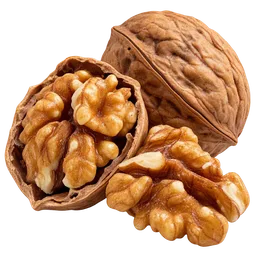
Walnut
What the trials found
Walnuts have clearer evidence for favorable cardiovascular risk-marker changes than bone-density benefits in adults, while bone evidence remains early and inconclusive.
- 2 papers
- 0 of 8 outcomes
Dose, timing & forms
How much
Think in daily food servings, not supplement-style milligrams. Better-known walnut trials use regular daily intake over months or years, and cardiovascular research generally tests walnuts as a replacement for other calorie sources, not as an extra food added to an unchanged diet.12 For bone density, the small reviewed evidence base does not establish a target intake that reliably changes scan results.2
When and how long
Forms & standardisation
Choose ordinary edible walnuts. The research concerns the whole food, not walnut oil, powdered extracts, or isolated alpha-linolenic acid supplements.12 Raw or dry-roasted walnuts both fit, but store them sealed in the refrigerator or freezer if you buy in bulk, since their delicate unsaturated fats lose quality with prolonged heat and air exposure.
What this is and how it works
- Across 2 reviewed papers, sample size and effect estimates for cardiovascular markers were not reported in the supplied evidence summary.1
- Two papers reviewed here span eight outcomes, including cardiovascular risk markers and bone-density measures.1
- Walnut evidence covers cardiovascular outcomes more directly than bone density, whose randomized-trial evidence remains early.2
A walnut is the edible seed of the walnut tree, usually eaten raw or roasted. Unlike a capsule, it brings fat, fiber, minerals, and plant compounds together in one food, so it works best as a regular food swap rather than a quick fix.1
Walnuts supply alpha-linolenic acid, a plant omega-3 fat, plus polyphenols that participate in the body's signaling and antioxidant systems.1 Think of them as replacing a low-value snack with building materials that cells use to keep their communication network running smoothly. The reviewed bone research is still too small to establish a clear bone-density effect.2
Bottom line
Walnuts make sense if you want a satisfying whole-food source of unsaturated fat and you can use them to replace a less nutritious snack. Evidence supports favorable cardiovascular risk-marker changes more clearly than bone-density benefits, and the bone evidence is still early.12 Skip them if you have a tree-nut allergy, and choose another nutrient-dense food if their calories do not fit your eating pattern.
Common questions
Are walnuts good for bone health?
How many walnuts should you eat each day?
Do walnuts support heart health?
Sources
Sources
Generated August 27, 2026