How do I remember my supplements without setting ten alarms?
Nov 24, 2026 · 2 min read · 5 sources
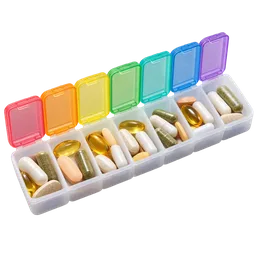
Remember supplements without alarms by linking suitable doses to one daily action and one consistent storage spot.
Most missed supplements are not a willpower problem. They are a bad setup problem, usually made worse by bottles scattered across three rooms.
I would stop setting alarms and build one supplement station around a thing you already do every day. Put the supplements that can be taken together next to breakfast, coffee, or your toothbrush, use a 7 day organizer if the pills are simple, and review the labels once a week for duplicate ingredients.
Make the routine boring enough to survive
The protocol is this: choose one anchor, one time, one place, and one visible cue for 8 to 12 weeks. If you take vitamin D, creatine, magnesium, or a basic multivitamin, the exact minute usually matters less than taking it consistently and safely. Breakfast works well because it is already a daily cue and many people tolerate supplements better with food.
The best evidence here is not a supplement trial. It is habit research. In Lally's 12 week real world study, 96 volunteers chose one daily eating, drinking, or activity behavior to repeat in the same context. Automaticity increased with repetition, and the often quoted 66 day figure was an average, not a deadline.1 The useful lesson is simpler: stop asking your memory to restart the plan every morning. Same cue, same place, same action.
My actual setup would be a small tray, a water glass, and a checklist with the supplement names and doses. If you use a pill organizer, fill it once weekly while looking at the bottles, not from memory. That gives you two safety checks: the empty compartment tells you whether you took it, and the bottle tells you what dose you meant to take.
Do one weekly duplicate dose check
The mistake to avoid is taking the same ingredient from three products because each bottle looks different. The FDA requires dietary supplement labels to use a Supplement Facts panel with serving size and amounts per serving.2 Read that panel like a dose map. Add up repeated nutrients across your multivitamin, sleep blend, electrolyte powder, and single ingredient bottles.
This matters most for ingredients that also show up in medicines or fortified products. Acetaminophen is not a supplement, but it is the clearest warning about duplicate dosing behavior: research on nonprescription acetaminophen found that misunderstanding active ingredients and instructions is common, and the overdose risk rises when people use multiple products without recognizing the same active ingredient.3 The same household rule applies to supplements: different front labels do not mean different ingredients.
So make one note on your phone called "daily supplements." List product, serving size, amount, and reason. Delete anything you cannot explain. If you add a new product, it has to earn a spot on that list before it earns a spot in the tray.
Know when the simple routine is not enough
A simple memory system is fine for low risk basics. It is not enough when timing changes safety. If you take warfarin, vitamin K intake should stay consistent day to day because warfarin works by antagonizing vitamin K activity.4 That does not mean panic about greens or a multivitamin. It means do not start, stop, or vary vitamin K supplements casually.
St. John's wort is the other red flag. Reviews describe clinically important drug interactions through drug metabolism pathways, including reduced exposure to some medicines.5 If it is in your stack, it does not belong in an autopilot organizer until you have checked it against your medication list.
For everyone else, the practical goal is not perfect discipline. It is fewer decisions. One anchor. One station. One weekly label check. That beats ten alarms you will learn to ignore.
Supplements in this article



Worth knowing
- Some supplements have real timing rules, but this essay is about memory systems and duplicate dose prevention.
- Medication timing can be safety critical and should follow the prescriber's directions.
- They help memory, but original labels still matter for directions, serving size, and warnings.
Common questions
What is the easiest way to remember daily supplements?
Should I use a pill organizer?
What is the biggest safety mistake?
Sources
- 1. How are habits formed: Modelling habit formation in the real world (2010) Behavioral basis for one cue and repeated context
- 2. 21 CFR 101.36, Nutrition labeling of dietary supplements (2026) Label facts for serving size and amount per serving
- 3. Risk of unintentional overdose with non-prescription acetaminophen products (2012) Safety analogy for duplicate active ingredients
- 4. Vitamin K, Health Professional Fact Sheet (2026) Warfarin and vitamin K caveat
- 5. Herb Drug Interactions with St John's Wort (2009) St. John's wort medication interaction caveat