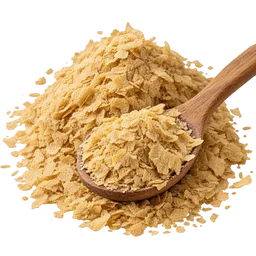
Brewer's Yeast
What the trials found
Brewer's yeast does not have enough reliable evidence to improve blood sugar or cardiovascular markers, so its metabolic benefits remain unproven across the available evidence.
- 3 papers
- 0 of 9 outcomes
Dose, timing & forms
How much
The reviewed human evidence is too limited and too varied to support a single evidence-based daily dose for metabolic goals. Treat label serving sizes as food-supplement guidance, not a proven protocol, and avoid assuming that more brewer's yeast produces a larger effect. 12 If you are choosing it for its nutrients rather than a specific outcome, start with the manufacturer’s lowest suggested serving and judge tolerance first. 2
When and how long
Human research does not establish a best time of day for brewer's yeast. Taking it with a meal is a practical choice because its savory powder or flakes work easily in food, and a consistent routine makes it easier to notice digestive tolerance. 2 Do not use timing as a substitute for monitoring food intake or clinician-guided care when metabolic markers need attention. 1
Forms & standardisation
Look past the front label. Brewer's yeast products differ in chromium content, added vitamins and whether the product is sold as powder, flakes or tablets, so compare the Supplement Facts panel before treating products as interchangeable. 12 If a label highlights chromium, verify the amount per serving rather than relying on the words "natural source." 1
What this is and how it works
- Three reviewed papers report no usable pooled effect estimate or MCID comparison for metabolic outcomes. 2
- The reviewed evidence spans three papers and nine outcomes, with limited clarity about dose, formulation, and population. 2
- Chromium content does not establish brewer's yeast as an effective supplement for metabolic health. 1
Brewer's yeast is an inactive form of Saccharomyces cerevisiae, the same species used in brewing and baking. Once the yeast is dried, it becomes a savory, nutrient-dense powder, flake or tablet rather than a live fermentation starter. Its exact nutrient profile changes sharply with the strain and how the product is processed. 2
Its most discussed nutrient is chromium, a trace mineral involved in the signaling that lets insulin pass its message to cells. Think of insulin as a delivery driver and chromium as part of the doorbell system: it supports the signal, but extra doorbells do not guarantee a bigger delivery. 1 Brewer's yeast also contains fiber-rich cell-wall compounds, although the small human evidence base does not establish which component drives changes in metabolic markers. 2
Bottom line
Brewer's yeast fits best for someone who wants a savory, nutrient-dense food supplement and understands that its metabolic promise remains early. It is not a proven tool for changing blood sugar or cardiovascular markers. People with a yeast allergy, significant digestive sensitivity, or a condition requiring close metabolic monitoring should check with a qualified clinician before using it regularly. 12
Common questions
What is brewer's yeast used for?
Is brewer's yeast the same as nutritional yeast?
Does brewer's yeast support blood sugar?
Sources
Sources
Generated August 27, 2026