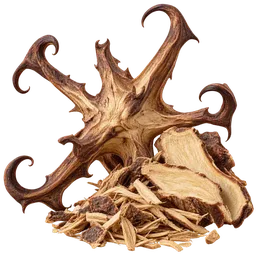
Devil's Claw
What the trials found
Devil's claw for easing chronic low back pain in adults has not enough research to establish effectiveness, leaving benefits uncertain rather than proven.
- 1 papers
- 1 of 1 outcomes
Median effective dose, most-studied outcomes
- Manage chronic low back pain 75 mg 3 wk
Risk, worst reported severity
- Hypertension moderate
- nausea / emesis
- warfarin moderate
- antithrombotic agents moderate
What devil's claw actually does
Ongoing low back pain can limit movement, work, sleep, and daily comfort. 25536022
| Outcome | Effect | Evidence | Dose | Time | Rank |
|---|---|---|---|---|---|
| Early research 1 | |||||
| Ease chronic low back pain Not enough research Ongoing low back pain can limit movement, work, sleep, and daily comfort. | | 1 meta-analysis 1 papers · n=— | 50–100 mg | 3 wk | — |
Effect tiers come from native-unit MCID where available, Cohen's d otherwise.
Dose, timing & forms
How much
For chronic low back pain, the available research used oral extracts supplying 50 to 100 mg of harpagoside per day, with 75 mg daily sitting near the middle of the studied range. That is a research dose for a standardized extract, not 50 to 100 mg of raw devil's claw root. One small evidence base is not enough to establish an optimal dose or a dependable benefit.1
When and how long
The low back pain research used devil's claw daily for roughly three weeks, rather than as an occasional rescue supplement. The trial evidence does not establish a best morning versus evening schedule, so follow the product directions and prioritize consistency if you and a clinician decide it is appropriate.1
Forms & standardisation
Look for an oral devil's claw root extract that states its harpagoside content, since the studied dosing refers to harpagoside rather than the total weight of ground root. A label that only lists “devil's claw” without an extract ratio or harpagoside amount makes it hard to compare with the clinical protocol.1
Studied range, by outcome
| Outcome | Studied range | Median effective | Duration | Evidence |
|---|---|---|---|---|
| Manage chronic low back pain | 50–100 mg | 75 mg | 3 wk | 1 paper 1 sig. endpoint |
Adverse events and drug interactions
Safety events
Drug interactions
What this is and how it works
- One reviewed paper examined low-back pain relief, but reported sample size and effect direction are unavailable here.1
- The evidence spans one reviewed paper and one outcome, focused on chronic low-back pain.
- People using blood-thinning medication should check potential devil's claw interactions with a clinician or pharmacist.
Devil's claw comes from the hooked fruit and storage roots of Harpagophytum procumbens, a plant native to southern Africa. Supplements usually contain a dried root extract rather than the fruit itself. Brands often highlight harpagoside, one of the plant compounds used to identify and standardize the extract.1
Researchers are exploring whether devil's claw compounds dial down inflammatory signaling involved in pain sensitivity, although human trials have not yet pinned down a clear mechanism. Think of it as trying to turn down an overactive smoke alarm, not repairing the source of the fire. The clinical evidence is too limited to show that this biological idea reliably translates into meaningful back-pain relief.1
Bottom line
Devil's claw is a reasonable topic to discuss if you want a plant-based option for chronic low back pain and understand that the evidence is preliminary. Do not expect a proven solution from this small research base. It is not a good self-experiment for people using blood-thinning medication or anyone who has not checked potential interactions with a pharmacist or clinician.
Common questions
Does devil's claw work for low back pain?
What is harpagoside in devil's claw?
How long does devil's claw take to work?
Who should avoid devil's claw?
Sources
Sources
- 1. Herbal medicine for low-back pain (2007) ↑
Generated August 27, 2026
Related
More evidence for Devil's Claw
Evidence guide
Devil's claw (Harpagophytum procumbens)
NewClaws in the Sand: How a Kalahari Root Moved From Desert Wisdom to the Pain Aisle
Evidence guide
Apr 12, 2026
Ingredient evidence
Ingredient evidence
NewCapsaicin
All scored outcomes
Aug 27, 2026
Ingredient evidence
Ingredient evidence
NewCapsicum
All scored outcomes
Aug 27, 2026
Systematic review
Systematic review
NewGlucosamine for Joint Health: A Systematic Evidence Review
GRADE evidence review
Jun 19, 2026