Evening Primrose Oil
12 studies read · 3 answers · 2 sources
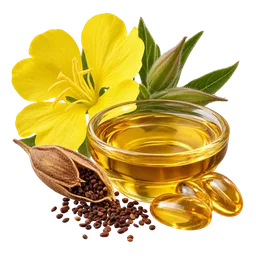
Evening primrose oil provides a proven modest benefit for cycle-related breast tenderness, while evidence across other outcomes, including eczema, remains unconvincing.
What it does
Worth watching
-
Less breast pain · May help
Breast pain can make clothing, movement, and everyday activities uncomfortable.
1 review of 5 trials · 527 people · noticed in 8–26 weeks
Early findings (2)
-
More skin hydration · Unclear if it helps
1 trial · 50 people · noticed in 8–39 weeks
-
Less disruption from eczema · Unclear if it helps
1 review of 8 trials · 289 people · noticed in 8–17 weeks
How to take it
How much
For cycle-related breast tenderness, trials have used 1,000 to 4,000 mg daily of evening primrose oil. The benefit is modest, so the goal is fewer or less intense sore days across your cycle, rather than a dramatic change. 1
When
Take it consistently every day rather than only when breast soreness starts. The relevant research follows people across multiple menstrual cycles, so assess it over time and track symptoms against your cycle. 1
Which form
Choose a product that clearly lists evening primrose oil and the amount of gamma-linolenic acid, or GLA, per serving. GLA is the component behind the proposed signaling mechanism, but a higher-sounding GLA number does not establish a stronger real-world result. 2
Bottles worth buying
Dosed where the research is, in a clean formula, from audited brands. Not sponsored.
-

Evening Primrose Oil 500 mg
Bluebonnet · 500 mg a day · brand audit 82
-

Evening Primrose Oil
21st Century · 1,500 mg a day · brand audit 77
-

Evening Primrose Oil 1300 mg
Nutricost · 1,300 mg a day · brand audit 57
-

Evening Primrose Oil 500 mg
NOW · 1.5 Gram(s) a day · brand audit 87
-

Super Primrose
NOW · 2.6 Gram(s) a day · brand audit 87
-

Optimal Primrose
Seeking Health · 1.3 Gram(s) a day · brand audit 85
How it works
Evening primrose oil comes from the seeds of the evening primrose plant. It contains gamma-linolenic acid, or GLA, an omega-6 fat that your body uses as raw material for cell-signaling compounds. 2
GLA moves through an enzyme pathway that produces dihomo-gamma-linolenic acid, a fatty acid involved in the body's inflammation-signaling network. Picture it as swapping one ingredient on a message board that tells immune cells which signals to post. 2 That biological story has not translated into meaningful eczema improvement in controlled trials. 2