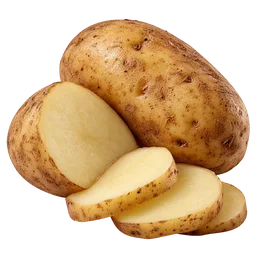
Potato
What the trials found
Potato supplements have insufficient evidence for meaningful benefits across blood pressure, blood sugar, kidney health, or other consumer outcomes.
- 2 papers
- 0 of 11 outcomes
Dose, timing & forms
How much
The available human research is too small to establish a trustworthy dose range for potato supplements. Do not treat the serving size on a potato powder, extract, or resistant starch product as a clinically validated target. The most sensible approach is to choose a product that clearly states whether it contains whole potato, potato starch, or resistant starch, then follow its label while keeping expectations modest.
When and how long
There is no tested best time of day for potato supplements. If you use a starch-based product, take it consistently rather than only before a high-carbohydrate meal, because the proposed effect depends on how much starch escapes digestion and reaches the gut. 2 Taking a new product with food is a practical way to see how your stomach handles it.
Forms & standardisation
Whole potato, potato powder, potato extract, and potato resistant starch are different products with different biology. Resistant starch is the form most directly connected to the gut fermentation mechanism, so look for a label that identifies resistant starch content rather than using vague terms such as potato complex. 2 A potassium amount on the label tells you the mineral dose, but it does not establish a blood pressure benefit. 1
What this is and how it works
- Two papers reviewed here provide no pooled participant count or quantified effect estimate across 11 outcomes. 2
- Evidence spans potato-related potassium and resistant starch, rather than a standardized concentrated potato supplement. 1
- Potassium-containing products require medical guidance for people with kidney disease or potassium-affecting medications. 1
Potato comes from the underground tuber of the Solanum tuberosum plant. In supplement form, it can show up as dried potato powder, potato extract, or isolated potato starch. Those forms are not interchangeable with a baked or boiled potato, since processing changes the fiber, starch structure, and nutrient mix.
Potassium works like the mineral setting on a home thermostat, helping cells control fluid movement and electrical signals that influence blood vessel and muscle function. 1 Some potato starch resists digestion and travels to the large intestine, where gut microbes use it as fuel instead of your small intestine absorbing it quickly as sugar. 2
Bottom line
Potato is worth considering as a food first, especially if you want an inexpensive source of potassium and a flexible carbohydrate. The evidence for potato supplements remains early, so skip grand promises about blood pressure, blood sugar, or kidney support. If you need to limit potassium because of a health condition or medication, get personalized medical guidance before using concentrated potato products.
Common questions
Does potato raise blood sugar?
Is potato a useful potassium source?
What is the best potato supplement dose?
Sources
Sources
Generated August 27, 2026