Secoisolariciresinol Diglucoside
What the trials found
Secoisolariciresinol diglucoside has not been shown to improve ovulation signals in humans; evidence across hormone-related outcomes remains insufficient to establish a reliable benefit.
- 2 papers
- 1 of 5 outcomes
What secoisolariciresinol diglucoside actually does
Reproductive hormones help regulate ovulation, menstrual cycles, and the chance of pregnancy. 32312713
| Outcome | Effect | Evidence | Dose | Time | Rank |
|---|---|---|---|---|---|
| Early research 1 | |||||
| Support fertility hormone levels Not enough research Reproductive hormones help regulate ovulation, menstrual cycles, and the chance of pregnancy. | | 1 RCT 1 papers · n=149 | 50 mg | 52 wk | — |
Effect tiers come from native-unit MCID where available, Cohen's d otherwise.
Dose, timing & forms
How much
The only consumer-relevant hormone protocol reviewed used 50 mg daily of oral SDG over a long period. It did not show a statistically clear improvement in estrogen-related outcomes, so there is no evidence-based dose target for hormone support.2
When and how long
The available research tests SDG as a daily habit, not an occasional supplement. No trial evidence establishes a best time of day, a need to split the dose, or a meaningful advantage to taking it with or without food.2
Forms & standardisation
Look for a product that clearly names secoisolariciresinol diglucoside or SDG and states the amount per serving. Do not assume that a flaxseed product delivers the same amount of SDG as a purified extract, since whole flaxseed contains a changing mix of fiber, oils, and lignans.1
Studied range, by outcome
| Outcome | Studied range | Median effective | Duration | Evidence |
|---|---|---|---|---|
| Support healthy estrogen function | 50 mg | — | 52 wk | 1 paper |
What this is and how it works
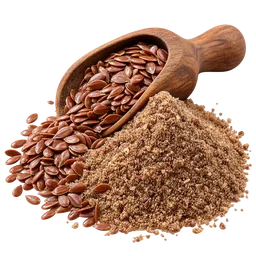
Secoisolariciresinol diglucoside, or SDG, is a lignan, a naturally occurring plant compound concentrated in flaxseed. After you consume it, certain gut microbes remove its sugar groups and turn it into enterodiol and enterolactone, compounds with weak estrogen-like activity.1
Bottom line
SDG makes the most sense for people who are specifically interested in flaxseed lignans and accept that the human evidence is still early. It is not a proven way to shift estrogen or progesterone patterns, and anyone managing a hormone-sensitive condition should discuss supplements with a qualified clinician first.2
Common questions
What is secoisolariciresinol diglucoside?
Does SDG support estrogen balance?
Is SDG the same as flaxseed?
Sources
Sources
Generated August 27, 2026
Related