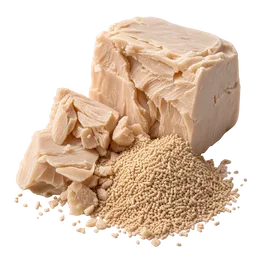
Yeast
What the trials found
Yeast does not earn a clear recommendation for any specific health outcome because current evidence does not establish a predictable benefit across broad goals.
- 2 papers
- 0 of 10 outcomes
Dose, timing & forms
How much
No evidence-based general dose fits yeast as a category. The available evidence spans too few papers and too many possible yeast preparations to support a dependable dose for energy, mood, metabolism, respiratory health, kidney or urinary concerns, or quality of life. Choose a product only when its label clearly identifies the yeast preparation and gives a specific intended use.1
When and how long
No consistent trial-based timing routine stands out for yeast supplements. Take any product according to its label directions, and use it consistently only when the specific preparation has a reason for daily use. Do not assume that a food serving of nutritional yeast follows the same schedule as a yeast extract or another concentrated product.1
Forms & standardisation
The key detail is not simply “yeast,” but the exact form: nutritional yeast, brewer's yeast, yeast extract, or a named yeast species and preparation. Look for a complete Supplement Facts panel, including the amount per serving and any added vitamins or minerals, rather than relying on front-label language alone.1
What this is and how it works
- No pooled effect estimate or clinically meaningful threshold comparison is available for yeast outcomes.1
- Two papers reviewed here span 10 outcomes, including fatigue, mood, and metabolic measures.1
- Different yeast preparations contain different ingredients, so findings cannot be generalized across products or doses.1
Yeast supplements can include brewer's yeast, nutritional yeast, yeast extract, or other processed yeast ingredients. Some products emphasize naturally occurring nutrients, while others use a specific yeast preparation as the featured ingredient. The label matters because the word “yeast” alone does not tell you which type, amount, or active components you get.1
Yeast does not have one shared mechanism because each product starts with a different species or preparation. Think of “yeast” like “fruit”: an apple and a lemon share a category, but their nutrients and effects differ. Until a product identifies its yeast type and tested preparation, no specific body mechanism stands on solid ground.1
Bottom line
Yeast does not earn a clear recommendation for a specific health goal from the current evidence. It makes more sense as a food or supplement choice when you know the exact preparation and want its listed nutrients, not when you expect a predictable effect on fatigue, mood, metabolism, or other broad outcomes.1 If you want a supplement for a defined goal, pick one with human trials on the same form and dose you plan to use.1
Common questions
Do yeast supplements boost energy?
Is nutritional yeast the same as a yeast supplement?
What is the best time to take yeast supplements?
Can I choose a yeast supplement by dose alone?
Sources
Sources
Generated August 27, 2026