What does “take with food” actually mean?
Nov 20, 2026 · 2 min read · 5 sources
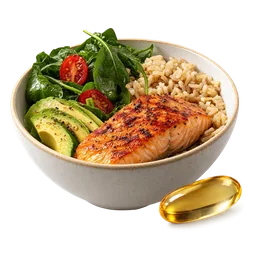
“Take with food” means taking a supplement during or just after a calorie-containing meal or snack when food aids absorption or comfort.
You are staring at a bottle at breakfast, wondering whether three almonds count. The label sounds precise, but most of the time it is trying to solve one of two problems.
Take it with the meal you already eat, not with a ceremonial cracker. If the label says “with food,” I would take it during the meal or within about 30 minutes after, ideally with a meal that contains some fat. The exception is iron: if you tolerate it on an empty stomach, that is often better for absorption. If it makes you nauseated, take it with food and accept the tradeoff.3
A real meal solves the absorption problem
For fat soluble vitamins and oily supplements, “food” usually means enough calories to trigger normal digestion, especially fat digestion. Vitamin D is the cleanest example. NIH describes vitamin D as a fat soluble vitamin, and a randomized feeding study found that peak 12 hour plasma vitamin D3 was 32 percent higher when the supplement was taken with fat containing meals than with fat free meals.2,1
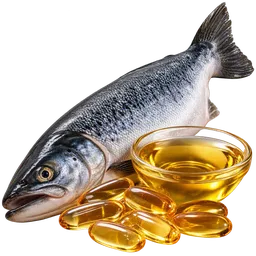
That does not mean you need a high fat ritual. It means yogurt, eggs, avocado toast, a normal lunch, or dinner all make more sense than taking it with black coffee. Fish oil shows the same principle more dramatically in older absorption work: EPA and DHA absorption from fish oil ethyl esters rose about threefold, to about 60 percent, when taken with a high fat meal.4
Sometimes food is about your stomach, not better absorption
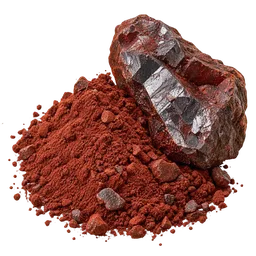
Iron is the supplement where people get misled by the phrase. MedlinePlus says iron is best absorbed on an empty stomach, but many people need food because nausea, cramps, constipation, or diarrhea get in the way. NIH also notes that taking iron with food can reduce adverse effects.3
So the practical rule is simple. If iron does not bother you, take it away from meals. If it does, take it with a small meal and do not feel like you failed. The dose you keep taking beats the perfect dose you quit. Just do not park it next to calcium, antacids, or a dairy heavy meal if iron status is the reason you are taking it, because those can interfere with absorption.3
Calcium flips the logic again. Calcium carbonate is absorbed best with food, while calcium citrate works with or without food. Calcium is also absorbed best at 500 mg or less at one time, so a 1,000 mg supplement is better split than swallowed all at once.5
The thing that matters less than you heard
The snack size debate is mostly noise. You do not need to engineer a special supplement snack. You need to know why the label says food. For vitamin D, fish oil, CoQ10, and similar oily compounds, pair it with the largest normal meal you reliably eat. For calcium carbonate, take it with a meal. For iron, start away from food unless your stomach votes no.
My default: put “with food” supplements next to lunch or dinner, not on the nightstand. If a product causes reflux, nausea, or fishy burps, move it earlier in the meal or choose a different form. If the label gives a stricter instruction, such as “take on an empty stomach” or “separate from medications,” follow that instead. “With food” is a practical instruction, not a command to build your day around a pill.
Supplements in this article
Worth knowing
- Drug labels can have strict food rules that change blood levels or side effects.
- Food can improve absorption, reduce stomach upset, or interfere, depending on the ingredient.
- Those situations need more precise timing and monitoring.
Common questions
Does coffee count as food?
How soon after eating can I take it?
What if the supplement makes me nauseated?
Sources
- 1. Dietary fat increases vitamin D-3 absorption (2015) primary number for fat containing meals and vitamin D absorption
- 2. Vitamin D Fact Sheet for Health Professionals (2025) classification of vitamin D as fat soluble
- 3. Taking iron supplements (2025) practical iron timing and tolerance guidance
- 4. Absorption of eicosapentaenoic acid and docosahexaenoic acid from fish oil ethyl esters (1988) fish oil meal fat absorption example
- 5. Calcium Fact Sheet for Consumers (2024) calcium form specific timing guidance