Do I need to bring my whole supplement routine on vacation?
Nov 27, 2026 · 2 min read · 4 sources
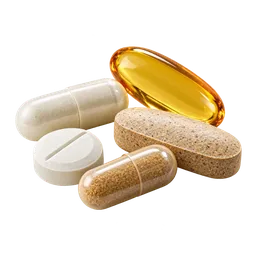
Most routine supplements can stay home on vacation; bring only those with a clear short-term or clinician-directed purpose.
The suitcase test is useful. If a supplement only matters after weeks of steady use, a few missed days usually isn't the part that makes or breaks it.
I would not bring the whole routine. I would bring the supplements that have a specific job during the trip, and I would leave the slow-burn health stack at home unless you're correcting a known deficiency or following a medical plan.
Most routines tolerate a short pause
Creatine is the easiest example. If you've been taking it daily and you're going away for a week, skipping it is not the same as starting over. The International Society of Sports Nutrition position stand notes that once muscle creatine stores are elevated, they generally take 4 to 6 weeks to return to baseline.1 So if creatine powder makes your bag annoying, leave it. Resume when you get home.
Vitamin D is similar in practical terms. The marker used to assess vitamin D status, 25-hydroxyvitamin D, has a circulating half-life of about 15 days, according to the NIH Office of Dietary Supplements.2 That does not mean your dose never matters. It means a missed long weekend is not a crisis. If you are taking vitamin D because your level was low, bring it on a long trip. If you take it as part of a general wellness pile, missing several days is unlikely to matter.
Omega-3s are also a long-game supplement. A scoping review found 58 human studies measuring omega-3 index responses to fish, fortified foods, or supplements, which tells you the relevant outcome is a tissue or blood fatty acid pattern built over time, not an acute vacation-day effect.4 If your fish oil leaks in a toiletry bag, the cost-benefit math is bad.
The trip-specific supplements are the ones worth packing
Melatonin is the exception I would actually consider. It is not a daily nutrient replacement in this context. It is a timing tool for jet lag. The Cochrane review of 10 trials found that melatonin taken close to target bedtime at the destination, usually 10 p.m. to midnight, reduced jet lag after flights crossing five or more time zones. Doses from 0.5 to 5 mg worked similarly, with no clear gain above 5 mg.3
The conditions that change the answer are simple: trip length, reason for use, and consequence of missing it. If you are traveling for three days, skip almost everything that is not needed daily. If you are away for a month, pack the basics you reliably take. If the supplement is part of a clinician-directed plan, such as iron for documented low ferritin, B12 after deficiency, prenatal folic acid, or calcium plus vitamin D after a bone-health recommendation, bring it. The red flag is not forgetting magnesium. The red flag is interrupting something being used to correct a measured problem.
The confound is streak anxiety
The thing people overrate is consistency for its own sake. Yes, supplements only work if you take enough of the right one for long enough. No, that does not mean your body notices every missed capsule as a failure. For many supplements, the relevant biology changes over weeks. A vacation pause is just noise.
The single decision: make a three-part pile. First, bring clinician-directed or deficiency-related supplements. Second, bring trip-specific tools, mainly melatonin for major time-zone travel if it suits you. Third, leave the rest. Your routine can restart when your normal meals, workouts, sleep schedule, and pill organizer restart.
Supplements in this article


Worth knowing
- Those follow a different rule: do not interrupt them for convenience.
- If a clinician told you to take iron, B12, vitamin D, calcium, iodine, or folate for a measured reason, pack it.
- Rules for carrying melatonin, CBD, botanicals, and high-dose supplements vary by destination.
Common questions
Do I need to pack creatine for a one week trip?
Should I bring vitamin D on vacation?
What supplement is most worth packing for travel?
Sources
- 1. International Society of Sports Nutrition position stand: safety and efficacy of creatine supplementation in exercise, sport, and medicine (2017) Supports short creatine pauses during travel.
- 2. Vitamin D: Health Professional Fact Sheet Supports vitamin D as a slow-changing status question.
- 3. Melatonin for preventing and treating jet lag (2002) Supports melatonin as a trip-specific supplement for jet lag.
- 4. The influence of dietary and supplemental omega-3 fatty acids on the omega-3 index: a scoping review (2023) Supports omega-3 as a long-horizon supplement rather than an acute travel need.