Capsaicinoids
Best for
Use more fat for energy
Large effect, needs confirmation 4 weeks 1 meta-analysis, n=198 #4 of 21 studied
- 7 papers
- 2 of 18 outcomes
- 2 positive
Capsaicinoids show a large effect on fat use and appetite-related outcomes, but the evidence needs confirmation before supporting long-term weight-control claims.
Median effective dose, most-studied outcomes
- Use more fat as fuel 150 mg 4 wk
- Reduce calorie intake 150 mg 4 wk
Risk, worst reported severity
- adverse events / symptoms (assessed by symptom questionnaire)
- dyspepsia
What capsaicinoids actually does
Fat burning means your body uses stored or circulating fat as a source of energy. 19671203 · 35875695 · 37228817 +3
Appetite control can help eating feel more manageable when hunger or cravings get in the way. 38571755
| Outcome | Effect | Evidence | Dose | Time | Rank |
|---|---|---|---|---|---|
| Worth watching 2 | |||||
| Use more fat for energy Large effect, needs confirmation Fat burning means your body uses stored or circulating fat as a source of energy. | | 1 meta-analysis 6 papers · n=198 | — | 4 wk | #4 /21 |
| Feel fuller and curb cravings Large effect, needs confirmation Appetite control can help eating feel more manageable when hunger or cravings get in the way. | | 1 RCT 1 papers · n=63 | 100–200 mg | 4 wk | — |
Effect tiers come from native-unit MCID where available, Cohen's d otherwise.
Dose, timing & forms
How much
For the strongest early signal, studies tested oral capsaicinoids from 0.625-200 mg per day for fat use, with 150 mg per day as the median effective amount across the reviewed trials.2 The calorie-intake studies used 100-200 mg per day, also centering around 150 mg per day, but that outcome has far less replication.1 These are research doses, not proof that more is better.
When and how long
The useful pattern is consistency: the key trials followed participants for roughly four weeks, so capsaicinoids work as a daily experiment rather than a pre-workout trick or occasional appetite reset.12 Research has not established a clear morning-versus-evening advantage. If the product irritates your stomach, taking it with a meal is the sensible practical choice.
Forms & standardisation
Look for a label that identifies the actual capsaicinoid amount, rather than only listing chili pepper powder or a proprietary blend. The research signal comes from measured oral preparations, including capsaicin-related extracts, so a product without a stated active-compound dose is hard to compare with trial protocols.12
Studied range, by outcome
| Outcome | Studied range | Median effective | Duration | Evidence |
|---|---|---|---|---|
| Use more fat as fuel | — | 150 mg | 4 wk | 4 papers 4 sig. endpoints |
| Reduce calorie intake | 100–200 mg | 150 mg | 4 wk | 1 paper 4 sig. endpoints |
Adverse events and drug interactions
Safety events
What this is and how it works
- Across 6 studies (n=198), capsaicinoids increased fat use; one study (n=63) also found greater fullness and lower energy intake.2
- Seven papers reviewed here span 18 outcomes, including energy expenditure, fat oxidation, appetite, and energy intake.
- Short trials support promising metabolic changes, not established long-term weight control.
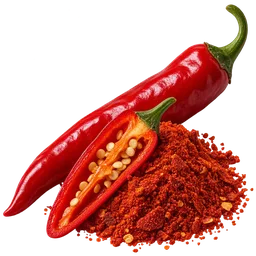
Capsaicinoids are the natural compounds behind chili peppers' burn, with capsaicin as the best-known member. Supplements concentrate these compounds into capsules or extracts, so you get the heat-signal without building every meal around hot peppers.
Capsaicinoids activate TRPV1, a heat-sensing switch on sensory nerves. Picture it as briefly turning up the body's thermostat signal: nerve activity prompts a small rise in energy use and changes which fuel your body draws on, including a greater share from fat.2 This shift in fuel use is the most interesting early finding, but it does not establish lasting fat loss.2
Bottom line
Capsaicinoids suit someone curious about a modest metabolic nudge who can tolerate spicy compounds and keeps expectations realistic. The short trials show promising changes in fat use and calorie intake, not established long-term weight control.12 Skip them if spicy supplements reliably trigger digestive symptoms, and do not use them as a substitute for food habits that actually drive results.
Common questions
Do capsaicinoids actually burn fat?
Can capsaicinoids reduce appetite?
Are capsaicinoid supplements the same as eating chili peppers?
When should you take capsaicinoids?
Sources
Sources
Generated August 27, 2026
Related
More evidence for Capsaicinoids
Ingredient evidence
Ingredient evidence
NewAsian Psyllium
All scored outcomes
Aug 27, 2026
Ingredient evidence
Ingredient evidence
NewSaffron
All scored outcomes
Aug 27, 2026
Ingredient evidence
Ingredient evidence
NewCarnitine
All scored outcomes
Aug 27, 2026
Ingredient evidence
Ingredient evidence
NewFucoxanthin
All scored outcomes
Aug 27, 2026
Ingredient evidence
Ingredient evidence
NewGreen Tea
All scored outcomes
Aug 27, 2026
Ingredient evidence
Ingredient evidence
NewSynephrine
All scored outcomes
Aug 27, 2026