Ergothioneine
What the trials found
Ergothioneine does not yet have established benefits across memory, attention, inflammation, or skin health because human outcome evidence remains too limited to support a clear cross-outcome conclusion.
- 2 papers
- 0 of 10 outcomes
Risk, worst reported severity
- Mild adverse events (unspecified) mild
- doxorubicin moderate
- cytarabine minor
Dose, timing & forms
How much
There is no well-established, evidence-based consumer dose for ergothioneine yet. The small human evidence base has not established a dose that reliably improves memory, attention, inflammation, skin outcomes, or long-term brain health, so higher-dose supplement marketing runs ahead of the clinical picture. Focus on the product's stated amount and avoid assuming that more produces better results.2
When and how long
Human research has not established an ideal time of day, or a proven advantage for split dosing. If you choose to use it, take it consistently and follow the product label rather than treating it as an occasional quick fix. Taking it alongside a meal is a reasonable practical option, but not a clinically proven requirement.
Forms & standardisation
Look for products that name the ingredient specifically as L-ergothioneine and disclose the amount per serving. Mushroom powders contain ergothioneine, but their content varies by species, growing conditions, and processing, so they are not interchangeable with a measured purified ingredient. A standardized label improves dose clarity, though it does not solve the current lack of outcome-specific dosing evidence.2
Adverse events and drug interactions
Safety events
Drug interactions
What this is and how it works
- No pooled human effect size is available for the strongest outcomes, so noticeable benefit cannot be quantified 2.
- Two papers reviewed here span ten outcomes, with evidence centered mainly on biological rationale rather than clinical results 2.
- Human cells actively transport ergothioneine, but cellular uptake does not establish meaningful health benefits 1.
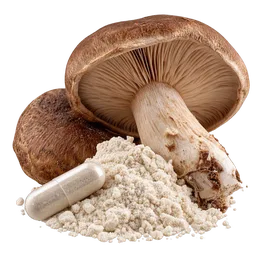
Ergothioneine is a naturally occurring compound found in foods, with mushrooms as a standout dietary source. Your body does not make much, if any, on its own, so intake comes largely from food or supplements. Cells can selectively bring it in and hold onto it rather than treating it like a random antioxidant.12
Ergothioneine travels into cells through a dedicated carrier protein called OCTN1, which works like a priority delivery lane rather than leaving the compound to drift around the bloodstream.1 Once inside, it can react with certain damaging oxidants and bind reactive metals, processes that researchers are investigating in relation to cellular stress.2
Bottom line
Ergothioneine is genuinely interesting because your cells actively collect it, not because human outcome evidence is already settled.1 It suits people who want to experiment cautiously with a food-derived antioxidant and accept uncertain benefits. Skip the hype if you want a supplement with established effects on memory, attention, inflammation, or skin health, and review use with a clinician if you take cancer medicines.
Common questions
What does ergothioneine do?
Is ergothioneine good for memory?
Should I take ergothioneine with food?
Is ergothioneine the same as glutathione?
Sources
Sources
Generated August 27, 2026
Related