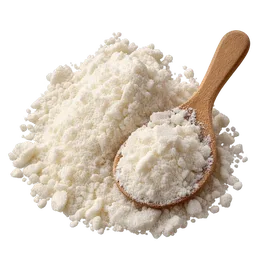
Fructo-Oligosaccharides
What the trials found
Fructo-Oligosaccharides have not been shown to build a more adaptable gut community because human research remains not enough for a reliable conclusion.
- 2 papers
- 1 of 6 outcomes
What fructo-oligosaccharides actually does
A diverse gut microbiome contains many types of bacteria that help process food. 28924143
| Outcome | Effect | Evidence | Dose | Time | Rank |
|---|---|---|---|---|---|
| Early research 1 | |||||
| Build a more diverse gut microbiome Not enough research A diverse gut microbiome contains many types of bacteria that help process food. | | 1 RCT 1 papers · n=— | 16 g | 2 wk | — |
Effect tiers come from native-unit MCID where available, Cohen's d otherwise.
Dose, timing & forms
How much
The available human evidence is too thin to establish a reliable target dose for a practical gut-health goal. One short trial tested FOS for Bifidobacteria, but it did not provide enough evidence to show that FOS reliably builds a more adaptable gut community.1 Treat the studied protocol as a research reference, not a proven daily recommendation.
When and how long
The available trial used FOS daily over a short period, so the research does not support taking it only occasionally.1 It also does not establish a best time of day, whether to split the serving, or whether food changes results. Let your own digestive comfort guide those practical details rather than expecting a timing trick to change the evidence.
Forms & standardisation
Look for a label that specifically names fructo-oligosaccharides or FOS, rather than assuming every product labeled “prebiotic” contains the same ingredient. The available evidence concerns FOS itself, not broad multi-ingredient prebiotic blends.1 Current research does not identify a superior source, chain length, or standardization marker.
Studied range, by outcome
| Outcome | Studied range | Median effective | Duration | Evidence |
|---|---|---|---|---|
| Support fiber-using gut microbes | 16 g | — | 2 wk | 1 paper |
What this is and how it works
- One early human paper assessed gut-community adaptability, but reported participant numbers and a pooled effect estimate are unavailable.1
- Two papers reviewed here span six outcomes, with evidence concentrated in one early research tier.
- Findings do not establish whether microbial changes translate into noticeable benefits for people.
Fructo-oligosaccharides, or FOS, are short carbohydrate chains found naturally in foods such as chicory root, onions, garlic, and bananas. Supplement makers also produce them from plant sugars and add them to powders, bars, and fiber blends. Your digestive enzymes largely leave them alone, so they arrive in the large intestine for microbes to use.1
FOS acts like a delivery truck that bypasses your own digestion and unloads fuel for certain colon microbes. When those microbes ferment it, they produce short-chain fatty acids and other compounds that shape the local gut environment.1 The important unanswered question is whether changing one bacterial group produces a lasting, meaningful change in the broader gut community.
Bottom line
FOS makes biological sense as food for selected gut microbes, but the current human evidence is far too limited to promise a broader microbiome benefit.1 It fits someone who wants to experiment cautiously with a specific prebiotic fiber, not someone seeking a proven way to rebuild gut health after a disruption. If fermentable fibers already leave you uncomfortable, this is not the ingredient to choose based on hype.
Common questions
What are fructo-oligosaccharides?
Do fructo-oligosaccharides improve the gut microbiome?
Are FOS and fiber the same thing?
Sources
Sources
Generated August 27, 2026
Related
More evidence for Fructo-Oligosaccharides
Ingredient evidence
Ingredient evidence
NewGalactooligosaccharides
All scored outcomes
Aug 27, 2026
Ingredient evidence
Ingredient evidence
NewInulin
All scored outcomes
Aug 27, 2026
Ingredient evidence
Ingredient evidence
NewOligosaccharide (unspecified)
All scored outcomes
Aug 27, 2026
Ingredient evidence
Ingredient evidence
NewProbiotics
All scored outcomes
Aug 27, 2026