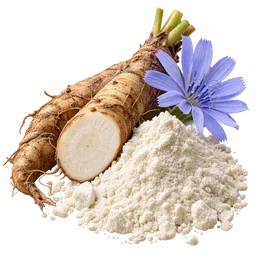
Inulin
Best for
Build a more diverse gut microbiome
Likely strong benefit 6–30 g/day 1–26 weeks 18 studies, n=718 #2 of 19 studied
- 57 papers
- 3 of 111 outcomes
- 3 positive
Inulin provides a likely strong benefit for building an adaptable gut community, with the clearest evidence for microbiota changes rather than every digestive outcome.
Median effective dose, most-studied outcomes
- Support fiber-using gut microbes 15.5 g 1–26 wk
- Make bowel movements easier 11 g <1–24 wk
- Support fiber fermentation in the gut 16 g 1–26 wk
Risk, worst reported severity
- flatulence / abdominal discomfort / intestinal pressure mild
- Gastrointestinal symptoms (bloating, loose stool) mild
- omeprazole moderate
- metformin moderate
What inulin actually does
| Outcome | Effect | Evidence | Dose | Time | Rank |
|---|---|---|---|---|---|
| Strong benefits 1 | |||||
| Build a more diverse gut microbiome Likely strong benefit A diverse gut microbiome contains many types of bacteria that help process food. | | 16 RCTs 18 papers · n=718 | 6–30 g | 1–26 wk | #2 /19 |
| Modest benefits 1 | |||||
| Relieve constipation Likely modest benefit Constipation can mean infrequent, hard, or difficult bowel movements. | | 11 RCTs 11 papers · n=511 | 0.5–30 g | 0–24 wk | #4 /12 |
| Early research 1 | |||||
| Increase short-chain fatty acids in the gut Faint early signal Gut bacteria ferment fiber into short-chain fatty acids that nourish cells in the colon. | | 9 RCTs 9 papers · n=265 | 8–30 g | 1–26 wk | #5 /7 |
Effect tiers come from native-unit MCID where available, Cohen's d otherwise.
Dose, timing & forms
How much
The strongest evidence centers on gut-microbe changes, with studies using 6 to 30 g daily and a median effective intake around 15.5 g/day.1 Constipation trials span 4 to 30 g/day, but the practical move is to begin well below the upper end because gas often sets the real limit. Benefits for bowel comfort commonly show up over about four weeks of steady use.2
When and how long
Consistency matters more than a particular clock time. Mix your chosen amount into a meal, yogurt, oatmeal, or drink at the same time each day, then split it between meals if one larger serving causes pressure or bloating. Give a new intake at least several weeks before judging bowel changes, since the relevant trials tracked daily use over weeks rather than occasional servings.12
Forms & standardisation
Chicory root inulin has direct human trial coverage, so it is the most recognizable form to look for on a label.12 Labels also use terms such as inulin-type fructans or oligofructose. These fibers share a family resemblance, but chain length and product blends differ, so do not assume every prebiotic fiber delivers identical results.
Studied range, by outcome
| Outcome | Studied range | Median effective | Duration | Evidence |
|---|---|---|---|---|
| Support fiber-using gut microbes | 6–30 g | 15.5 g | 1–26 wk | 15 papers 12 sig. endpoints |
| Make bowel movements easier | 4–30 g | 11 g | <1–24 wk | 11 papers 14 sig. endpoints |
| Support fiber fermentation in the gut | 8–30 g | 16 g | 1–26 wk | 8 papers 4 sig. endpoints |
| Support fiber fermentation capacity | 8–12 g | 12 g | 4–26 wk | 4 papers 4 sig. endpoints |
| Reduce constipation's daily burden | 12 g | 12 g | 4 wk | 1 paper 1 sig. endpoint |
| Gut microbial community makeup | 15 g | — | 1 wk | 1 paper |
Adverse events and drug interactions
Safety events
Drug interactions
Recommended Inulin products
Real products that dose Inulin where the research does, in a clean formulation, from brands we've audited. We only list ones we'd stand behind.
-

BulkSupplements.com
Inulin Powder 2500 mg
Well dosed 5,250 mg/day A formulaBrand audit 54/100
-

NOW
Certified Organic Inulin
Well dosed 8.4 Gram(s)/day A formulaBrand audit 87/100
-

Puritan's Pride
Stevia Powder with Inulin
Well dosed 3,400 mg/day A formulaBrand audit 68/100
-

Seeking Health
ProBiota Base
Well dosed 5 Gram(s)/day A formulaBrand audit 85/100
-

The Vitamin Shoppe
Miracle Fiber
Well dosed 17.4 Gram(s)/day A formulaBrand audit 69/100
-

Protocol For Life Balance
ProtoMeal Natural Chocolate Flavor
Well dosed 4.2 Gram(s)/day A formulaBrand audit 86/100
Chosen for adequate Inulin dosing vs. the studied range, a clean formulation (grade A–C), and independent brand-quality audits. Not sponsored.
What this is and how it works
- Across 18 studies (n=718), inulin improved gut-community measures across 46 endpoints; no shared native-unit effect or MCID comparison was reported. 1
- The review covers 57 papers and 111 outcomes, including bowel function, gut microbiota, and other digestive measures.
- Rapid fermentation can cause gas, bloating, or cramps, especially when doses increase too quickly.
Inulin is a fermentable carbohydrate found naturally in foods such as chicory root, Jerusalem artichoke, garlic, onions, and asparagus. Supplement powders usually come from chicory root and add a concentrated dose of this prebiotic fiber to food or drinks.1
Your small intestine largely leaves inulin alone, so it arrives in the colon as lunch for selected microbes. Think of it as stocking a neighborhood pantry for fiber specialists: when those microbes get a reliable food supply, they expand and change the community around them.1 Their fermentation also produces short-chain fatty acids, small compounds that colon cells use as fuel, although human evidence for a meaningful rise in these compounds remains early.1
Bottom line
Inulin makes the most sense if you want to build a more fiber-adapted gut community or need a gentle nudge toward easier bowel movements. Start low and increase slowly, because the same rapid fermentation behind its benefits often brings gas, bloating, or cramps. Skip the aggressive dose chase if your gut already reacts strongly to fermentable fibers.
Common questions
What does inulin do for the gut?
Does inulin help constipation?
Why does inulin cause gas and bloating?
Is chicory root fiber the same as inulin?
Sources
Sources
Generated August 27, 2026
Related
More evidence for Inulin
Ranking
Body Fat Reduction
NewBest Supplements for Fat Loss, Ranked by Clinical Evidence
Evidence ranking
Apr 4, 2026
Ranking
Blood Sugar Control
NewBest Supplements for Blood Sugar, Ranked by Clinical Evidence
Evidence ranking
Apr 4, 2026
Ingredient evidence
Ingredient evidence
NewAlexandrian senna
All scored outcomes
Aug 27, 2026
Ingredient evidence
Ingredient evidence
NewAsian Psyllium
All scored outcomes
Aug 27, 2026
Ingredient evidence
Ingredient evidence
NewBlonde Psyllium
All scored outcomes
Aug 27, 2026
Ingredient evidence
Ingredient evidence
NewChicory
All scored outcomes
Aug 27, 2026