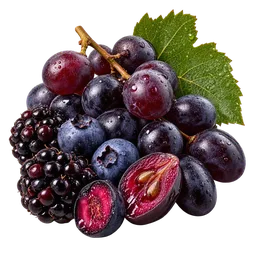
Anthocyanidins
What the trials found
Anthocyanidins show the clearest short-term signal for antioxidant-capacity measures, while evidence remains insufficient for broad, visible health benefits across other outcomes.
- 38 papers
- 0 of 78 outcomes
- 2 severe
Median effective dose, most-studied outcomes
- Support overall antioxidant capacity 60 mg 2 wk
Risk, worst reported severity
- infectious colitis severe
- ulcerative colitis exacerbation requiring hospitalization severe
Dose, timing & forms
How much
For overall antioxidant capacity, the short clinical protocols used 60 mg daily for 2 weeks. That is the practical evidence-based starting point for this broad, unspecified anthocyanidin category, but it does not establish that higher doses produce bigger benefits.1 Because the outcome is a laboratory measure of antioxidant defense, set expectations accordingly: the trials do not show a reliable, noticeable energy or performance boost.1
When and how long
The short antioxidant trials used daily dosing across the full two-week protocol, so consistency matters more than chasing a particular time of day.1 Take it with a meal if the product bothers your stomach, and avoid treating an occasional capsule as equivalent to the studied routine. The available protocols do not establish a special morning or evening advantage.1
Forms & standardisation
“Anthocyanidins” alone is not a very informative label description. Look for the plant source and the amount of anthocyanins or named pigment compounds per serving, since berry, grape, and purple-corn extracts can deliver very different chemical mixes. The short human evidence supports the dose range, but it does not identify one extract source as the clear winner.1
Studied range, by outcome
| Outcome | Studied range | Median effective | Duration | Evidence |
|---|---|---|---|---|
| Support overall antioxidant capacity | 60 mg | 60 mg | 2 wk | 2 papers 2 sig. endpoints |
Adverse events and drug interactions
Safety events
Recommended Anthocyanidins products
Real products that dose Anthocyanidins where the research does, in a clean formulation, from brands we've audited. We only list ones we'd stand behind.
-

XYMOGEN
Saloxicin
Well dosed 80 mg/day C formulaBrand audit 80/100
-

Life Extension
Optimized Resveratrol
Well dosed 85 mg/day C formulaBrand audit 90/100
-

Pure Encapsulations
CurcumaSorb Mind EasySticks Natural Strawberry and Lemonade Flavor
Well dosed 100 mg/day B formulaBrand audit 78/100
-

NFH
EGCG SAP
Well dosed 150 mg/day B formula -

Integrative Therapeutics
Recancostat 100
Well dosed 300 mg/day B formula -

ProCaps
Women's Founder's
Well dosed 200 mg/day A formula
Chosen for adequate Anthocyanidins dosing vs. the studied range, a clean formulation (grade A–C), and independent brand-quality audits. Not sponsored.
What this is and how it works
- Short human trials linked anthocyanidins with stronger antioxidant-capacity measures, but pooled effect size and study count are unavailable here.1
- The reviewed evidence spans 38 papers and 78 outcomes, with strongest support concentrated in antioxidant-status measures.
- Evidence is narrow and short-term, limiting conclusions about lasting cardiovascular or other visible health changes.
Anthocyanidins are a family of plant pigments behind deep red, purple, and blue foods. They sit inside a larger group of compounds called anthocyanins, which usually carry a sugar attachment in the foods and extracts you consume.
After digestion, anthocyanidin-related compounds and their breakdown products interact with the cell's stress-response controls, including pathways that switch on protective antioxidant enzymes.1 Think of this system like a kitchen smoke alarm that prompts the cell to bring out its cleanup crew before small chemical sparks spread. Human research most consistently tracks changes in antioxidant-capacity measures, rather than proving a specific everyday health outcome.1
Bottom line
Anthocyanidins fit best if you want a short, modest trial aimed at antioxidant status and you value a food-derived plant pigment. The evidence is narrow: two-week studies support antioxidant-capacity measures, not a long list of visible health changes.1 Avoid self-starting a concentrated product if you have active inflammatory bowel disease or a history of severe bowel flares, and get clinician guidance first.
Common questions
What are anthocyanidins?
What do anthocyanidin supplements do?
How long do anthocyanidins take to work?
Are anthocyanidins the same as anthocyanins?
Sources
Sources
Generated August 27, 2026
Related
More evidence for Anthocyanidins
Ranking
Blood Sugar Control
NewBest Supplements for Blood Sugar, Ranked by Clinical Evidence
Evidence ranking
Apr 4, 2026
Ranking
Memory and recall
NewThe 10 Best Supplements for Memory, Ranked by Evidence
Evidence ranking
May 9, 2026
Ingredient evidence
Ingredient evidence
NewAstaxanthin
All scored outcomes
Aug 27, 2026
Ingredient evidence
Ingredient evidence
NewBilberry
All scored outcomes
Aug 27, 2026
Ingredient evidence
Ingredient evidence
NewBlack Currant
All scored outcomes
Aug 27, 2026
Ingredient evidence
Ingredient evidence
NewBlueberry
All scored outcomes
Aug 27, 2026