Best Supplements to Ease ADHD Symptoms in Children (2026)
8 supplements · 1 outcomes · 9 trials
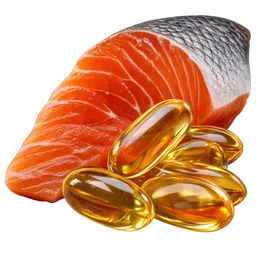
Our #1 pick
The strongest evidence-backed nutritional add-on
If you want a supplement that actually moves ADHD symptoms in children, the list gets short fast. In this evidence set, omega-3 stands out, zinc looks useful but less certain, and phosphatidylserine looks promising but early; everything else either lacks convincing data or looks like a bad bet for broad use.1234567
That honesty matters because mental health outcomes here are modest, not magical. The goal is not to “fix” a child with a capsule — it is to look for small, meaningful gains in attention, impulsivity, emotional steadiness, and day-to-day functioning while you keep the bigger plan in place: sleep, routines, school support, and professional care when needed.123
#1 deep dive
Why Omega-3 takes the top spot
How it works
Omega-3 fats become part of brain-cell membranes, like swapping stiff plastic wires for flexible cables so signals pass with less friction. Researchers are exploring how that supports attention and impulse-control circuits, but these ADHD trials mainly show the outcome rather than proving one single pathway.123
Best for
Families who want the most evidence-based supplement first, especially as an add-on to a broader ADHD support plan.
Watch out
Pro tip
Buy fish oil that lists EPA and DHA amounts clearly and take it with food; vague “1,000 mg fish oil” labels hide what you actually get.
Evidence by outcome
Helps lower total ADHD symptom burden in children.

Zinc
Likely helps
A solid second-line option with decent evidence
Full breakdown

Phosphatidylserine
Early data
Promising early data, but still a step behind
Phosphatidylserine earns a spot because early findings look impressive on paper: the verdict is preliminary, the trust score is 44, and the effect estimate is moderate (d=0.76). The catch is obvious — only a small, early evidence base supports that signal, so confidence stays much lower than omega-3.67
Full breakdown
What doesn't work
Save your money on these
People talk about it a lot for mood and focus, but the ADHD symptom evidence here is simply too weak to rank: verdict unknown, trust 10.
It sounds brainy, so it sells well, but this dataset still rates it as unknown with very low confidence. That is not enough to put it near the top.
This one is more than overrated for blanket use — the dataset gives it a likely-harm verdict for overall ADHD symptom severity. Iron only makes sense when there is a specific reason to use it, not as a default ADHD supplement.
Synergistic stacks
Combinations that work better together
Foundation Stack
Omega-3 + Zinc
This pairs the strongest evidence-backed option with the next most credible add-on. The ADHD data above evaluates them mainly as separate interventions, not as a formal combo, so the logic here comes from stacking the best-supported individual signals rather than from a head-to-head combination trial.12345
Membrane Support Stack
Omega-3 + Phosphatidylserine
These ingredients make sense together because the phosphatidylserine data itself includes an omega-3-linked study, and both target brain-cell membrane function from different angles. Evidence for ADHD remains stronger for omega-3 than for phosphatidylserine, so think of this as a strong base plus an early-stage upgrade.12367
Shortlist
A specific product for each pick
One well-dosed, cleanly-formulated option per ranked ingredient, from brands we've audited. Not sponsored.
 Well dosed audit 87
 Well dosed audit 90
For Phosphatidylserine
NOW Sunflower Phosphatidyl Serine 100 mgWell dosed audit 87
Buying guide
What to look for on the label
Form matters
- •For omega-3, the label should list **EPA and DHA separately**. If it only says “fish oil,” you cannot match it to the evidence.
- •For zinc, buy based on **elemental zinc**, not the total weight of zinc sulfate or another salt.
- •For phosphatidylserine, the product should state the exact **phosphatidylserine milligrams per serving** and the source material.
Red flags
- •Proprietary blends that hide the active amount
- •Kids products with candy-style marketing but no meaningful label transparency
- •Fish oil that smells rancid or hides oxidation testing
- •Mega-dose zinc products that push “more is better” without a child-specific rationale
Quality markers
- •Third-party testing for purity and contaminants
- •A full Supplement Facts panel with clear active amounts
- •Lot-specific quality documentation or a certificate of analysis
- •Brands that explain exactly which study-style form they use instead of leaning on vague buzzwords
The bottom line
If you want the shortest honest answer, start with omega-3. It has the best evidence, the best trust score, and the clearest case for a real—though still modest—improvement in overall ADHD symptoms in children.123
After that, zinc looks like a reasonable second step, and phosphatidylserine looks interesting if you understand that the evidence is still early.4567 The bigger lesson is simple: the best supplement plan for child ADHD is usually not a giant stack. It is one evidence-backed choice at a time, with realistic expectations and close tracking of how the child actually feels and functions.
Frequently asked
Common questions
What supplement has the best evidence for ADHD symptoms in children?
How long do supplements take to affect ADHD symptoms?
Is zinc a good first supplement for every child with ADHD?
Does phosphatidylserine work better than omega-3?
Which supplements for ADHD look overrated right now?
Related
Go deeper on the top picks
Standalone evidence guides for the supplements at the top of this ranking, plus systematic reviews and combination breakdowns.
Ingredient evidence
Ingredient evidence
NewOmega-3
All scored outcomes
Aug 27, 2026
Ranking
Arthritis and joint pain
NewBest Supplements for Arthritis and Joint Pain, Ranked by Clinical Evidence
Evidence ranking
Apr 4, 2026
Ranking
Migraines and Headaches
NewBest Supplements for Migraines and Headaches, Ranked by Clinical Evidence
Evidence ranking
Apr 4, 2026
Ranking
Depression
NewBest Supplements for Depression, Ranked by Clinical Evidence
Evidence ranking
Apr 4, 2026
Ranking
Brain fog and mental clarity
NewBest Supplements for Brain Fog and Mental Clarity, Ranked by Evidence
Evidence ranking
Apr 4, 2026
Ranking
Staying asleep through the night
NewBest Supplements to Stay Asleep Through the Night
Evidence ranking
Apr 4, 2026
Sources
- 1. Omega-3 fatty acid supplementation in children with ADHD symptoms (2009) ↑
- 2. Systematic review and meta-analysis of omega-3 fatty acids for ADHD symptomatology (2011) ↑
- 3. Polyunsaturated fatty acid supplementation for ADHD in children (2012) ↑
- 4. Zinc sulfate as adjunct therapy for ADHD in children (2011) ↑
- 5. Zinc supplementation and ADHD symptoms in children (2016) ↑
- 6. Phosphatidylserine with omega-3 fatty acids for children with ADHD (2013) ↑
- 7. Phosphatidylserine supplementation and ADHD symptoms in children (2021) ↑
Generated May 18, 2026