New Evidence Brief Published May 13, 2026
Saffron for ADHD Hyperactivity: What the Study Shows
1 study · 0 participants · 11 sources
Evidence summary
Saffron does not have enough research to show reduced ADHD hyperactivity in children and adolescents, and the current evidence cannot establish a noticeable benefit.
- Across 1 study, saffron produced no pooled hyperactivity estimate, leaving effect size and noticeability unquantified.1
- ADHD evidence here comes from children and adolescents, not adults, limiting generalizability.5
- Studies measured broader ADHD symptom bundles, not hyperactivity alone, so the outcome stays noisy.1
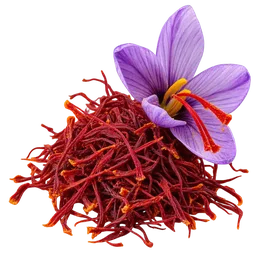
Saffron gets attention in ADHD because it is not another stimulant story—it is a bright-red extract people hope will calm the body without flattening the kid. When hyperactivity shows up as nonstop motion, blurting, and can't-sit-through-dinner energy, that promise sounds huge.5
For hyperactivity specifically, the research base is still tiny. The real question is not whether saffron does something in the brain, but whether it reliably turns down restless, impulsive behavior, and right now the literature is too thin to answer yes or no.136
How it works
Saffron's best-studied compounds, crocin and safranal, seem to tune the brain's chemical messaging system—especially serotonin and dopamine—more like adjusting traffic lights than slamming a brake.36 Researchers also study its antioxidant effects, which work like rust control on a busy circuit: less chemical wear can help signals travel more cleanly.36 That gives saffron a believable ADHD story, but a believable mechanism is not the same as proven hyperactivity control.36
What the studies show
For this exact question, the evidence base is extremely small: only 1 study contributes to hyperactivity-specific evidence, so there is no combined number showing how much hyperactivity changes on average.1
The best-known randomized ADHD trial gave saffron for 6 weeks and found improvement on broader ADHD symptom ratings that looked similar to methylphenidate. That is useful context, but it still does not isolate hyperactivity cleanly enough to tell you how much saffron reduces fidgeting, blurting, or sit-still problems on its own.5
A later clinical effectiveness study also reported ADHD symptom improvement with a saffron extract in children and adolescents. Even with that extra signal, the literature stays too small and too varied to turn saffron into a dependable answer for hyperactivity specifically.1
Broader reviews of saffron on psychological and cognitive outcomes support the idea that it has real brain activity. Still, background plausibility does not solve the main problem here: the hyperactivity evidence is too sparse to estimate a clear, noticeable benefit.36
Caveats worth knowing
- ·
Only 1 study feeds the hyperactivity-specific question, so one result can swing the whole impression.1
- ·
The literature does not give a combined estimate for how big the change is or whether most families would notice it.1
- ·
- ·
Trial lengths were short, including a 6-week pilot, so long-term effects on classroom and home behavior stay uncertain.5
- ·
Watch-outs
-
Mood activation has been reported · moderate severity
-
Headache, nausea, dry mouth, and vomiting show up repeatedly · low severity
-
Use extra caution when blood-count problems would be risky · high severity
-
Drug-interaction signals exist, mostly from animal studies · moderate severity
Practical guidance
If you still want to copy the best-known ADHD trial, the clearest human study used 20 mg/day for children under 30 kg and 30 mg/day for those over 30 kg, over 6 weeks.5 That is the strongest dose-and-duration anchor in the ADHD literature, but it is not a validated formula for hyperactivity specifically.5
Treat saffron like a short, measured experiment rather than an open-ended project. Track fidgeting, blurting, and sit-still time week by week, and if nothing clearly changes by 6 weeks, the current research does not give a strong reason to keep going on faith alone.5
People also ask
How long does it take for saffron to help with ADHD?
How do I use saffron for ADHD?
What do the Japanese use to treat ADHD?
What is the most effective herb for ADHD?
Is there a downside to taking saffron?
How quickly does saffron work for ADHD?
Sources
Sources
- 1. Effectivity of Saffron Extract (Saffr'Activ) on Treatment for Children and Adolescents with Attention Deficit/Hyperactivity Disorder (ADHD): A Clinical Effectivity Study. ↑
- 2. Saffron (Crocus sativus L.) and major depressive disorder: a meta-analysis of randomized clinical trials. ↑
- 3. A systematic review of randomized controlled trials examining the effectiveness of saffron (Crocus sativus L.) on psychological and behavioral outcomes. ↑
- 4. Comparison of Saffron and Fluvoxamine in the Treatment of Mild to Moderate Obsessive-Compulsive Disorder: A Double Blind Randomized Clinical Trial. ↑
- 5. Crocus sativus L. Versus Methylphenidate in Treatment of Children with Attention-Deficit/Hyperactivity Disorder: A Randomized, Double-Blind Pilot Study. ↑
- 6. Effects of saffron (Crocus sativus L.) on cognitive function. A systematic review of RCTs. ↑
- 7. Effect of saffron (Crocus sativus L.) on sodium valporate induced cytogenetic and testicular alterations in albino rats. ↑
- 8. Crocus sativus L. Extract Containing Polyphenols Modulates Oxidative Stress and Inflammatory Response against Anti-Tuberculosis Drugs-Induced Liver Injury. ↑
- 9. Crocus sativus L. Stigmas, Tepals, and Leaves Ameliorate Gentamicin-Induced Renal Toxicity: A Biochemical and Histopathological Study. ↑
- 10. Comparative Evaluation of Antidepressant and Anxiolytic Effects of Escitalopram, Crocin, and their Combination in Rats. ↑
- 11. Acute and subacute toxicity of safranal, a constituent of saffron, in mice and rats. ↑
Related
More evidence for Saffron
Ingredient evidence
Ingredient evidence
NewSaffron
All scored outcomes
Aug 27, 2026
Evidence guide
Saffron
NewThreads of Light: How a Royal Dye Became a Research-Backed Aid for Mood, Sleep, and Sight
Evidence guide
Apr 7, 2026
Ranking
Deep, Restful Sleep
NewBest Supplements for Deep, Restful Sleep (2026)
Evidence ranking
Mar 29, 2026
Ranking
Peripheral Neuropathy
NewBest Supplements to Ease Neuropathy Pain and Numbness (2026)
Evidence ranking
Apr 4, 2026
Ranking
Sleep Quality
NewBest Supplements to Increase Deep, Restorative Sleep (2026)
Evidence ranking
May 16, 2026
Ranking
High Blood Pressure
NewBest Supplements for Blood Pressure, Ranked by Clinical Evidence
Evidence ranking
Apr 4, 2026