New Vitamin E Published May 6, 2026
The Antioxidant Paradox: Vitamin E's century-long arc from fertility clue to focused medicine
Antioxidant protection, eye health support, and liver health in specific conditions
Evidence summary
Vitamin E has a narrow disease-specific role: AREDS-style use slows age-related macular degeneration, but routine supplementation does not improve cardiovascular or cancer outcomes and can raise risk.
- Across AREDS trials, vitamin E-containing formulas lowered progression to advanced age-related macular degeneration by about 25%, a meaningful reduction 2.
- Beneficial findings center on AREDS-style eye formulas and 800 IU/day natural vitamin E for nondiabetic NASH adults.
- Large prevention trials found no cardiovascular or cancer benefit, and SELECT linked 400 IU/day synthetic vitamin E to more prostate cancer.
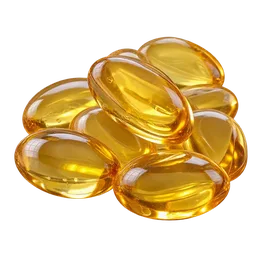
A vitamin named for childbirth once symbolized vitality—yet, a century later, large trials found that taking more of it could raise certain health risks. How did Vitamin E travel from a fertility clue in a Berkeley rat room to a cautionary label on supplement shelves?
From lettuce leaves to "tocopherol"
In 1922, Herbert Evans and Katharine Bishop noticed something puzzling: rats on a purified diet could conceive but could not carry litters to term—until a dash of wheat-germ oil fixed it. The missing factor, later isolated from wheat germ, earned a name that sounded like a promise—tocopherol—Greek for "to carry a pregnancy," with "-ol" marking an alcohol. Vitamin E had entered the story as the fertility vitamin, a talisman of life itself. 1 3 As our methods matured, so did our definitions. We learned there are eight family members (four tocopherols, four tocotrienols), but the liver has a favorite: alpha-tocopherol. A dedicated chaperone protein relays alpha-tocopherol into circulation, letting other forms fade—an elegant bit of cellular gatekeeping that explains why labels, doses, and effects don't all match. 2
When promise met the randomized trial
By the late 1990s, Vitamin E had become the emblematic antioxidant. If oxidants battered arteries and DNA, wouldn't a daily capsule be a shield? Two landmark studies challenged that assumption. First, the HOPE/HOPE-TOO trials: more than 9,500 people with vascular disease or diabetes took 400 IU of natural Vitamin E for years. Result: no reduction in major cardiovascular events or cancers—and a higher rate of heart failure. The authors cautioned, "There is a tendency to accept 'natural products' as being safe..," urging rigorous testing before mass use. 4 17 Second, in healthy male physicians, Vitamin E didn't prevent heart attacks or strokes—but hemorrhagic strokes were more common in the vitamin group. Antioxidant theory met the messy reality of human biology. 7
The prostate plot twist
Nothing overturned assumptions like SELECT, a 35,000-man trial testing 400 IU/day of synthetic alpha-tocopheryl acetate to prevent prostate cancer. With longer follow-up, men on Vitamin E had a statistically significant 17% higher prostate cancer incidence than placebo—about 11 extra cases per 1,000 men over seven years. "Vitamins are not innocuous," lead author Eric Klein warned. 5 6 16 Why the risk? Investigators are still dissecting dose, baseline nutrient status, and interactions with selenium. A National Cancer Institute analysis suggested that starting selenium levels may modify risk—an early hint that one-size-fits-all supplementation can backfire. 6
Where Vitamin E still shines
Here the story narrows—from sweeping prevention to targeted therapy.
Nonalcoholic steatohepatitis (NASH): In the NIH-funded PIVENS trial, 800 IU/day of natural Vitamin E for 96 weeks improved liver fat and inflammation in nondiabetic adults with biopsy-proven NASH (though not fibrosis). For some, the liver's microscopic storm quieted. 10
Age-related macular degeneration (AMD): Vitamin E didn't prevent AMD—but as part of the AREDS/AREDS2 eye-vitamin formula (with vitamin C, zinc, copper, and lutein/zeaxanthin in AREDS2), it helped reduce progression from intermediate to advanced AMD by about 25%. It is a character actor in a proven ensemble, not a soloist. 11
Frank deficiency: When the body can't absorb fat—think cystic fibrosis, cholestatic liver disease, or rare genetic conditions—Vitamin E deficiency can erode nerves and coordination. In a recent case report, a previously healthy adult with sensory axonopathy improved markedly after three months of Vitamin E repletion. In classic abetalipoproteinemia, high-dose Vitamin E can arrest progressive neuropathy. Here, supplementation isn't a wellness gamble; it's therapy. 12 13
The form and the dose: a quiet switch
Vitamin E isn't just a number; it's a family reunion with a bouncer at the door. The liver's alpha-tocopherol transfer protein preferentially escorts alpha-tocopherol into the bloodstream. Flood the system with supplemental alpha, and blood levels of gamma-tocopherol—abundant in typical U.S. diets—drop. Randomized trials show 400–1,200 IU/day of alpha can reduce circulating gamma by roughly half within weeks. Tissues adapt slowly; even adipose stores may take a year or more to drift back after stopping. 2 14 15 That displacement may matter. Gamma-tocopherol has distinct chemistry in handling reactive nitrogen species; reducing it could subtly reshape antioxidant defenses. It's one more reason "more alpha" isn't automatically "better."
Practical guardrails without the hand-waving
If you're correcting a proven deficiency or a malabsorption disorder, Vitamin E is medicine—dosing and monitoring belong with your clinician. 2
If you have intermediate AMD, the AREDS2 formula (which includes 400 IU of Vitamin E) is evidence-based for slowing progression—again, as a combo, not Vitamin E alone. 11
For otherwise healthy adults, large trials do not support Vitamin E to prevent heart disease, cancer, or death—and signal risks at common high doses (e.g., increased prostate cancer with 400 IU/day; more hemorrhagic strokes in one trial; heart-failure signals in high-risk patients). Food sources remain the safer default. 4 5 7 9
"There is a tendency to accept 'natural products' as being safe..," the HOPE-TOO team wrote. That's the paradox of Vitamin E: a molecule essential for life that, outside the right context, can tip biology the wrong way. 17
The next chapter: precision, not panaceas
Future work is already asking sharper questions: Do genetics, starting nutrient levels, or the balance of tocopherols/tocotrienols decide who benefits or who's harmed? SELECT's investigators are probing baseline nutrient status to decode who is vulnerable at what dose. The takeaway for now is wonderfully unsexy: match the tool to the job. Use Vitamin E where evidence is strong (deficiency, specific eye and liver indications); resist the allure of "just in case." 6
Key takeaways
What to walk away with
- 01
Vitamin E began as a fertility clue and matured into a family of eight compounds, with the liver preferentially retaining alpha-tocopherol.
- 02
Large trials reshaped expectations: 400 IU/day increased prostate cancer risk in SELECT and raised heart-failure events in HOPE/HOPE-TOO, without cardiovascular or cancer benefits.
- 03
AREDS/AREDS2 formulas (including 400 IU Vitamin E) reduce progression from intermediate to advanced AMD by about 25%, but don't prevent AMD onset.
- 04
Targeted clinical uses exist: deficiency or fat-malabsorption states, intermediate AMD (AREDS2), and select nondiabetic adults with biopsy-proven NASH under specialist care.
- 05
Practical use: take with meals containing fat; consistency over weeks to months matters more than time of day.
- 06
Cautions: high-dose alpha-tocopherol (~400 IU/day) has been linked to prostate cancer, hemorrhagic stroke signals in one trial, and higher heart-failure events; discuss if you have bleeding risks or use anticoagulants.
Effect timeline
When to expect what
- Immediate
- No
- Peak
- 8–12 weeks for deficiency symptoms; 6–24 months for disease endpoints (e.g., NASH, AMD)
- Duration needed
- Ongoing for deficiency; ~24 months used in NASH; multi-year use in AREDS/AREDS2
- Wears off
- Gradually over months; some effects persisted ≥1 year post-supplementation in trials
Research trajectory
What the studies actually show
-
In SELECT, 400 IU/day of synthetic alpha-tocopherol increased prostate cancer incidence by 17% vs. placebo (11 extra cases/1,000 men over seven years). 5
Large prevention trial in >35,000 men; risk emerged after year three and persisted post-supplementation.
High-dose routine use can cause population-level harm.
-
HOPE/HOPE-TOO: 400 IU/day natural Vitamin E did not reduce major CV events or cancers and was associated with higher heart-failure risk. 4
Long-term randomized trial in patients with vascular disease/diabetes.
Challenges use in cardiovascular prevention; flags potential harm in high-risk patients.
-
AREDS/AREDS2 formulas (which include 400 IU Vitamin E) reduce progression from intermediate to advanced AMD by ~25%; no prevention of AMD onset. 11
NIH NEI trials established a combination formula; AREDS2 replaced beta-carotene with lutein/zeaxanthin.
Vitamin E has a proven role within a specific, combined therapy.
-
In NASH, 800 IU/day natural Vitamin E for 96 weeks improved steatosis and inflammation in nondiabetic adults, not fibrosis. 10
PIVENS randomized trial compared Vitamin E, pioglitazone, placebo.
Targeted therapeutic potential in a defined liver disease.
Human trials
What real trials found
-
Previously healthy adult with sensory axonopathy linked to Vitamin E deficiency improved after three months of supplementation. 12
- Outcome
- Marked symptom improvement after repletion
- Why it matters
- Illustrates deficiency state where Vitamin E is therapeutic, not optional
- Source
- Cureus case report (open-access PMC)
-
Teen with abetalipoproteinemia treated with escalating high-dose Vitamin E over seven years showed arrested neuropathy/myopathy and improved labs. 13
- Outcome
- Clinical improvement and stabilization with high-dose therapy
- Why it matters
- Shows lifesaving role in rare genetic malabsorption
- Source
- CMAJ case report (open-access PMC)
-
Adults with cystic fibrosis/liver involvement and severe Vitamin E deficiency had neurologic disease that improved with Vitamin E (parenteral/oral) once malabsorption addressed. 1
- Outcome
- Partial correction of neurologic deficits with Vitamin E and bile salts
- Why it matters
- Demonstrates real-world reversal when malabsorption is treated
- Source
- Case series in adults with cystic fibrosis
Expert insights
Voices in the field
Vitamins are not innocuous... they can be harmful. 16
There is a tendency to accept 'natural products' as being safe... 17
Practical guidance
Putting it to use
Who may benefit
People with documented Vitamin E deficiency or fat-malabsorption (e.g., cystic fibrosis, cholestatic liver disease), certain rare genetic disorders; individuals with intermediate AMD using an AREDS2 formula; select nondiabetic adults with biopsy-proven NASH under specialist care.
Dosing
For deficiency and malabsorption disorders, clinicians individualize dosing and route (oral vs. parenteral). In AMD, follow AREDS2 formula; in NASH (nondiabetic adults), trials used 800 IU/day natural Vitamin E with specialist oversight.
Timing
Take with meals containing fat to aid absorption; consistency over weeks to months matters more than time of day.
Quality
Labels differ: natural RRR-alpha-tocopherol (often "d-alpha") vs. synthetic all-racemic ("dl-alpha"). The liver prefers the natural form; high alpha doses can lower blood gamma-tocopherol.
Cautions
High-dose alpha-tocopherol (≈400 IU/day) has been linked to increased prostate cancer risk in healthy men, more hemorrhagic strokes in one trial, and higher heart-failure events in high-risk patients. Discuss with your clinician if you're on anticoagulants or have bleeding risk.
A closing thought
Essential nutrients don't grant us immunity from nuance. Vitamin E's lesson is simple and durable: precision beats panaceas, and context is the dose that matters most.
Frequently asked
Common questions
Should healthy people take high-dose Vitamin E?
Who actually benefits from Vitamin E supplementation?
What form of Vitamin E matters most?
How should Vitamin E be taken for best absorption?
What are the key safety concerns with Vitamin E?
Does Vitamin E prevent age-related macular degeneration (AMD)?
Related
More on this supplement
Pulled from across the site — rankings, comparisons, combinations, and reviews where this supplement shows up.
Sources
- 1. History of vitamin E in infant nutrition (1988)
- 2. NIH Office of Dietary Supplements: Vitamin E (Health Professional Fact Sheet) (2021)
- 3. A century of vitamin E: Early milestones and future directions in animal nutrition (preprint) (2023)
- 4. Effects of long-term vitamin E supplementation on cardiovascular events and cancer (HOPE/HOPE-TOO) (2005)
- 5. Vitamin E and the Risk of Prostate Cancer: SELECT (2011)
- 6. SELECT: Questions and Answers (NCI) (2014)
- 7. Physicians' Health Study II: Vitamins E and C in prevention of cardiovascular disease (2008)
- 8. ATBC: Alpha-tocopherol and stroke subtypes (2000)
- 9. NIH ODS: Health risks from excessive Vitamin E (UL; hemorrhagic stroke citations) (2021)
- 10. PIVENS trial: Pioglitazone, Vitamin E, or Placebo for NASH (2010)
- 11. AREDS/AREDS2 Clinical Trials (NEI): Major findings (2023)
- 12. Sensory Axonopathy Associated With Vitamin E Deficiency (case report) (2021)
- 13. Arrest of neuropathy and myopathy in abetalipoproteinemia with high-dose vitamin E therapy (1985)
- 14. Supplementing alpha-tocopherol reduces serum gamma- and delta-tocopherol in humans (2003)
- 15. Human adipose alpha- and gamma-tocopherol kinetics during and after 1 year of alpha-tocopherol supplementation (1994)
- 16. NIH news release: Increased prostate cancer risk from Vitamin E supplements (2011)
- 17. HOPE-TOO conclusion emphasizing caution with 'natural products' (2005)
1,060 words · 17 sources · Vitamin E