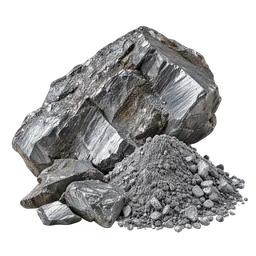
Zinc refused to give up its secrets. For centuries, metalworkers could smelt copper, tin, iron, and lead with a hot fire. Zinc wouldn't cooperate—it slipped away as vapor before anyone could catch it. Only when furnaces were redesigned to trap the metal did zinc step onto history's stage; only later did doctors learn that our bodies, too, falter without it. 1
The metal that tried to escape
Because zinc boils at a lower temperature than it reduces, early furnaces couldn't contain it; the metal vanished as vapor. Medieval metallurgists in India solved the puzzle by distilling zinc in closed retorts, while Romans learned to season copper with zinc vapor to make brass. Much later, in 1746, Andreas Marggraf described isolating metallic zinc—centuries after artisans had been using it without knowing its name. 1 Two thousand years before Marggraf, a Roman ship went down off Tuscany with a physician's kit aboard. Among the artifacts were tin boxes of gray tablets. Modern analysis revealed their main ingredients: zinc carbonates and hydroxycarbonates—what the ancients called "cadmia." These tablets were likely crushed and dissolved as eyedrops, an ancient therapy echoed today by zinc's modern dermatologic and ocular uses. 2
The doctor who changed what medicine believed
"Until 1961 it was believed that zinc deficiency in humans could never occur," wrote hematologist Ananda Prasad, reflecting on a discovery that overturned dogma. 3 In Iran and Egypt, he met young men with stunted growth, delayed puberty, and brittle skin. Their diets were heavy in unleavened bread and low in animal protein—a perfect recipe for zinc shortfall because plant phytates bind zinc and make it hard to absorb. When Prasad gave zinc, the young men grew; their bodies caught up. The idea that a simple metal could change a life became modern clinical fact. 3 That insight scaled. Today, in busy pediatric wards from Dhaka to Dar es Salaam, zinc isn't an exotic supplement; it's part of standard diarrheal care alongside oral rehydration. The World Health Organization recommends a short, 10–14 day course (20 mg/day for children over six months; 10 mg/day for younger infants). The result is not just faster recovery—it's fewer repeat infections in the months that follow. 4 In a Dhaka hospital trial, children with cholera who received zinc recovered faster and produced less stool than those on placebo—a real-world difference measured in hours of illness saved and liters of rehydration fluid spared. 5 Multiply that effect across communities, and zinc becomes quiet public health infrastructure.
The eye's slow race against time
Zinc's story isn't only acute care. In the landmark Age-Related Eye Disease Study (AREDS), people at high risk of advanced macular degeneration took a daily combination of antioxidants plus zinc (80 mg as zinc oxide, with copper to prevent deficiency). Over years, their risk of progressing to vision-stealing late-stage disease dropped about 25%, and vision loss fell by about 19%. For those already at low risk, the benefit wasn't apparent—evidence that zinc helps most when the stakes are highest. 6 Even beyond pills, zinc persists in modern eye care's periphery: zinc oxide remains one of the few sunscreen actives the FDA proposes as "generally recognized as safe and effective," a skin defense that shields the very organ we're trying to protect. 7
The cold-case detective work
Every winter, zinc lozenges re-enter the chat. The latest Cochrane review (2024) found that zinc may reduce the duration of a cold, but benefits vary and side effects like nausea and bad taste are more common—overall certainty low. 8 Meanwhile, a meta-analysis of properly formulated zinc acetate lozenges (totaling ~80–92 mg/day) reported colds ending about three days sooner on average. The catch? Formulation matters: acids like citric acid can tie up the zinc, blunting its effect. If you're going to try it, start within 24 hours and keep it short (under two weeks). 9 One hard line is easy to draw: don't put zinc up your nose. After more than 130 reports of loss of smell, the FDA warned against intranasal zinc products; some were pulled from shelves. Smell loss can be long-lasting. 10
How zinc does its quiet work
Think of zinc as a master key your cells keep on a ring: over 300 enzymes need it to cut, copy, and repair DNA; immune cells need it to coordinate their attack with precision; skin cells need it to knit wounds. When diets lean heavily on high-phytate grains and legumes without counterweights—fermentation, leavening, or animal proteins—less zinc slips through the gut's "customs." Signs of deficiency read like a systems checklist: slow wound healing, more infections, altered taste or smell. 11,12 For most healthy adults, the daily target is modest—about 11 mg for men and 8 mg for women—and long-term doses much above that shouldn't be routine without a reason, because chronic high intake can steal copper, causing anemia and neurological problems. Keep an eye on timing, too: iron supplements and certain antibiotics compete for the same cellular doorways, so separate zinc from tetracyclines and quinolones by several hours. 11
A spark at the beginning of life
Zinc's most cinematic cameo was captured in a darkened lab at Northwestern University. As an egg is fertilized, billions of zinc ions burst from its surface in shimmering "zinc sparks," and the brightness of that flash correlates with embryo quality in early research. "When I first saw the human zinc spark, I just broke down crying," recalled ovarian biologist Teresa Woodruff. 13 Those sparks seem to help seal the egg's entryway against additional sperm—a metallurgical lock clicking shut at life's first moment. 13
Putting it to work, wisely
Children with acute diarrhea: short-course zinc is standard of care and can prevent another episode in coming months. Ask your pediatric clinician about the WHO dosing (10–14 days). 4
Eye health in intermediate/advanced AMD: the AREDS/AREDS2 formula includes zinc with copper; benefits accrue over years, not days. 6
Colds: if you choose to try lozenges, favor zinc acetate totaling ~80–100 mg/day for no more than 1–2 weeks, avoid citric acid in the lozenge, and start within 24 hours. Expect a metallic taste and mild nausea; results vary. 8,9
Everyday nutrition: aim for food first—oysters, beef, and dairy are rich; plant-heavy diets can still work with leavened breads, soaked/fermented legumes, nuts, and seeds. Stay near the daily recommended intake long term, and avoid intranasal zinc. 11,3,10
Zinc's lesson is less about miracle cures and more about context. It is the right tool when deficiency lurks, when a child's gut is under siege, when the eye's macula needs a shield, and perhaps when a cold has just begun—if we respect formulation and dose. The metal that once escaped our furnaces is now part of our pharmacopoeia, and still hinting at roles we're only beginning to see.
Zinc's arc runs from ancient furnaces to children's wards, from Roman eye pills to a flash at conception. Its power lies not in being a cure-all, but in being precisely enough: a trace metal that, when present and properly used, lets other systems do their jobs. In an age of maximalism, zinc reminds us that sometimes the smallest keys open the most important doors.