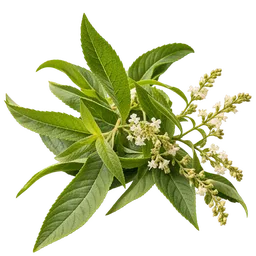
Lemon Verbena
What the trials found
Lemon verbena shows early signals for sleep and stress, but evidence remains insufficient to establish meaningful benefits across broader goals such as mood, pain, performance, or hormone balance.
- 6 papers
- 0 of 22 outcomes
Dose, timing & forms
How much
The better-known human protocols use daily standardized lemon verbena leaf extract for several weeks, rather than occasional tea. Sleep and stress are the clearest consumer-relevant areas studied so far, but the small evidence base does not support treating one protocol as a proven universal dose.1 Start with the product's studied extract and label directions, then assess your response over the full trial-like timeframe instead of escalating quickly.1
When and how long
For a calming or sleep-focused routine, take lemon verbena consistently at the same time each day and follow the timing used by the specific extract you choose. An evening routine makes practical sense when sleep is your goal, while daytime use better fits stress or recovery goals. The available trials examine regular use over weeks, so it is not an occasional rescue supplement.1
Forms & standardisation
Most human research uses standardized leaf extract, not loose-leaf tea. Look for a product that identifies Aloysia citrodora or Lippia citriodora and states its extract standardization, ideally including verbascoside or total polyphenol content.12 Tea remains a pleasant food-style option, but it does not reliably match the concentrated extract tested in clinical research.1
What this is and how it works
- One randomized sleep study reported improved sleep quality, but no pooled effect size or MCID comparison is available.1
- Six papers reviewed here span 22 outcomes, with human evidence concentrated on sleep and stress.
- Findings apply mainly to specific standardized extracts and study populations, not lemon verbena products generally.
Lemon verbena, also called Aloysia citrodora, is a fragrant shrub whose narrow leaves carry a strong lemon scent. People traditionally steep the leaves as tea, while clinical studies usually test concentrated leaf extracts rather than kitchen tea bags.2
Its leaf compounds, especially verbascoside and related polyphenols, act like tiny rust guards in laboratory models, helping limit the chain reactions that oxidative stress can set off.2 Researchers are also exploring how these compounds influence the body's stress-response signaling, which gives the sleep and stress findings a biologically plausible starting point, not a settled explanation.12
Bottom line
Lemon verbena makes the most sense for someone who wants a mild, caffeine-free addition to a wind-down routine and accepts that the human evidence is still early. The sleep and stress signals are worth watching, but six papers reviewed here do not justify big promises for mood, pain, performance, or hormone goals. Skip the hype, choose a clearly standardized extract if you try it, and keep expectations modest.1
Common questions
What is lemon verbena used for?
Does lemon verbena help with sleep?
Is lemon verbena the same as lemon balm?
How long does lemon verbena take to work?
Sources
Sources
Generated August 27, 2026
Related