Can I mix my powders into the same drink?
Nov 22, 2026 · 2 min read · 4 sources
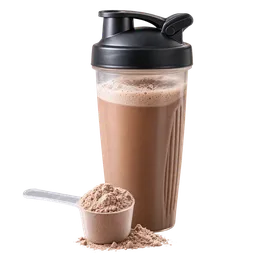
Supplement powders can usually share one drink when each ingredient stays within its safe daily dose.
The real-life version is not chemistry class. It is one shaker, three tubs on the counter, and ten minutes before you leave.
Yes, I would mix ordinary powders in the same drink if the total doses make sense. The exception is a high-risk ingredient where a small measuring mistake matters, especially pure or highly concentrated caffeine.
One shaker is fine. One careless stack is not.
For common powders like creatine, protein, collagen, electrolyte mixes, fiber, or flavored amino acids, the drink itself is not the main safety issue. Your stomach is already built to receive mixed food. A smoothie with protein, creatine, cocoa, and milk is not automatically more dangerous than taking those same things separately.
The practical rule is simpler: count the active ingredients across every scoop. Creatine is a good example. The International Society of Sports Nutrition position stand describes a typical maintenance intake of 3 to 5 grams per day after optional loading, and creatine monohydrate does not require a dedicated glass to work.3 If you put 5 grams of creatine into a protein shake, fine. If your pre-workout already contains creatine and you add another full scoop because the tubs look separate, now the shaker hid the duplicate.
Minerals are where people get surprised. The NIH Office of Dietary Supplements lists the adult upper limit for supplemental magnesium at 350 mg per day. That limit applies to magnesium from supplements or medications, not magnesium naturally found in food.1 So a nighttime magnesium powder plus an electrolyte powder plus a greens powder can turn into a bathroom problem before it turns into a performance plan.
Calcium has a wider adult upper limit, 2,000 to 2,500 mg per day depending on age, but it still rewards label reading.2 Calcium also gets added to multivitamins, bone formulas, meal replacements, and fortified foods. Mixing is not the problem. Forgetting the running total is.
The confound is “will they cancel each other out?” Usually, no.
Most people asking this are worried that one powder will neutralize another. For everyday supplement powders, that fear is usually louder than the evidence. The bigger variables are dose, timing, tolerance, and whether the product is accurately measured.
Caffeine is the ingredient I would separate mentally, even if it ends up in the same cup. The FDA warns consumers to avoid pure or highly concentrated caffeine powders and liquids, because they are hard to measure and have been linked to deaths in otherwise healthy people.4 That is different from a pre-workout with a labeled caffeine amount, but the lesson carries over. If one scoop has 200 mg caffeine and another “fat burner” has more, your drink can quietly become a stimulant stack.
The other reason to separate powders is comfort, not danger. Fiber can thicken fast. Magnesium citrate can loosen stool. Some greens powders taste worse with protein. Creatine can sit gritty if you let it stand. None of that means the mix is unsafe. It means the best stack on paper can still be a drink you hate.
The decision today: mix for convenience, audit for dose.
Here is what I would do. Use one drink for the boring, well-labeled basics: protein, creatine, collagen, electrolytes, and maybe a greens powder if you tolerate it. Before adding a new powder, read the Supplement Facts panel and circle duplicates: caffeine, magnesium, calcium, vitamin D, niacin, zinc, and herbal stimulants.
Do not mix mystery scoops from unlabeled bags. Do not use bulk pure caffeine powder. Do not assume half a scoop is precise unless the label gives grams and you can weigh it. If you have kidney disease, a heart rhythm problem, or you take medications with mineral spacing instructions, that is a real reason to ask a pharmacist how to time the stack.
For everyone else, the answer is refreshingly ordinary: one shaker is fine. The label math is the supplement routine.
Supplements in this article
Worth knowing
- Minerals can interfere with some medications, so medication-specific spacing belongs with a pharmacist.
- Taste, texture, clumping, and storage stability vary by formula.
- If the label hides active amounts, you cannot do the dose math.
Common questions
Can I mix creatine and protein powder together?
Can I mix all my powders the night before?
What powder should I not casually add to a stack?
Sources
- 1. Magnesium: Fact Sheet for Health Professionals (2026) Upper limit for supplemental magnesium
- 2. Calcium: Fact Sheet for Health Professionals (2026) Upper limit range for calcium
- 3. International Society of Sports Nutrition position stand: safety and efficacy of creatine supplementation in exercise, sport, and medicine (2017) Creatine maintenance dose and mixing context
- 4. Pure and Highly Concentrated Caffeine (2026) High-risk powder exception for caffeine