Chastetree (Vitex agnus-castus)
4 studies read · 3 answers · 1 sources
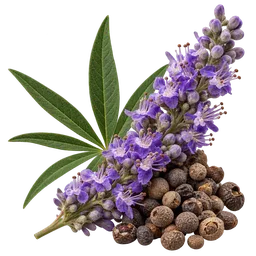
Chastetree barely improves premenstrual syndrome symptoms, with evidence strongest for PMS and too limited to support noticeable benefits across other outcomes.
What it does
Worth watching
-
More cycle regularity · May help
More predictable periods can make it easier to plan around bleeding and know when a period is late.
1 trial · 60 people · noticed in 12 weeks
-
Less breast pain · May help
Breast pain can make clothing, movement, and everyday activities uncomfortable.
1 review of 5 trials · noticed in 13 weeks
Early findings (1)
-
Milder PMS symptoms · May help a little
1 trial · 170 people
How to take it
Chastetree is a reasonable topic to discuss with a clinician if PMS disrupts your life and you want to explore a botanical option, but set the bar low. The available trial found only a trivial benefit, not the kind of change that reliably transforms a difficult cycle. 1 Avoid self-experimenting if you have unexpected menstrual bleeding, and review medications with a clinician or pharmacist first.
How much
The available PMS trial used 20 mg daily for 12 weeks. It found only a trivial change in overall PMS burden, so increasing the dose does not have evidence behind it as a way to produce a bigger result. 1
When
Take it consistently each day rather than only when symptoms start. The trial assessed a full 12-week course, which means the evidence does not tell you that occasional use works. 1
Which form
Look for a product that clearly identifies Vitex agnus-castus fruit extract and states the amount per daily serving. The PMS trial tested a standardized fruit extract, not tea, whole berries, or a vague proprietary blend. 1
The dose that worked, by measure (1)
- Ease the overall PMS burden
- 20 mg12 weeks
Who should be careful
Medicines it can clash with
- pramipexole moderate
Reported side effects
- Acne mild
- Multiple abscesses mild
- Intermenstrual bleeding mild
- Urticaria mild
- Early menstrual period mild
- Gastric upset mild
- nausea mild
- spotting mild
Bottles worth buying
Dosed where the research is, in a clean formula, from audited brands. Not sponsored.
-

Vitex 40 mg
Nature's Answer · 40 mg a day · brand audit 75
-

Women's Menopause Support
Doctor's Best · 50 mg a day · brand audit 82
-

Premenstrual Comfort
SuperSmart · 40 mg a day · brand audit 63
-

PhytoBalance II
Pure Encapsulations · 40 mg a day · brand audit 78
-

Natural Estrogen Without Soy Isoflavones
Life Extension · 20 mg a day · brand audit 90
-

AM Formula
Nature's Way · 40 mg a day · brand audit 72
How it works
Chastetree gets plenty of attention for PMS, but the result worth knowing is surprisingly modest: one trial found a change so small that most people would struggle to notice it. 1
Chastetree, also called vitex, comes from the dried fruit of a Mediterranean shrub. People use fruit extracts in capsules or tablets, usually in the weeks and months leading up to their periods. The clinical research for PMS is still thin, so the label hype runs ahead of what the trial result shows. 1
Chastetree appears to interact with dopamine signaling, the brain-to-pituitary messaging system that helps control prolactin release. Think of dopamine as a hand on a hormone faucet: when the signal presses down, it can turn down prolactin output, a pathway researchers have explored in PMS. 1