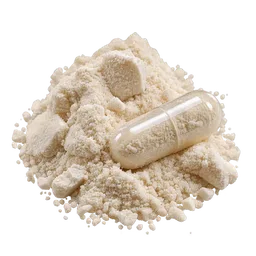
Lactobacillus rhamnosus
Best for
Reduce diarrhea
Likely benefit 1 weeks 1 meta-analysis, n=936 #4 of 16 studied
- 4 papers
- 2 of 6 outcomes
- 1 positive
Lactobacillus rhamnosus, specifically LGG, likely provides a modest benefit by shortening acute diarrhea episodes in children with gastroenteritis, while broader gut-health benefits remain uncertain.
Risk, worst reported severity
- hepatic enzyme increased moderate
- electrolyte imbalance mild
What lactobacillus rhamnosus actually does
A stomach bug, or acute gastroenteritis, can cause diarrhea, vomiting, cramps, and fever. 17690340
| Outcome | Effect | Evidence | Dose | Time | Rank |
|---|---|---|---|---|---|
| Clear benefits 1 | |||||
| Reduce diarrhea Likely benefit Diarrhea brings loose, watery stools that can disrupt daily life and cause dehydration. | | 1 meta-analysis 2 papers · n=936 | — | 1 wk | #4 /16 |
| Early research 1 | |||||
| Feel better during a stomach bug Not enough research A stomach bug, or acute gastroenteritis, can cause diarrhea, vomiting, cramps, and fever. | | 1 RCT 1 papers · n=192 | — | 1 wk | — |
Effect tiers come from native-unit MCID where available, Cohen's d otherwise.
Dose, timing & forms
How much
The clearest use is short-term acute diarrhea, not everyday general wellness. Pediatric guidance for the studied LGG strain uses at least 10 billion CFU daily for 5 to 7 days, and the clinical evidence supports that short-course approach for acute gastroenteritis.23 The evidence does not establish one routine dose for every L. rhamnosus product or for milder gut infection symptoms.13
When and how long
Start the course during the acute diarrhea episode and take it consistently each day through the short study-style course, rather than taking an occasional capsule only when symptoms flare.3 The available evidence does not establish a meaningful advantage for morning versus evening use or for taking LGG with versus without food.3
Forms & standardisation
Look for the full strain name Lactobacillus rhamnosus GG or LGG, not just L. rhamnosus. Strain identity matters because the surface features that shape LGG's interactions with the gut do not automatically belong to every member of the species.1 Choose a product that states its live CFU count and confirms that count through the expiration date.
Adverse events and drug interactions
Safety events
What this is and how it works
- Across 2 studies (n=936), LGG shortened acute diarrhea episodes; a numerical effect and MCID comparison were not reported.2
- Four papers reviewed here span six outcomes, with strongest support for acute infectious diarrhea treatment.3
- Evidence centers on clearly labeled LGG products in children, not Lactobacillus rhamnosus products generally.2
Lactobacillus rhamnosus is a group of friendly bacteria used as probiotics. The important detail is the surname after the species name: individual strains act differently, and the diarrhea research centers on L. rhamnosus GG, often shortened to LGG.1
Bottom line
A clearly labeled LGG product is worth considering when you want a modest, evidence-backed way to shorten a brief acute diarrhea episode.23 Do not expect the same confidence for everyday gut health or for making a stomach infection substantially milder, where the evidence remains thin.13 People with significant illness or complex medical needs should use clinician guidance before starting a probiotic.
Common questions
Does Lactobacillus rhamnosus help with diarrhea?
Is Lactobacillus rhamnosus the same as Lactobacillus rhamnosus GG?
When should you take Lactobacillus rhamnosus for acute diarrhea?
Sources
Sources
- 1. Towards a better understanding of Lactobacillus rhamnosus GG-host interactions (2014) ↑
- 2. Meta-analysis: Lactobacillus GG for treating acute gastroenteritis in children (2007) ↑
- 3. Use of Probiotics for Management of Acute Gastroenteritis: A Position Paper by the ESPGHAN Working Group for Probiotics and Prebiotics (2017) ↑
- 4. Probiotics for treating acute infectious diarrhoea (2010) ↑
Generated August 27, 2026
Related
More evidence for Lactobacillus rhamnosus
Ingredient evidence
Ingredient evidence
NewBifidobacterium
All scored outcomes
Aug 27, 2026
Ingredient evidence
Ingredient evidence
NewLactobacillus reuteri
All scored outcomes
Aug 27, 2026
Ingredient evidence
Ingredient evidence
NewProbiotics
All scored outcomes
Aug 27, 2026
Ingredient evidence
Ingredient evidence
NewLactococcus acidophilus
All scored outcomes
Aug 27, 2026
Ingredient evidence
Ingredient evidence
NewSaccharomyces boulardii
All scored outcomes
Aug 27, 2026