Magnesium Oxide
Best for
Relieve constipation
Promising early signal 4–6 weeks 2 meta-analyses, n=202 #5 of 12 studied
- 46 papers
- 8 of 91 outcomes
- 3 positive
- 3 severe
Magnesium oxide offers a likely real but unnoticeable reduction in nighttime cramp disruption, while evidence across other health outcomes remains uneven and limited.
What magnesium oxide actually does
More time asleep can help you meet the amount of sleep you need. 23853635 · 33865376
Sleep quality reflects whether the night leaves you feeling well rested. 34719399 · 36620514
Uninterrupted sleep helps the night feel more settled and restorative. 23853635 · 33865376
Less severe insomnia can mean fewer nights spent struggling with sleep. 23853635 · 33865376
Memory helps you hold onto information and bring it back when you need it. 39009081
| Outcome | Effect | Evidence | Dose | Time | Rank |
|---|---|---|---|---|---|
| Modest benefits 1 | |||||
| Ease leg cramps at night Likely real but unnoticeable Leg cramps are sudden, painful muscle contractions that can interrupt sleep. | | 2 meta-analyses 3 papers · n=480 | 226 mg | 4–9 wk | #1 /2 |
| Worth watching 2 | |||||
| Relieve constipation Promising early signal Constipation can mean infrequent, hard, or difficult bowel movements. | | 2 meta-analyses 4 papers · n=202 | — | 4–6 wk | #5 /12 |
| Fall asleep sooner Promising early signal A shorter wait for sleep can make bedtime feel less frustrating. | | 1 meta-analysis 2 papers · n=55 | 320–729 mg | 5–8 wk | #6 /20 |
| Early research 5 | |||||
| Get more sleep each night Not enough research More time asleep can help you meet the amount of sleep you need. | | 1 meta-analysis 2 papers · n=55 | 320–729 mg | 5–8 wk | — |
| Sleep that feels more restorative Not enough research Sleep quality reflects whether the night leaves you feeling well rested. | | 2 RCTs 2 papers · n=64 | 226–250 mg | 9–10 wk | — |
| Stay asleep through the night Not enough research Uninterrupted sleep helps the night feel more settled and restorative. | | 1 meta-analysis 2 papers · n=— | 320–729 mg | 8 wk | — |
| Reduce insomnia symptoms Not enough research Less severe insomnia can mean fewer nights spent struggling with sleep. | | 1 meta-analysis 2 papers · n=— | 500 mg | 8 wk | #7 /13 |
| Remember more Not enough research Memory helps you hold onto information and bring it back when you need it. | | 1 meta-analysis 1 papers · n=— | 520 mg | 8 wk | — |
Effect tiers come from native-unit MCID where available, Cohen's d otherwise.
Dose, timing & forms
How much
For constipation, the better-studied regimen uses 1.5 g daily of magnesium oxide and tracks stool comfort over several weeks, rather than judging it after a single dose.4 Sleep research has used 500 mg daily for eight weeks in older adults with primary insomnia, with earlier sleep onset as the clearest signal.2 For nighttime leg cramps, a 226 mg daily regimen produced only trivial average improvement, so increasing the dose solely for cramps does not look compelling.1
When and how long
For bowel regularity, take it consistently and build the routine around when you want a bowel movement, while leaving room to adjust if stools become too loose or your stomach feels uncomfortable.4 The insomnia trial used a daily evening-oriented routine for eight weeks, so bedtime use fits the available protocol better than taking it only on a rough night.2 Keep timing consistent for at least several weeks before deciding whether it changes sleep.2
Forms & standardisation
Choose magnesium oxide when constipation is the priority, since that is where its lower absorption becomes part of the intended effect.4 For a general magnesium supplement, do not assume the large compound weight on the front label equals the amount of elemental magnesium your body absorbs. Magnesium oxide has lower bioavailability than several alternative magnesium preparations.3 Look for a label that clearly states both the magnesium oxide amount and elemental magnesium amount.
Adverse events and drug interactions
Safety events
Recommended Magnesium Oxide products
Real products that dose Magnesium Oxide where the research does, in a clean formulation, from brands we've audited. We only list ones we'd stand behind.
-

Synergy
Body Prime
Well dosed 1,200 mg/day A formula -

KAPPA NUTRITION
Mag Cleanse 7 in 1 Cleanse & Detox Advanced Complex
Well dosed 1,345 mg/day B formula
Chosen for adequate Magnesium Oxide dosing vs. the studied range, a clean formulation (grade A–C), and independent brand-quality audits. Not sponsored.
What this is and how it works
- Across 3 studies (n=480), nighttime cramp disruption was evaluated, but no native-unit effect or MCID comparison was reported.1
- The reviewed evidence spans 46 papers and 91 outcomes, including constipation, sleep, and nighttime leg cramps.
- Nighttime cramp findings apply to specific trial populations and should not be generalized across magnesium oxide uses.
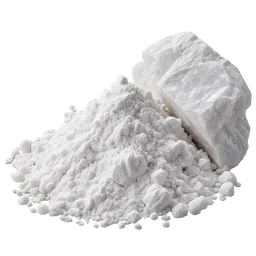
Magnesium oxide is a mineral salt made by pairing magnesium with oxygen. You find it in many inexpensive magnesium supplements and in products aimed at occasional constipation. Compared with more readily absorbed forms, more of magnesium oxide remains inside the digestive tract.3
In the bowel, unabsorbed magnesium oxide acts like a sponge that pulls water into the stool, which can soften it and make it easier to pass.4 The magnesium that does enter circulation takes part in nerve-cell signaling, including systems involved in winding down for sleep, though sleep trials have not pinned down one proven pathway.2
Bottom line
Magnesium oxide makes the most sense for someone whose main goal is easier, more comfortable bowel movements and who can tolerate a gradual daily routine.4 It has an early but interesting sleep-onset signal, while its leg-cramp benefit is too tiny to build expectations around.12 Skip self-treatment and get medical advice first if you have kidney problems, unexplained severe symptoms, or take medicines that require carefully spaced dosing.
Common questions
Is magnesium oxide good for constipation?
Does magnesium oxide help you sleep?
Does magnesium oxide stop nighttime leg cramps?
Is magnesium oxide absorbed well?
Sources
Sources
- 1. Effect of Magnesium Oxide Supplementation on Nighttime Leg Cramps: A Randomized Clinical Trial (2017) ↑
- 2. The Effect of Magnesium Supplementation on Primary Insomnia in Elderly: A Double-Blind Placebo-Controlled Clinical Trial (2012) ↑
- 3. Bioavailability of US Commercial Magnesium Preparations (2001) ↑
- 4. A Randomized, Double-Blind, Placebo-Controlled Trial of Magnesium Oxide for Chronic Constipation (2019) ↑
Generated August 27, 2026