Passionflower
2 studies read · 6 answers · 3 sources
Passionflower shows a large effect on longer stretches of sleep, but the finding needs confirmation before passionflower can be considered reliably effective across sleep and anxiety outcomes.
What it does
Worth watching
-
Staying asleep through the night · May help
A night with fewer awakenings can make it easier to feel rested in the morning.
1 trial · 65 people · noticed in 4 weeks
-
Less anxiety before surgery · May help a lot
Worry before surgery or dental care can make appointments harder to face.
1 trial · 42 people
-
Falling asleep sooner · May help
A shorter wait to fall asleep can leave more of the night for rest.
1 trial · 65 people · noticed in 4 weeks
Early findings (3)
-
Better sleep quality · May help a little
1 trial · 65 people · noticed in 4 weeks
-
Feel less daily stress · May help
1 trial · 65 people · noticed in 4 weeks
-
More hours of sleep · May help
1 trial · 65 people · noticed in 4 weeks
How to take it
Passionflower is a reasonable option for someone who wants to test a gentle bedtime supplement and accepts that the sleep evidence is still early. The signal for staying asleep is interesting, but one small evidence base cannot settle the question. Skip casual experimentation if you already use sedating anxiety medicines, and check with a clinician first.1,3
How much
The clearest sleep-focused protocol uses 600 mg daily of an oral passionflower preparation for about 4 weeks. Early findings suggest that this routine supports longer, less interrupted sleep more than it establishes a dramatic fix for insomnia.1 Do not treat the 600 mg figure as interchangeable across teas, tinctures, and extracts, since those products deliver very different amounts of plant compounds.3
When
Use passionflower consistently rather than only on a rough night, since the sleep protocol ran daily for several weeks.1 For a bedtime goal, follow the product directions and take the dose at a time that lets you see whether it causes drowsiness before you need to drive, study, or make important decisions.3 Pre-procedure research used a single oral dose before surgery under clinical supervision, which is not a reason to self-dose before a medical procedure.2
Which form
The clinical literature examines oral preparations, including extracts and herbal tea, rather than a single universally validated passionflower product.1,3 Look for a label that names Passiflora incarnata, states the amount per serving, and identifies the plant material or extraction details. A generic “passionflower blend” makes it hard to compare what you take with what trials tested.3
The dose that worked, by measure (6)
- Sleep more easily through the night
- 600 mg4 weeks
- Handle daily demands with less stress
- 600 mg4 weeks
- Stay asleep through the night
- 600 mg4 weeks
- Fall asleep sooner
- 600 mg4 weeks
- Sleep more soundly
- 600 mg4 weeks
- Spend more time asleep
- 600 mg4 weeks
Who should be careful
Medicines it can clash with
- anxiolytics minor
Reported side effects
- dizziness / drowsiness / confusion mild
- somnolence mild
- drowsiness
How it works
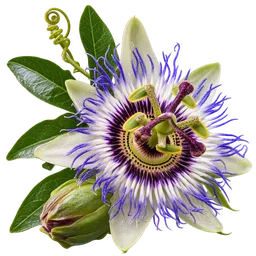
Passionflower is not just a pretty climbing vine. Early trials suggest its extract might help some people spend less of the night awake.
Passionflower usually means Passiflora incarnata, a flowering vine long used in teas, tinctures, and extracts for nervous tension and bedtime routines. Modern supplements concentrate material from the plant above the ground, but products vary widely in the plant part and extraction method they use.3
Passionflower contains plant compounds that researchers think nudge the brain's gamma-aminobutyric acid system, one of its main braking systems for overactive nerve signaling.3 Picture it like easing off a car's accelerator when your thoughts keep revving at bedtime. This proposed mechanism fits its traditional calming use, but human sleep trials remain too limited to prove exactly how it works.1,3
Common questions
Does passionflower actually help you sleep?
How much passionflower should you take for sleep?
Can passionflower calm anxiety before a procedure?
Does passionflower make you sleepy during the day?
Sources
- 1. A pilot study on the effects of a Passiflora incarnata herbal tea on subjective sleep quality (2011)
- 2. Preoperative oral Passiflora incarnata reduces anxiety in ambulatory surgery patients: a double-blind, placebo-controlled study (2008)
- 3. Passiflora incarnata L.: ethnopharmacology, clinical application, safety and evaluation of clinical trials (2015)