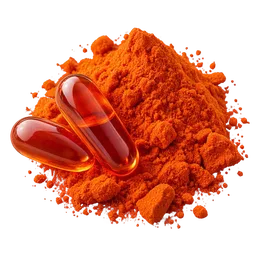
Beta-Carotene
What the trials found
Beta-carotene has not enough research supporting improved macular defenses or reliable benefits across other health outcomes, especially from standalone high-dose supplements.
- 16 papers
- 1 of 20 outcomes
Risk, worst reported severity
- treatment-emergent adverse events (overall)
- Gastrointestinal disorders
What beta-carotene actually does
Age-related macular degeneration can take away sharp central vision for reading and recognizing faces. 28756617
| Outcome | Effect | Evidence | Dose | Time | Rank |
|---|---|---|---|---|---|
| Early research 1 | |||||
| Prevent age-related macular degeneration Not enough research Age-related macular degeneration can take away sharp central vision for reading and recognizing faces. | | 1 meta-analysis 1 papers · n=22k | — | 468 wk | — |
Effect tiers come from native-unit MCID where available, Cohen's d otherwise.
Dose, timing & forms
How much
When and how long
Research does not identify a best time of day for beta-carotene. If a clinician recommends it for a specific reason, take it consistently as directed and follow the product instructions, rather than treating it as an occasional add-on.1
Adverse events and drug interactions
Safety events
Recommended Beta-Carotene products
Real products that dose Beta-Carotene where the research does, in a clean formulation, from brands we've audited. We only list ones we'd stand behind.
-

Bluebonnet
D. Salina Beta-Carotene 25,000 IU
Well dosed 3,750 mcg/day A formulaBrand audit 82/100
-

NATURELO Premium Supplements
Whole Food Multivitamin for Teens
Well dosed 1,350 mcg RAE/day A formula -

NATURELO Premium Supplements
Whole Food Multivitamin for Teen Guys
Well dosed 1,350 mcg RAE/day A formula -

NATURELO
Whole Food Multivitamin for Men
Well dosed 1,000 mcg RAE/day A formula -

Isotonix
Multivitamin
Well dosed 10,000 IU/day B formula -

Amazon Elements
Men's 40+ One Daily
Well dosed 5,000 IU/day B formula
Chosen for adequate Beta-Carotene dosing vs. the studied range, a clean formulation (grade A–C), and independent brand-quality audits. Not sponsored.
What this is and how it works
- One study (n=22,083) reported no clear direction for macular-defense endpoints; a noticeable-change threshold was not established.4
- Sixteen papers reviewed here spanned 20 outcomes, with only one claim rated as early evidence.
- High-dose beta-carotene supplementation is unsafe for smokers, with trials reporting increased lung-cancer risk.2
Beta-carotene is a plant pigment found in orange and dark-green produce, including carrots, sweet potatoes, spinach, and kale. It belongs to a family called carotenoids, and your body can turn some of it into vitamin A when needed.1
Beta-carotene works mainly as a raw material for vitamin A. Think of it as a box of replacement bulbs: your body opens only what it needs to make retinal, a vitamin A form used in the eye's light-sensing system.1 Research has not established that this conversion translates into a standalone macular benefit from supplemental beta-carotene.4
Bottom line
Beta-carotene makes the most sense as part of a varied diet rich in colorful vegetables, not as a high-dose shortcut for eye health. The current evidence leaves its standalone macular benefit unresolved, and people who smoke or have a substantial smoking history should avoid high-dose supplements unless a clinician specifically directs otherwise.234
Common questions
What does beta-carotene do in the body?
Does beta-carotene support macular health?
Should smokers take beta-carotene supplements?
Sources
Sources
- 1. Vitamin A and Carotenoids Fact Sheet for Health Professionals
- 2. The effect of vitamin E and beta carotene on the incidence of lung cancer and other cancers in male smokers (1994) ↑
- 3. The effect of beta carotene and vitamin A on lung cancer and cardiovascular disease (1996) ↑
- 4. A randomized, placebo-controlled, clinical trial of high-dose supplementation with vitamins C and E, beta carotene, and zinc for age-related macular degeneration and vision loss (2001) ↑
Generated August 27, 2026