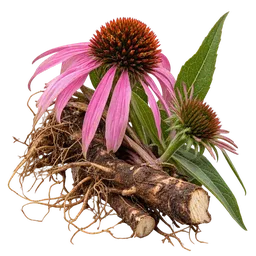
Echinacea angustifolia
What the trials found
Echinacea angustifolia does not have enough research to establish easier cold symptoms or fewer colds and respiratory infections in adults.
- 1 papers
- 2 of 2 outcomes
Risk, worst reported severity
- Gastrointestinal side effects
What echinacea angustifolia actually does
Cold symptoms such as cough, congestion, and fever can make ordinary days harder. 16049208
A respiratory, skin, or soft-tissue infection can interrupt work, school, and daily routines. 16049208
| Outcome | Effect | Evidence | Dose | Time | Rank |
|---|---|---|---|---|---|
| Early research 2 | |||||
| Feel less sick with a cold Not enough research Cold symptoms such as cough, congestion, and fever can make ordinary days harder. | | 1 RCT 1 papers · n=155 | 300 mg | — | — |
| Get fewer common infections Not enough research A respiratory, skin, or soft-tissue infection can interrupt work, school, and daily routines. | | 1 RCT 1 papers · n=155 | 300 mg | — | — |
Effect tiers come from native-unit MCID where available, Cohen's d otherwise.
Dose, timing & forms
How much
When and how long
Forms & standardisation
Look for a label that clearly names Echinacea angustifolia and identifies the plant part, especially root, rather than simply saying “echinacea.” The available clinical evidence is too limited to favor a specific extract type or alkylamide standardization level.1
Studied range, by outcome
| Outcome | Studied range | Median effective | Duration | Evidence |
|---|---|---|---|---|
| Ease cold and flu symptoms | 300 mg | — | — | 1 paper |
| Prevent acute respiratory infections | 300 mg | — | — | 1 paper |
Adverse events and drug interactions
Safety events
What this is and how it works
- One randomized trial (n=155) found no clear change in cold symptoms or respiratory infections 1.
- One paper reviewed here spans two outcomes: cold-symptom relief and prevention of colds or respiratory infections.
- Evidence comes from one small randomized trial, limiting confidence in both outcomes.
Echinacea angustifolia is a prairie flower native to North America. Its root has a long history in herbal products, usually sold as capsules, tablets, teas, or liquid extracts for cold-season support.
Echinacea angustifolia contains plant compounds called alkylamides, but the available clinical trial does not show that they create a meaningful change in the body that translates into fewer or easier colds.1 Think of the extract as a key ring with many keys: scientists have not identified one that reliably turns the immune response in a useful direction for cold symptoms.1
Bottom line
Echinacea angustifolia is not a strong pick if your goal is to prevent colds or noticeably reduce cold symptoms. One small trial found trivial, non-significant results, while digestive side effects remain possible.1
Common questions
Does Echinacea angustifolia prevent colds?
Can Echinacea angustifolia shorten a cold?
What side effects does Echinacea angustifolia cause?
Sources
Sources
Generated August 27, 2026
Related
More evidence for Echinacea angustifolia
Ingredient evidence
Ingredient evidence
NewEchinacea
All scored outcomes
Aug 27, 2026
Ingredient evidence
Ingredient evidence
NewEchinacea purpurea
All scored outcomes
Aug 27, 2026
Ingredient evidence
Ingredient evidence
NewEuropean Elder / Elderberry
All scored outcomes
Aug 27, 2026
Ingredient evidence
Ingredient evidence
NewThyme
All scored outcomes
Aug 27, 2026
Ingredient evidence
Ingredient evidence
NewVitamin C
All scored outcomes
Aug 27, 2026
Ingredient evidence
Ingredient evidence
NewZinc
All scored outcomes
Aug 27, 2026