European Elder / Elderberry
7 studies read · 3 answers · 4 sources
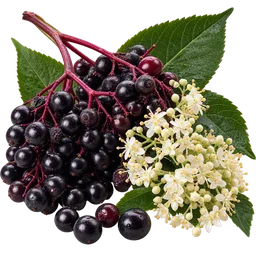
European elderberry produces a likely real but unnoticeable improvement in short-term respiratory recovery, with the clearest signal being slightly earlier return to usual activities rather than broad protection.
What it does
Worth watching
-
Less severe respiratory infections · May help a lot
A respiratory infection can bring symptoms, medication use, or complications that disrupt daily life.
1 trial · 29 people · noticed in 2 weeks
Early findings (2)
-
Faster illness recovery · May help
1 review of 2 trials · 87 people · noticed in 1–2 weeks
-
Fewer infections · Unclear if it helps
1 trial · 312 people · noticed in 2 weeks
How to take it
Elderberry makes the most sense for adults who want to try a short-term supplement during a cold-season stretch and who expect, at best, a subtle change in symptoms.2,3 It is not a standout option for preventing respiratory infections or guaranteeing a faster return to normal, and anyone with liver or autoimmune concerns should get clinician advice before using it.
How much
For short-term cold and flu symptom studies, researchers tested 600 to 900 mg daily of elderberry extract, with 750 mg sitting near the middle of that range. These trials suggest only an early, small signal for symptom relief, so more is not automatically better.2,3 Research on returning to routine also tested a much larger 5.7 g preparation, yet the observed effect was trivial and did not establish a reliable practical advantage.3
When
Use elderberry as a daily short course, not as a one-off dose when you first feel run-down. Respiratory protocols generally ran for about two weeks, while some illness-focused studies started supplementation after symptoms began.1,2 The research does not establish a clear best time of day, so follow the product instructions and take it consistently during the short trial period.2,3
Which form
Human studies have tested both liquid elderberry syrups and capsules, rather than a single interchangeable elderberry product.1,2 Look for a label that clearly names Sambucus nigra berry extract and gives an actual extract amount. Avoid assuming that a gummy, tea, juice, or a product that lists only a berry-equivalent amount matches the preparations tested in trials.2,3
The dose that worked, by measure (1)
- Ease cold and flu symptoms
- 750 mg2 weeks
Who should be careful
Reported side effects
- autoimmune hepatitis severe
- drug-induced liver injury (transaminitis) - ALT/AST elevation severe
- nausea and loose stools (gastrointestinal upset) moderate
- gastrointestinal issue mild
- no adverse events reported
- itchy throat / cold-like symptoms
- fatigue
- kidney pain
Bottles worth buying
Dosed where the research is, in a clean formula, from audited brands. Not sponsored.
-

Sambucus Max Potency Softgels
Nature's Way · 750 mg a day · brand audit 72
-

Elderberry 500 mg
NOW · 1,500 mg a day · brand audit 87
-

Sambucus Black Elderberry Extract
The Vitamin Shoppe · 4,000 mg a day · brand audit 69
-

Elderflower Sambucus 400 mg
Puritan's Pride · 1,200 mg a day · brand audit 68
-

Elderberry Extract
BulkSupplements.com · 700 mg a day · brand audit 54
-

Elderberry Extract Powder 175 mg
BulkSupplements.com · 700 mg a day · brand audit 54
How it works
Elderberry has the reputation of a cold-season staple. The catch: its human research points to a small, short-term edge, not a dramatic immunity upgrade.3
In lab work, elderberry compounds influence chemical signals that immune cells use to coordinate inflammation, while its anthocyanins also take part in antioxidant defenses.4 Think of it less as an immune system gas pedal and more as a hand adjusting a noisy control panel. That biology is interesting, but it does not prove a meaningful real-world effect on infections.3,4
Common questions
Does elderberry stop a cold or flu?
What form of elderberry has the best research?
Can you take elderberry every day?
Who should avoid elderberry supplements?
Sources
- 1. Randomized study of the efficacy and safety of oral elderberry extract in the treatment of influenza A and B virus infections (2004)
- 2. Elderberry supplementation reduces cold duration and symptoms in air-travellers: A randomized, double-blind placebo-controlled clinical trial (2016)
- 3. Black elderberry supplementation effectively treats upper respiratory symptoms: A meta-analysis of randomized, controlled clinical trials (2019)
- 4. The effect of Sambucol, a black elderberry-based natural product, on the production of human cytokines: I. Inflammatory cytokines (2001)