Jujube
7 studies read · 1 answers · 1 sources
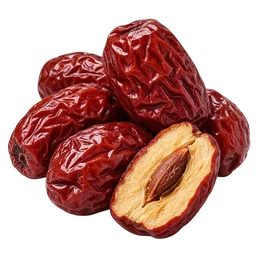
Jujube shows a promising early signal for sleeping through more of the night, but limited human evidence does not establish a reliable or precisely sized benefit.
What it does
Early findings (1)
-
Better sleep quality · May help a little
2 trials · 160 people · noticed in 3–4 weeks
How to take it
Jujube suits someone who wants a food-derived option for sleep continuity and accepts that the human evidence is promising, not settled.1 Give a consistent routine several weeks before deciding whether it earns a place in your cabinet. Skip the hype if you want a reliably proven sleep treatment or a precisely standardized extract, because current trials do not provide that certainty.1
How much
For sleep, the small clinical literature centers on 7.5 mL daily of a liquid jujube preparation, used consistently for about a month.1 That protocol fits the ingredient's strongest consumer-facing signal, better sleep continuity, but only one of two sleep studies showed a significant result, so keep expectations measured. A separate antioxidant-focused trial used 30 g daily of jujube fruit for 12 weeks, which does not establish a sleep dose.1
When
Use jujube as a daily routine, not as an occasional rescue option on a rough night. The sleep studies followed participants for several weeks, but they do not establish that a particular clock time or taking it with food changes results.1 If you use it for sleep, taking the same preparation in the evening gives you the cleanest way to judge your own response over a few weeks.
Which form
The sleep research used a liquid preparation, while antioxidant research used fruit, so do not assume dried jujube snacks match a concentrated liquid product.1 Jujubosides often appear on supplement marketing, but clinical trials have not established a single jujuboside standard or extract ratio as the proven choice.1 Choose a product that clearly names the plant, plant part, and serving amount rather than one that hides the dose inside a proprietary blend.
The dose that worked, by measure (1)
- Sleep more soundly
- 7.5 mL3–4 weeks
How it works
Jujube looks like an ordinary dried fruit, yet early clinical research points to a more interesting use: helping some people stay asleep rather than just fall asleep.1
Jujube is the fruit of Ziziphus jujuba, a tree grown across parts of Asia and the Mediterranean. You might know it as red date or Chinese date, where people eat the fresh or dried fruit and use concentrated preparations in traditional wellness practices.
Jujube contains jujubosides and flavonoids, plant compounds that researchers link to calming brain signaling and antioxidant activity.1 Think of its calming compounds as turning down the gain on an overactive sound system, so the brain receives less of the background noise that keeps it alert.1 Human sleep research is still early, so this mechanism explains interest in jujube rather than proving why it works for every person.1