Cannabidiol
Best for
Feel less pain
Barely detectable 45–600 mg/day 1–9 weeks 1 meta-analysis, n=378
- 12 papers
- 6 of 44 outcomes
- 1 positive
For everyday anxiety, stress, pain, joint discomfort, and sleep, cannabidiol has a finding of “Not enough research,” leaving reliable benefits unestablished in routine use.
What cannabidiol actually does
Pain relief can make it easier to move, rest, focus, and get through the day. 36803360 · 40748522 · 40839290 +3
Anxiety can bring persistent worry, unease, and physical tension into ordinary moments. 31810437 · 32383271 · 35445839 +1
Daily stress is the sense that life's demands are stretching beyond what you can handle. 31810437 · 35445839
Mood shapes how positive, calm, and engaged a person feels from day to day. 35445839
Sleep quality reflects whether the night leaves you feeling well rested. 40357520 · 40839290 · 41487518
Comfortable joints can make walking, stairs, and everyday movement easier. 41487518
| Outcome | Effect | Evidence | Dose | Time | Rank |
|---|---|---|---|---|---|
| Early research 6 | |||||
| Feel less pain Barely detectable Pain relief can make it easier to move, rest, focus, and get through the day. | | 1 meta-analysis 6 papers · n=378 | 45–600 mg | 1–9 wk | — |
| Feel less anxious Not enough research Anxiety can bring persistent worry, unease, and physical tension into ordinary moments. | | 1 meta-analysis 4 papers · n=129 | 50–600 mg | 4 wk | — |
| Feel less stressed day to day Not enough research Daily stress is the sense that life's demands are stretching beyond what you can handle. | | 2 RCTs 2 papers · n=48 | 50–600 mg | 4 wk | — |
| Lift your overall mood Not enough research Mood shapes how positive, calm, and engaged a person feels from day to day. | | 1 RCT 1 papers · n=48 | 600 mg | — | — |
| Sleep that feels more restorative Not enough research Sleep quality reflects whether the night leaves you feeling well rested. | | 2 RCTs 3 papers · n=43 | 45–300 mg | 8–9 wk | — |
| Ease joint pain Not enough research Comfortable joints can make walking, stairs, and everyday movement easier. | | 1 study 1 papers · n=43 | 45 mg | 9 wk | — |
Effect tiers come from native-unit MCID where available, Cohen's d otherwise.
Dose, timing & forms
How much
The reviewed oral studies tested 50 to 600 mg per day for anxiety and stress over about four weeks, and 45 to 300 mg per day for pain and sleep-focused outcomes. 13 Those ranges are research doses, not proven targets: the reviewed trials found no meaningful, dependable improvement for these consumer goals. 13 A single 600 mg dose has also appeared in an experimental social-anxiety setting, which is very different from taking CBD daily for general worry. 2
When and how long
The studies generally use CBD daily for weeks, so an occasional dose does not match the way researchers tested it. 13 There is no well-established morning, evening, with-food, or empty-stomach schedule that reliably improves results for sleep, pain, stress, or everyday anxiety. 13 If you use CBD, follow the product instructions and discuss timing with a pharmacist or clinician when you take prescription medicines.
Forms & standardisation
Most human research uses oral CBD preparations with a stated milligram amount, rather than vague hemp blends. 13 Look for a label that identifies cannabidiol per serving and clearly discloses THC content. A standardized label improves dose clarity, but it does not turn the current early findings into established benefits.
Studied range, by outcome
| Outcome | Studied range | Median effective | Duration | Evidence |
|---|---|---|---|---|
| Feel less intense pain | 45–300 mg | — | 1–9 wk | 5 papers |
| Ease anxiety symptoms | 50–600 mg | — | 4 wk | 4 papers |
| Sleep more soundly | 45–300 mg | — | 8–9 wk | 3 papers |
| Handle daily demands with less stress | 50–600 mg | — | 4 wk | 2 papers |
| Move with less joint pain | 45 mg | — | 9 wk | 1 paper |
| Ease the daily burden of arthritis | 45 mg | — | 9 wk | 1 paper |
| Feel more emotionally steady | 600 mg | — | — | 1 paper |
Recommended Cannabidiol products
Real products that dose Cannabidiol where the research does, in a clean formulation, from brands we've audited. We only list ones we'd stand behind.
-

LuZa Basic
Full Spectrum CBD 250 mg
Well dosed 250 mg/day A formula -

CBDistillery
Relief + Relax CBD Softgels 30 mg
Well dosed 100 mg/day A formula -

OXZGEN
Hemp Derived CBD Tincture 1500 mg
Well dosed 50 mg/day A formula -

CBDistillery ahhh distilled
CBD Softgels 30 mg Full Spectrum
Well dosed 100 mg/day A formula -

CBDPure
CBD Softgels 750
Well dosed 0.5 Gram(s)/day A formula -

CBDistillery ahhh distilled
CBD Softgels Broad Spectrum 30 mg
Well dosed 76 mg/day A formula
Chosen for adequate Cannabidiol dosing vs. the studied range, a clean formulation (grade A–C), and independent brand-quality audits. Not sponsored.
What this is and how it works
- Across 4 studies (n=129), cannabidiol showed no consistent direction for everyday anxiety; a noticeable-change threshold was not established. 1
- The reviewed evidence covers 12 papers and 44 outcomes, including anxiety, stress, pain, joint discomfort, and sleep.
- Three studies (n=43) assessed sleep outcomes, while two studies (n=48) assessed daily stress.
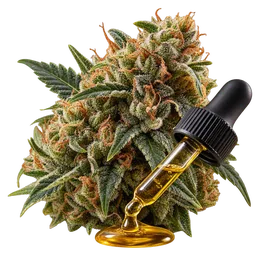
Cannabidiol, usually called CBD, is a cannabinoid found in hemp and cannabis plants. Unlike THC, CBD does not create a high, but the product in a bottle can differ a lot from the ingredient tested in research, especially when labels do not clearly state CBD and THC amounts.
CBD interacts with the body's endocannabinoid signaling network, a set of chemical messengers that helps tune pain, stress responses, sleep, and immune activity. Think of it less like an on switch and more like a sound engineer adjusting several control knobs at once, including serotonin-related signaling. 1 That broad activity makes CBD scientifically interesting, but it does not guarantee a noticeable real-world result for any one symptom. 1
Bottom line
CBD is reasonable to be curious about, but the reviewed trials do not establish it as a reliable choice for everyday anxiety, stress, pain, joint discomfort, or sleep. 13 Skip the high expectations and be especially cautious if you take prescription medicines, are pregnant or breastfeeding, or need a product with predictable effects. Talk with a clinician or pharmacist before adding it to a medication routine.
Common questions
Does CBD actually work for anxiety?
What CBD dose is best for sleep?
How long does CBD take to work?
Is CBD the same as cannabis that makes you high?
Sources
Sources
Generated August 27, 2026
Related
More evidence for Cannabidiol
Evidence map
Sleep
NewSleep: evidence map across 37 supplements
Evidence coverage map
Jul 30, 2026
Evidence map
Stress
NewStress: evidence map across 46 supplements
Evidence coverage map
Jul 30, 2026
Ingredient evidence
Ingredient evidence
New5-HTP
All scored outcomes
Aug 27, 2026
Ingredient evidence
Ingredient evidence
NewAshwagandha
All scored outcomes
Aug 27, 2026
Ingredient evidence
Ingredient evidence
NewBacopa
All scored outcomes
Aug 27, 2026
Ingredient evidence
Ingredient evidence
NewBergamot (Citrus bergamia)
All scored outcomes
Aug 27, 2026