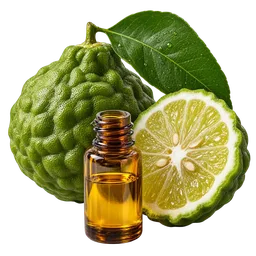
Bergamot (Citrus bergamia)
Best for
Feel less stressed day to day
Barely detectable 0.00083 mL/day 1 weeks 1 study, n=100
- 7 papers
- 4 of 41 outcomes
- 2 positive
Bergamot does not have enough research to reliably lower harmful cholesterol or post-meal triglycerides, while one small study reported a barely detectable blood-pressure effect.
Median effective dose, most-studied outcomes
- Lower LDL cholesterol 500 mg 12–16 wk
- Lower total cholesterol 375 mg 12–16 wk
- Ease anxiety symptoms 0.001 mL 1 wk
What bergamot (citrus bergamia) actually does
High triglycerides are blood fats linked with a higher risk of heart disease. 29273027 · 37732063 · 31167512
High LDL cholesterol can build up in artery walls and raise the risk of heart disease. 29273027 · 37732063 · 39682955
Daily stress is the sense that life's demands are stretching beyond what you can handle. 40786851
Anxiety can bring persistent worry, unease, and physical tension into ordinary moments. 40786851
| Outcome | Effect | Evidence | Dose | Time | Rank |
|---|---|---|---|---|---|
| Early research 4 | |||||
| Lower triglycerides Not enough research High triglycerides are blood fats linked with a higher risk of heart disease. | | 3 RCTs 3 papers · n=98 | 350–1300 mg | 12–13 wk | — |
| Lower cholesterol Not enough research High LDL cholesterol can build up in artery walls and raise the risk of heart disease. | | 3 RCTs 3 papers · n=98 | 350–700 mg | 12–16 wk | — |
| Feel less stressed day to day Barely detectable Daily stress is the sense that life's demands are stretching beyond what you can handle. | | 1 RCT 1 papers · n=100 | 0.00083 mL | 1 wk | — |
| Feel less anxious Barely detectable Anxiety can bring persistent worry, unease, and physical tension into ordinary moments. | | 1 RCT 1 papers · n=100 | 0.00083 mL | 1 wk | — |
Effect tiers come from native-unit MCID where available, Cohen's d otherwise.
Dose, timing & forms
How much
For cholesterol-related outcomes, oral bergamot extract studies commonly used 350-700 mg daily for roughly 12 to 16 weeks. Results for total cholesterol look more encouraging than results for LDL, while triglyceride findings remain inconsistent, so these doses are study protocols rather than a proven target.2 One anxiety and stress study used a tiny inhaled essential-oil exposure over one week, not an oral supplement dose.3
When and how long
Treat oral bergamot as a daily routine, not an occasional rescue supplement, because lipid studies tracked changes across months rather than hours.2 The available evidence does not establish a best time of day or show that taking it with food changes results. Keep aromatherapy separate from oral use, since the short mood study used inhalation rather than capsules or liquid extract.3
Forms & standardisation
Look for an oral Citrus bergamia peel extract that identifies its polyphenol or flavonoid content, rather than a label that simply says “bergamot.” Human lipid research focuses on polyphenol-rich oral extracts, whereas the mood research used inhaled essential oil.13 A standardized extract improves label clarity, but it does not guarantee the same result seen in a small trial.
Studied range, by outcome
| Outcome | Studied range | Median effective | Duration | Evidence |
|---|---|---|---|---|
| Lower LDL cholesterol | 350–500 mg | 500 mg | 12–16 wk | 3 papers 1 sig. endpoint |
| Lower total cholesterol | 350–700 mg | 375 mg | 12–16 wk | 3 papers 2 sig. endpoints |
| Lower your triglyceride level | 350–500 mg | — | 12 wk | 2 papers |
| Ease anxiety symptoms | 0.001 mL | 0.001 mL | 1 wk | 1 paper 1 sig. endpoint |
| Handle daily demands with less stress | 0.001 mL | 0.001 mL | 1 wk | 1 paper 1 sig. endpoint |
What this is and how it works
- Across 3 studies (n=98), bergamot’s effects on harmful cholesterol and post-meal triglycerides were not established.2
- Seven papers reviewed here span 41 outcomes, with evidence concentrated in early-stage research.
- One study of 100 participants found a barely detectable effect on daily blood pressure.
Bergamot peel polyphenols appear to influence how the liver makes, packages, and clears cholesterol-containing particles. Think of the liver as a shipping warehouse: these compounds are being studied for whether they change the number of fat packages sent into circulation, but human trials have not yet shown a consistent real-world result.12
Bottom line
Bergamot is most worth considering if you want to experiment cautiously with an oral citrus polyphenol extract alongside established diet and lifestyle basics, with modest expectations. The cholesterol and triglyceride signals are not strong enough to count on, and the anxiety evidence is far too thin to guide use.23 Skip self-treatment if you need dependable management of abnormal blood lipids, and discuss supplement use with a clinician if you take regular medicines.
Common questions
Does bergamot lower cholesterol?
Is bergamot extract the same as bergamot essential oil?
How long does bergamot take to work?
Can bergamot help anxiety?
Sources
Sources
- 1. Bergamot (Citrus bergamia Risso) and its potential role in cardiovascular risk prevention (2015) ↑
- 2. Effect of bergamot on lipid profile in humans: A systematic review and meta-analysis of randomized controlled trials (2019) ↑
- 3. Effects of inhalation of bergamot essential oil on mood states, parasympathetic nervous system activity, and salivary cortisol in 41 healthy females (2017) ↑
Generated August 27, 2026
Related
More evidence for Bergamot (Citrus bergamia)
Evidence map
Stress
NewStress: evidence map across 46 supplements
Evidence coverage map
Jul 30, 2026
Ingredient evidence
Ingredient evidence
New5-HTP
All scored outcomes
Aug 27, 2026
Ingredient evidence
Ingredient evidence
NewAshwagandha
All scored outcomes
Aug 27, 2026
Ingredient evidence
Ingredient evidence
NewBacopa
All scored outcomes
Aug 27, 2026
Ingredient evidence
Ingredient evidence
NewCannabidiol
All scored outcomes
Aug 27, 2026
Ingredient evidence
Ingredient evidence
NewCannabigerol
All scored outcomes
Aug 27, 2026